
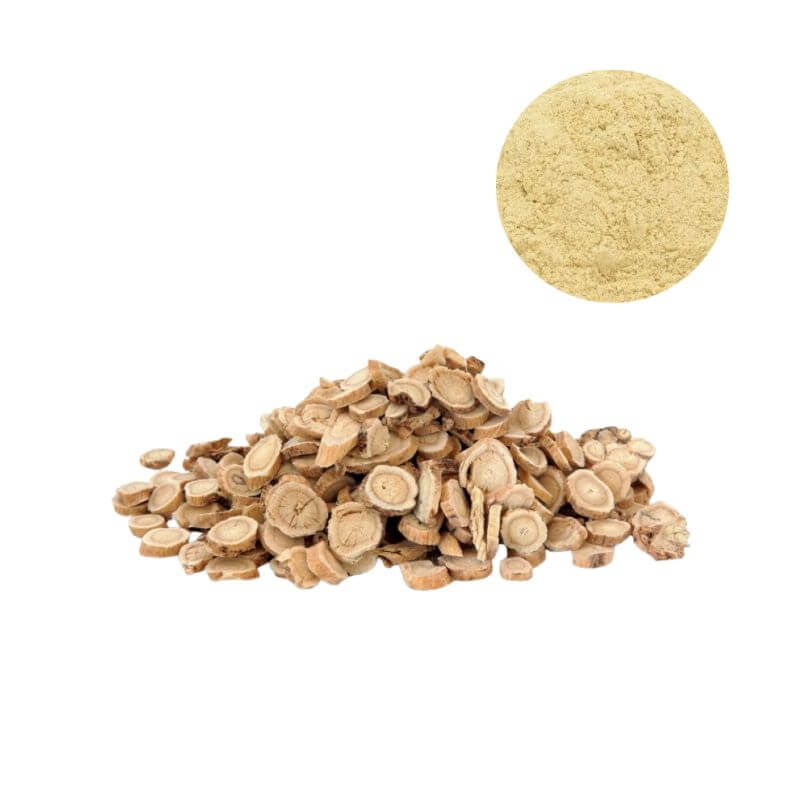
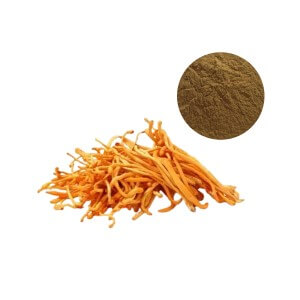
Astragalus Root Extract Powder
| Product Name | Astragalus Root Extract Powder |
| CAS Number | 94166-93-5 |
| Appearance | Yellow-brown to light yellow fine powder |
| Purity | 10:1 (by TLC), 50% & 70% Polysaccharides (by UV-Vis), 1% Astragaloside IV (by HPLC-ELSD) |
| Packaging | 1 kg/bag, 5 kg/bag, 25 kg/drum |
| MOQ | 1 kg |
Engineered for Residue Compliance & Logistics Stability in Global Supplement Supply Chains
Astragalus Root Extract Powder destined for North American and European brands must survive two barriers: tightened mycotoxin limits and physical degradation during transoceanic transit. Standardized specifications (10:1, polysaccharides 50%/70%, astragaloside IV 1%) provide R&D teams with batch-traceable data to accelerate formula development and regulatory filing. Committing to documented residue and particle control transforms this botanical ingredient into a strategic brand asset, enabling premium label claims and retail differentiation in a crowded immunity space.
Residue Elimination Workflow: From Agricultural Risk to Audit-Ready Batches
Botanical extracts inherit contaminants from soil, drying, and storage. The purchasing decision hinges not on stated limits but on documented process controls that reduce residues to quantifiable floors. A 2025 risk assessment in Food Chemistry systematically quantified the removal rates of pesticides and mycotoxins during Astragalus processing, demonstrating that macroporous resin adsorption eliminates 52-100% of target residues in a single pass (Food Chemistry, 2025; doi: 10.1016/j.foodchem.2025.144167). For procurement teams, this means each batch carries a built‑in compliance buffer, reducing the need for costly port‑hold retesting.
| Contaminant Class | Origin / Typical Risk Level | Targeted Removal Step | Quantified Performance (per lot COA) |
|---|---|---|---|
| Pesticides (47 types incl. organochlorides) | Conventional farming; chlorpyrifos often >0.1 ppm | Macroporous resin adsorption after ethanol extraction | Single‑run removal 52-100% |
| Ochratoxin A (OTA) | Post‑harvest improper drying; often 2-8 µg/kg in raw root | Optical sorting of raw root + ozone during extraction | <5 µg/kg (EU Reg. 2023/915 for dried herbs); 85-95% degradation rate |
| Heavy metals (Pb, As, Cd, Hg) | Industrial soil accumulation; Pb may reach 5-10 ppm | Chelation-ion exchange polishing of concentrated extract | Pb ≤2.0, As ≤1.0, Cd ≤1.0, Hg ≤0.1 mg/kg |
For a procurement director, this data sheet provides verifiable evidence that each batch already meets EU 2025/1006 thresholds and California Prop 65 safe harbor levels. Each lot’s COA includes a full pesticide screen (47 analytes) with all results below EU MRLs (Reg. EC 396/2005), ensuring customs clearance predictability. Pre-approved residue profiles shorten port-hold inspection cycles and grant multi-market admission without repetitive third-party verification – a direct compliance hedge against cross-border trade friction.
Degradation Kinetics & Physical Barriers Against Cross-Border Loss
A 30-day ocean freight from Shanghai to Rotterdam exposes powdered extracts to temperature cycling (10°C to 55°C) and relative humidity spikes (up to 90%). Astragalus Root Extract Powder contains two chemically vulnerable families: hygroscopic polysaccharides and heat-labile astragalosides. Each demands a distinct preservation strategy.
- Polysaccharide caking & microbial risk: When ambient RH exceeds the powder’s critical relative humidity (CRH = 65-70%), polysaccharides absorb moisture, forming hard agglomerates that block sifters and encourage mold growth. Mitigation: Vacuum-sealed aluminum foil liners (WVTR <0.1 g/m²·24h) plus silica gel desiccant pallets (20-40 kg per 20’ container) keep internal RH below 40% for the entire voyage.
- Astragaloside IV thermal degradation: This saponin begins to decompose above 40°C – a temperature routinely exceeded in shipping containers crossing the equator. Mitigation: Nitrogen flushing (residual O₂ <1%) combined with oxygen absorbers inside the liner reduces oxidative pathways, preserving ≥95% of astragaloside IV after 60 days at 50°C (internal stability study).
- Pressure-related bag rupture during air freight: Cargo holds depressurize to ˜0.75 atm at cruising altitude, expanding internal air volume. Standard sealed bags may burst. Mitigation: One-way pressure vents integrated into the foil bag allow equalization without moisture ingress – a low-cost specification that prevents in-transit spillage and contamination claims.
Achieving free-flowing powder at destination hinges on these engineered logistics choices. Three-year stability data at 25°C/60% RH show no significant change in astragaloside IV or polysaccharide content, supporting a 24-month retest period. From a total cost of ownership standpoint, preventing moisture-induced caking avoids 8-12% batch rejection rates at formulation sites and removes the hidden expense of re-conditioning or disposal – a direct safeguard against supply chain value erosion.
Analytical Fingerprinting to Exclude Adulterants & Substitutes
The global Astragalus trade suffers from species substitution (e.g., A. lehmannianus or A. complanatus) and reprocessed marc. Conventional HPLC-UV often fails to differentiate these. A multi-tiered identity protocol protects your formula’s efficacy and regulatory standing.
- HPLC-ELSD & HPLC-UV dual detection: Flavonoids (calycosin-7-glucoside, ononin) are quantified by HPLC-UV at 254 nm. Triterpene saponins (astragaloside I-IV) lack chromophores and require HPLC-ELSD for detection. This dual-method approach generates a 14-peak fingerprint; PCA similarity index <0.95 against the A. membranaceus reference triggers lot rejection, detecting down to 5% (w/w) substitution.
- DNA barcoding (ITS2 region): Applied to raw root before extraction. PCR amplification and Sanger sequencing must yield >99% identity with A. membranaceus GenBank entry. This absolute species proof eliminates any legal dispute over botanical identity.
- Quantitative analysis of multi-components by single marker (QAMS): Using astragaloside IV as the internal reference, relative correction factors calculate contents of astragaloside I, II, and III. Reduces analysis cost by 60% while maintaining full pharmacopoeial compliance (ChP 2025).
For a formulation scientist, receiving a COA that includes similarity index, DNA verification, and QAMS data means zero time spent on incoming identity validation. The ingredient is ready to be weighed, blended, and encapsulated – with full traceability back to the original root lot. For broad-spectrum antioxidant protocols, formulators frequently combine these high-purity saponins with our standardized 95% OPC antioxidant profiles, ensuring consistency in chromatographic standardization across the entire ingredient portfolio.
Particle Engineering for High-Speed Encapsulation & Total Cost of Ownership
Most production line stoppages originate not from active ingredient failures but from poor powder rheology. Astragalus Root Extract Powder, when correctly milled, eliminates three common CMO pain points.
| Physical Parameter | Specification Range | CMO Line Impact | Quantified TCO Benefit |
|---|---|---|---|
| Particle size (D90) | ≤200 µm (≥95% through 80 mesh) | Uniform die fill in capsule dosators | Reduces fill weight RSD from >3.5% to ≤1.8%; capsule reject rate drops by 40% |
| Angle of repose | 32° – 38° (measured per USP <1174>) | Hopper to tablet press gravity flow | Eliminates bridging & rat-holing; saves 1.5-2.5 hours of daily downtime |
| Hausner ratio | <1.25 | Die fill consistency at >100,000 caps/hour | Allows use of high-speed rotary presses without weight adjustment stops |
| Loss on drying (LOD) | ≤5.0% | Prevents sticking on punch faces | Reduces tablet scrap from 8-12% to ≤3%; saves USD 1,200-1,800 per ton |
From a procurement perspective, selecting this specific particle size specification eliminates the need for dry granulation or pre-blending with glidants – a step that typically costs USD 800-1,000 per metric ton and adds 2-3 days to lead time. The powder is direct-compressible, ready for high-throughput lines, and backed by a COA that includes all rheology parameters. In-line trials at a US CMO demonstrated 12% higher throughput versus non-optimized powder due to reduced bridge formation. Moving the angle of repose from a lab curiosity to a line-release criterion enables production planners to guarantee uninterrupted 10-hour shifts on rotary capsule fillers – each percentage point of downtime avoided contributes directly to the brand’s margin. To further optimize your high-speed tableting formulations, consider pairing this ingredient with our highly-flowable Elderberry immune support actives, which is standardized to meet identical flowability and particle size specifications for seamless multi-ingredient blending.
Verifiable Technical Dossier for Rapid Supplier Qualification
Each commercial lot of Astragalus Root Extract Powder ships with a complete qualification package: residue profile, stability summary, fingerprint chromatogram, and particle size analysis. All data align with USP <561>, EP 2.8.22, and ChP 2025 requirements.
Request standard compliance samples for Astragalus Root Extract Powder – includes full COA, residual solvent report, and logistics validation study. Available in 10-20 g evaluation bags with next-business-day dispatch.
Frequently Asked Questions
Share this product
Related Products
Ready to get started?
Contact our team for technical specifications, pricing, and customized solutions.