
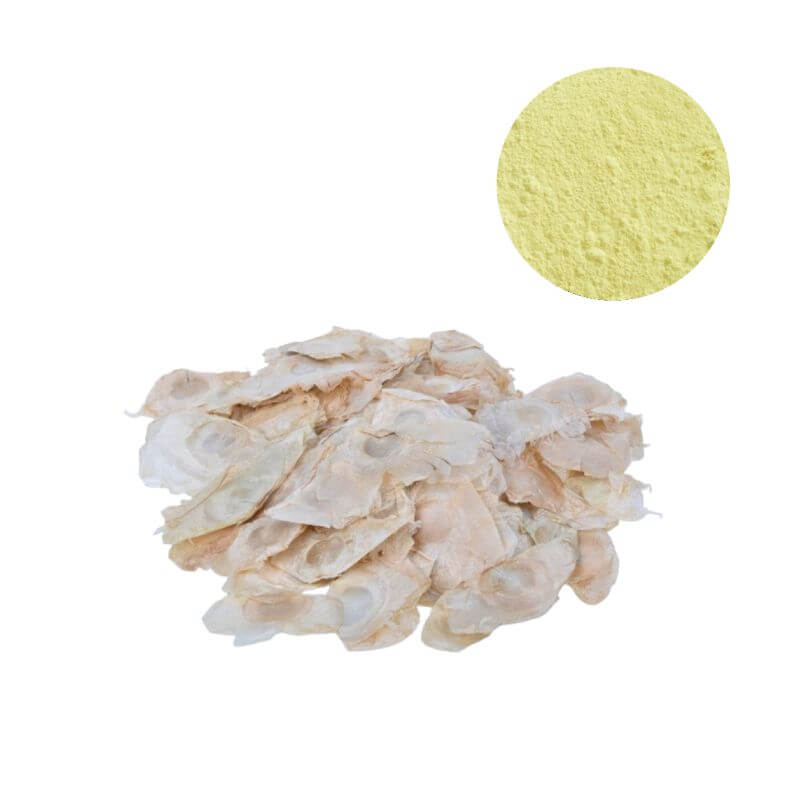
Chrysin Powder
| Product Name | Chrysin Powder |
| CAS Number | 480-40-0 |
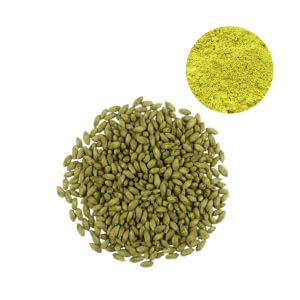
| Appearance | Light yellow to brown fine powder |
| Purity | 98% min. (by HPLC) |
| Packaging | 1 kg/bag, 5 kg/bag, 25 kg/drum |
| MOQ | 1 kg |
Chrysin Powder (98% HPLC): Solving Bioavailability & Formulation Stability for Next‑Generation Supplements
For brands developing premium dietary supplements, the gap between a promising flavonoid and a commercially viable ingredient often lies in two hurdles: low oral absorption and batch‑to‑batch inconsistency. Chrysin, a 5,7‑dihydroxyflavone found in Oroxylum indicum and propolis, is widely recognized for its antioxidant and aromatase‑modulating properties. Yet standard Chrysin powder suffers from <1% systemic bioavailability, rendering many finished products ineffective. This article examines how 98% HPLC‑verified Chrysin, when paired with advanced formulation strategies and rigorous quality protocols, can unlock its full potential for sports nutrition, hormonal balance, and anti‑inflammatory applications. For procurement teams, this translates directly into a lower risk of product returns and a stronger scientific narrative. In an era of tightened regulatory scrutiny and crowded shelves, selecting HPLC‑verified Chrysin with documented bioavailability data becomes a strategic lever to justify premium pricing and secure retail listings.
Mechanism Deep Dive: How Chrysin Supports Hormonal Equilibrium & Cellular Defense
Chrysin’s primary mechanism centers on competitive inhibition of aromatase (CYP19), the enzyme that converts androgens to estrogens. This activity has been studied for its potential to support healthy testosterone : estrogen ratios in active individuals and to manage estrogen‑dependent conditions. Beyond hormonal modulation, Chrysin acts as a potent scavenger of reactive oxygen species (ROS) and downregulates NF‑κB signaling, reducing pro‑inflammatory cytokines such as TNF‑α, IL‑6, and IL‑1β. From a strategic formulation perspective, these dual actions allow brands to create products that address both chronic low‑grade inflammation and endocrine balance—two consumer concerns driving growth in the “active aging” and “hormone health” segments. It's worth noting that most commercial Chrysin supplements fail to achieve relevant plasma levels; therefore, simply listing “Chrysin 98%” on a label is insufficient. Effective formulations must incorporate bioavailability enhancers or advanced delivery systems. This insight directly influences how procurement evaluates bulk Chrysin suppliers: not only by purity but also by their willingness to provide formulation support. In effect, a supplier that offers formulation data reduces in‑house R&D cycles by weeks, accelerating time‑to‑market for differentiated products.
Quality Benchmarks: Beyond Purity – What Defines a Premium Chrysin Ingredient?
For B2B buyers, a COA showing “≥98% by HPLC” is only the starting point. True quality differentiation lies in three overlooked parameters: residual solvent profile, heavy metal speciation, and particle size uniformity. Premium Chrysin powder typically exhibits:
- Residual solvents – complies with USP <467> limits, especially ethanol and ethyl acetate used in extraction.
- Heavy metals – Pb ≤1.0 mg/kg, As ≤1.0 mg/kg, Cd ≤0.5 mg/kg, Hg ≤0.1 mg/kg (ICP‑MS verified).
- Particle size – ≥95% through 80 mesh, ensuring blend uniformity in tableting or encapsulation.
A 2025 comprehensive review emphasized that Chrysin’s pharmacological profile can be significantly altered by its synthesis pathway (natural extraction vs. chemical synthesis) and the presence of co‑eluting flavonoids from the source plant (doi: 10.3390/ijms26199467). For procurement teams, this directly translates to the need for a fully traceable, batch‑specific COA that includes a chromatographic fingerprint. Avoid suppliers who only provide a generic specification sheet. Reliable certified Chrysin partners will also offer third‑party audits for GMP, Kosher, and Halal, and will support NDI or Novel Food dossiers when required. The table below summarizes the critical quality checkpoints for a Chrysin supplier.
| Quality Attribute | Why It Matters | Typical Premium Specification |
|---|---|---|
| HPLC Purity | Directly correlates with biological activity and label claim accuracy | ≥98.0% |
| Loss on Drying | Low moisture prevents hydrolysis and microbial growth | ≤1.0% |
| Ash Content | Indicates absence of inorganic contaminants | ≤1.0% |
| Total Plate Count | Essential for shelf‑stable finished products | ≤1,000 CFU/g |
For brands, this level of documentation directly minimizes the risk of supply chain audit failures and protects brand reputation—a hidden but critical cost factor.
Formulation in Practice: Overcoming Chrysin’s Bioavailability Bottleneck
The single greatest technical challenge with Chrysin is its extremely low oral bioavailability (<1%), caused by extensive phase‑II metabolism (sulfation and glucuronidation) and poor water solubility. Standard Chrysin powder, even at 98% purity, will produce negligible plasma levels in humans. However, recent clinical evidence offers a clear path forward. A 2025 randomized crossover trial in 16 healthy adults compared a micellar Chrysin‑quercetin‑rutin formulation against unformulated Chrysin and a non‑micellar Chrysin product (doi: 10.3390/antiox14111313). Key findings:
- Micellar formulation achieved 2× higher systemic exposure (AUC₀–₂₄) than unformulated Chrysin (p<0.05) and 2.6× higher than non‑micellar Chrysin.
- Caco‑2 cell permeability increased by >10‑fold.
- 30‑day daily supplementation was well‑tolerated, with a small but significant reduction in fasting glucose.
From a strategic formulation perspective, these results mean that brands can now create orally effective Chrysin products by partnering with suppliers offering pre‑formulated micellar or liposomal Chrysin, or by co‑processing Chrysin with absorption enhancers like piperine or cyclodextrins. Practical recommendations for formulators:
- Capsules/tablets – use micronized Chrysin (D90 <20 µm) with 5‑10 mg Piperine (Black Pepper Extract) per serving.
- Liquid shots / beverages – avoid direct dispersion; opt for water‑dispersible Chrysin (e.g., encapsulated or complexed with γ‑cyclodextrin).
- Synergistic pairings – combine with Quercetin Dihydrate and rutin, as in the clinical trial, to further improve absorption and antioxidant network effects.
This insight leads naturally to the final question: how can procurement teams ensure they receive not just raw Chrysin powder but a formulation‑ready solution with documented consistency?
Mitigating Risk: A Procurement Checklist for Sourcing Bulk Chrysin
Choosing a Chrysin powder distributor or exporter requires a framework that goes beyond price per kilogram. Below is a practical checklist based on industry best practices for botanical ingredients with bioavailability challenges.
- Full disclosure COA – includes heavy metals (ICP‑MS), residual solvents (GC), pesticides, and a chromatogram showing the purity peak.
- Formulation support – does the supplier provide stability data in different matrices (e.g., HPMC capsules, gummies)?
- Regulatory readiness – ask whether the supplier has successfully supported NDI notifications or Novel Food applications for Chrysin.
- Supply chain traceability – botanical source (Oroxylum indicum vs. synthetic) and batch‑to‑batch consistency data over at least 5 consecutive lots.
- Third‑party certifications – GMP, ISO 22000, Kosher, Halal, and non‑GMO verification.
For procurement teams, this directly translates to a lower total cost of ownership. A slightly higher unit price from a supplier that provides pre‑mixed micellar Chrysin or full regulatory dossiers eliminates the need for expensive in‑house formulation R&D and reduces launch delays by months. It's worth noting that many wholesale Chrysin offers from generic traders lack these value‑added services, leading to hidden costs. By applying this checklist, brands can confidently source Chrysin for sports nutrition, Chrysin for hormonal support, or Chrysin in functional foods from partners who act as true formulation allies. From a total cost of ownership perspective, investing in a fully documented Chrysin supply prevents costly batch rejections and regulatory delays, making the slightly higher upfront price a net saving.
Next Steps: De‑risk Your Chrysin‑Based Product Launch
You now have a clear roadmap: from understanding Chrysin’s mechanism to overcoming its bioavailability limits and auditing suppliers against a professional checklist. The most efficient way to accelerate your project is to test the material in your own matrix. Oclean Nutra offers a complimentary 10‑20 g sample of HPLC‑verified, 98% Chrysin powder, accompanied by a batch‑specific COA and a technical datasheet. Our team also provides formulation consultations (no obligation) to help you select the right delivery system—whether micellar, liposomal, or co‑crystal. Request your complimentary sample & technical dossier and turn a promising flavonoid into a market‑ready product with confidence.
Frequently Asked Questions
Share this product
Related Products
Ready to get started?
Contact our team for technical specifications, pricing, and customized solutions.