
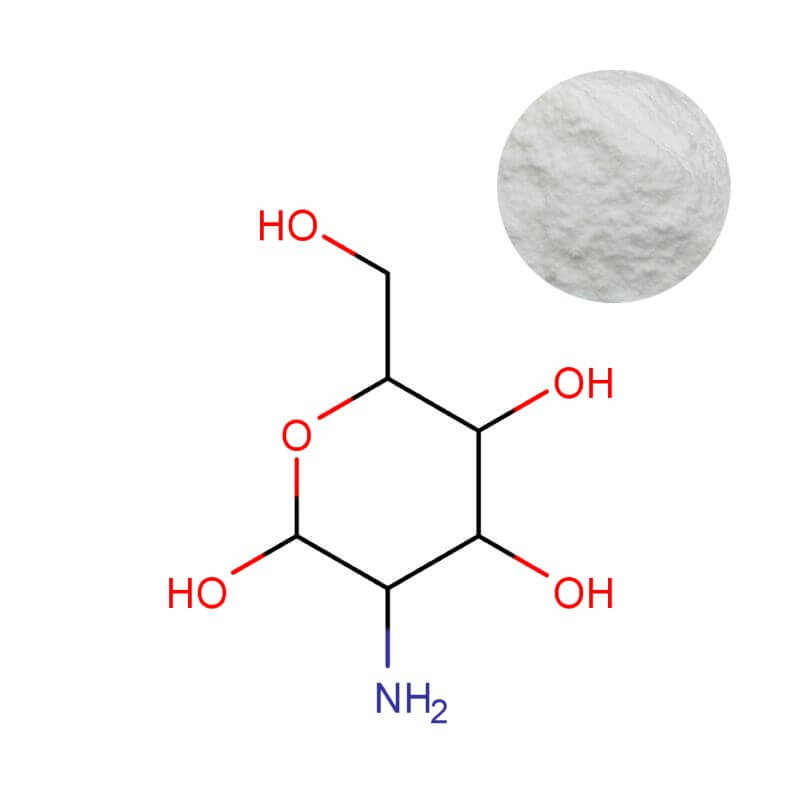
Glucosamine HCl Powder
| Product Name | Glucosamine HCl Powder |
| CAS Number | 66-84-2 |
| Appearance | White crystalline powder |
| Purity | 99% min. (by HPLC) |
| Packaging | 1 kg/bag, 5 kg/bag, 25 kg/drum |
| MOQ | 25 kg |
Glucosamine HCl Powder (≥99% Assay): A Clinically-Supported Foundation for Next-Generation Joint Health Formulations
For brands developing joint health supplements, the challenge is no longer simply adding glucosamine to a formula—it is ensuring clinical alignment, formulation stability, and supply chain integrity. A premium Glucosamine HCl Powder standardized to ≥99% purity (on dried basis) serves as the backbone for evidence-based products targeting osteoarthritis support and active joint maintenance. This ingredient offers a well-documented safety profile, compatibility with multiple delivery formats, and the flexibility to meet USP, EP, and JP compendial standards. The following analysis provides formulation scientists and procurement leads with a framework to evaluate, specify, and confidently source bulk Glucosamine HCl for commercial success. In an increasingly crowded joint health category, choosing a USP-grade ingredient with verified batch‑to‑batch consistency becomes a strategic lever to reduce formulation risk and justify a premium price.
Clinical Foundation: What Rigorous Research Reveals About Glucosamine HCl in Joint Formulas
Glucosamine hydrochloride is an amino monosaccharide and a natural precursor for glycosaminoglycan synthesis within cartilage. Unlike transient pain relievers, its value lies in supporting long‑term joint structure and function. A 2025 randomized double‑blind placebo‑controlled pilot study (n=54) evaluated a formulation containing type II collagen, glucosamine HCl, and chondroitin sulfate in individuals with mild‑to‑moderate knee osteoarthritis. The active group achieved significant improvements in the KOOS subscales: sports/recreation function improved by 25.25% (p<0.01) and quality of life by 27.66% (p<0.001), with excellent safety outcomes (doi: 10.1038/s41598-025-11723-2). From a strategic formulation perspective, this clinical evidence directly informs dosage targets—typically 1,500 mg per day—and supports the inclusion of glucosamine HCl in multi‑ingredient joint complexes designed for consistent, long‑term consumer benefit. Furthermore, a 2024 network meta‑analysis of 30 RCTs (5,265 patients) confirmed that glucosamine‑based combination therapies (e.g., with omega‑3 or ibuprofen) significantly reduce knee osteoarthritis pain compared to placebo, with moderate‑quality evidence for the glucosamine+omega‑3 pairing (doi: 10.3390/jcm13237444). These data empower formulators to move beyond generic claims toward targeted, clinically‑backed product positioning. For brand owners, aligning a formula with these specific clinical parameters shortens the R&D validation timeline and provides ready‑to‑use evidence for consumer marketing materials.
Quality Benchmarks: Beyond the Certificate of Analysis for Glucosamine HCl
While many suppliers offer a CoA, what distinguishes a premium bulk Glucosamine HCl is the depth of quality control behind each lot. Key specifications that directly influence formulation success include:
- Specific rotation (+70.0° to +73.0°, c=10, H₂O) – A sensitive indicator of correct molecular configuration; deviations suggest impurities or degradation.
- Chloride content (16.2% – 16.7%) – Unique to the HCl salt form, confirming chemical identity and stoichiometric consistency.
- Loss on drying (≤1.0%) – Low moisture content prevents caking and ensures stability during high‑speed encapsulation or tableting.
- Heavy metal limits (Pb ≤1.0 mg/kg, As ≤0.5 mg/kg) – Meets USP and international supplement standards, critical for global market access.
For procurement teams, this directly translates to predictable processing behavior and reduced risk of batch‑to‑batch variation. A certified GMP Glucosamine HCl supply chain should provide full transparency on particle size (e.g., ≥95% through 80 mesh) and residual solvents compliance with USP <467>. When sourcing Glucosamine HCl for capsules or tablets, request a batch‑specific CoA that includes these parameters. Additionally, consider the source origin: traditional extraction from shellfish shells versus fermentation‑derived glucosamine (from Aspergillus niger). The latter eliminates shellfish allergens and is Novel Food‑authorized in the EU, offering a clean‑label advantage for vegetarian and hypoallergenic product lines. This level of purity effectively means that brands can reduce the risk of failed finished‑product stability tests, avoiding costly rework and launch delays.
Formulation in Practice: Stability, Synergy, and Delivery Solutions with Glucosamine HCl
Successfully incorporating Glucosamine HCl into finished products requires attention to its physical and chemical behavior. The ingredient is freely soluble in water, has a slightly sweet taste, and maintains excellent stability when stored in a cool, dry environment. However, its aqueous solution is acidic (pH 3.0–5.0 for a 2% solution). Practically speaking, co‑formulating with highly alkaline minerals (e.g., magnesium oxide or calcium carbonate) without a buffer system may lead to incompatibility or reduced shelf life. Instead, consider the following synergistic pairings that are well‑supported in the literature:
| Co‑ingredient | Synergistic Benefit | Typical Daily Dose (for combined formula) |
|---|---|---|
| Chondroitin Sulfate Sodium | Supports cartilage water retention and shock absorption; classic pairing used in GAIT trial. | 800–1,200 mg |
| Omega‑3 Fatty Acids | Enhances anti‑inflammatory effects; ranked as top combination in 2024 network meta‑analysis. | 1,000 mg EPA/DHA |
| Type II Collagen | Provides building blocks for joint matrix; used in 2025 clinical study with positive outcomes. | 40 mg |
For brands targeting functional beverages or ready‑to‑mix powders, Glucosamine HCl’s high water solubility and neutral flavor profile make it an ideal candidate. The recommended inclusion level is 1,500 mg per serving. From a strategic formulation perspective, using the HCl salt rather than sulfate avoids extra sodium or potassium ions, which is beneficial for consumers monitoring mineral intake. It's worth noting that prolonged exposure to high humidity (>60% RH) can cause clumping; therefore, packaging with desiccants and maintaining low moisture during blending are essential steps. When evaluating a Glucosamine HCl distributor, ask for stability data under your target storage conditions—this reduces post‑launch complaint risk.
Supply Chain Resilience & Procurement Checklist for Bulk Glucosamine HCl
Price per kilogram is only one dimension of total cost of ownership. For a mature ingredient like Glucosamine HCl, supply continuity and quality consistency often outweigh initial savings. Key sourcing considerations include:
- Verified compliance – Does the supplier provide third‑party audited certificates for USP, EP, or JP standards?
- Traceability – Can they trace raw material origin (crustacean or fermentation) and provide a complete chain of custody?
- Batch‑to‑batch consistency – Request a five‑lot CoA history to evaluate variation in assay, particle size, and heavy metals.
- Regulatory support – Does the supplier offer technical dossiers for NDI or Novel Food filing (especially for fermentation‑based material)?
- Flexible packaging and MOQ – MOQ of 25 kg with options for 1 kg, 5 kg, 25 kg drums allows brands to scale from R&D trials to commercial production.
For procurement teams, this directly translates to lower risk of supply disruption and faster time‑to‑market. When you buy Glucosamine HCl wholesale, prioritize partners who provide a fully traceable, batch‑specific CoA within 24 working hours. Additionally, consider dual sourcing strategies: maintain a primary supplier for conventional shellfish‑derived glucosamine and a qualified backup for fermentation‑based material to hedge against allergen‑related market shifts or supply shocks. A reliable Glucosamine HCl supplier will also offer custom particle sizing (e.g., 40–80 mesh for direct compression) and can provide a free sample for in‑house validation before full‑scale commitment. Adopting a Total Cost of Ownership lens—factoring in CoA reliability, lot‑to‑lot consistency, and technical support—prevents catastrophic batch rejections that can erase any per‑kilo cost savings.
Next Steps for Your Joint Health Product Development
Moving from ingredient specification to market launch requires confidence in both the science and the supply chain. Glucosamine HCl Powder, with ≥99% purity, clinical backing, and versatile formulation characteristics, offers a low‑risk foundation for differentiated joint health supplements. To accelerate your development, request a complimentary sample and the full technical dossier—including a batch‑specific CoA and stability summary. Request Your Complimentary Sample & Technical Dossier today and validate how consistent, USP‑grade Glucosamine HCl can strengthen your next product line.
Frequently Asked Questions
Share this product
Related Products
Ready to get started?
Contact our team for technical specifications, pricing, and customized solutions.