
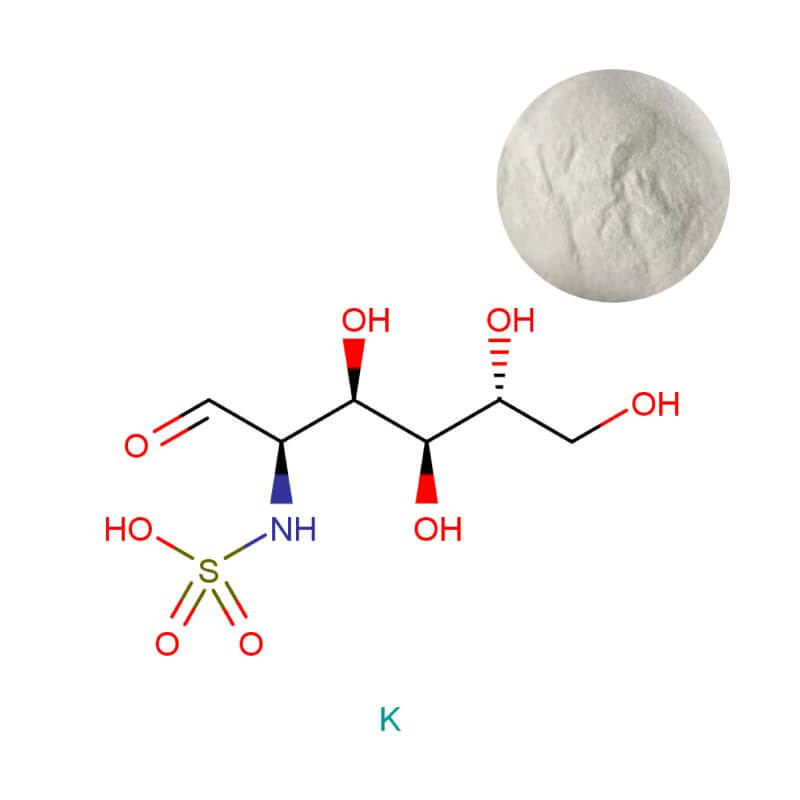
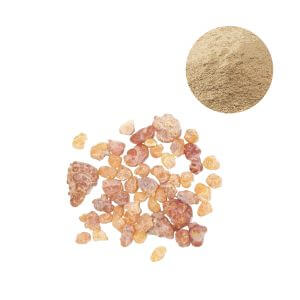
Glucosamine Sulfate 2KCl Powder
| Product Name | Glucosamine Sulfate 2KCl Powder |
| CAS Number | 31284-96-5 |
| Appearance | White crystalline powder |
| Purity | 98.0% ~ 102.0% (by USP/HPLC) |
| Packaging | 1 kg/bag, 5 kg/bag, 25 kg/drum |
| MOQ | 5 kg |
Glucosamine Sulfate 2KCl Powder (USP): Formulation-Ready Joint Health Ingredient with Verified Supply Chain Integrity
For brands developing next‑generation mobility and joint health supplements, the market demands clinically substantiated ingredients paired with uncompromising quality consistency. Premium Glucosamine Sulfate 2KCl (CAS 31284‑96‑5) meets USP specifications (98.0%–102.0% assay on dried basis) and is produced from marine‑origin chitosan. Sourcing bulk Glucosamine Sulfate 2KCl from a GMP‑certified partner ensures each batch delivers the same particle size, purity profile, and microbial control. This article examines the clinical rationale, quality benchmarks, formulation tactics, and procurement strategies that reduce product launch risks. In a category with dozens of undifferentiated glucosamine offerings, locking in USP‑compliant material directly enables premium positioning and supports structure/function claims that command higher retail margins.
Clinical Evidence: What 37 RCTs Reveal About Glucosamine Sulfate 2KCl Efficacy
A 2020 umbrella review (doi: 10.1177/1759720X20975927) aggregated 37 randomized controlled trials involving 3,949 participants, nearly all using 1,500 mg/day of crystalline glucosamine sulfate. Using GRADE methodology, the review concluded that glucosamine sulfate is superior to placebo for pain relief, joint space width preservation, and slowing radiographic progression of knee osteoarthritis. From a strategic formulation perspective, this consistent 1,500 mg dosage allows R&D teams to fix capsule count and excipient systems without re‑validation across different batches. Moreover, the long‑term safety profile—adverse events equivalent to placebo—directly supports supplement positioning for daily, prolonged use. Key takeaways for product developers:
- Validated daily intake: 1,500 mg aligns with positive clinical outcomes across multiple studies.
- Structure‑modifying potential: Evidence of joint space maintenance enables structure/function claims such as “supports long‑term joint structure.”
- Zero safety signal difference: Equivalent to placebo, reducing liability for brands targeting aging populations.
This clinical foundation directly influences quality expectations. The next section translates efficacy requirements into concrete quality attributes that a professional buyer must verify. From a product lifecycle perspective, adopting the exact dose and salt form used in these trials eliminates the need for costly post‑launch reformulation and gives your brand a credible, research‑backed story that resonates with educated consumers.
Quality Benchmarks: Why USP Compliance and Traceable COA Are Non‑Negotiable
A certificate of analysis listing only “≥99%” is insufficient for professional buyers. Premium Glucosamine Sulfate 2KCl must comply with USP standards, which define a narrow assay range (98.0%–102.0% on dried basis), specific rotation (+50.0° to +52.0°), and loss on drying ≤0.5%. A 2023 systematic review (doi: 10.3390/pharmacy11040117) reaffirmed the 1,500 mg/day dose as well tolerated; however, achieving that tolerability and efficacy in your final product requires batch‑to‑batch consistency in impurity profiles. For procurement teams, this directly translates to fewer rejected batches and reduced stability study failures. Key specifications to verify include:
| Quality Attribute | USP Specification | Business Impact |
|---|---|---|
| Assay (dried basis) | 98.0% – 102.0% | Ensures label claim accuracy and predictable dissolution. |
| Specific rotation | +50.0° to +52.0° | Confirms correct stereochemistry; deviations indicate process impurities. |
| Loss on drying | ≤0.5% | Low moisture prevents degradation and microbial growth during shelf life. |
From a strategic formulation perspective, a fully traceable, batch‑specific COA delivered before shipment allows your quality team to pre‑clear raw materials, eliminating quarantined inventory. Additionally, GMP‑certified manufacturing and compliance with USP <61> and <62> (absence of E. coli and Salmonella) are baseline for international distribution. When sourcing certified Glucosamine Sulfate 2KCl, demand documentation of heavy metals (Pb ≤1.0 mg/kg, As ≤0.5 mg/kg, Cd ≤0.5 mg/kg, Hg ≤0.1 mg/kg) and residual solvents per USP <467>. These parameters protect you from regulatory rejection in the EU, US, and other major markets. The next section applies these quality standards to real‑world formulation challenges.
Formulation in Practice: Managing Hygroscopicity, Compression, and Synergy
Glucosamine Sulfate 2KCl is a white crystalline powder with high water solubility but notable hygroscopicity. The 2KCl salt form offers better stability than hydrochloride variants, yet it still absorbs moisture above 60% relative humidity. For procurement teams, this directly translates to a need for packaging with desiccant‑lined barriers and low‑humidity blending environments. Practical formulation tactics include:
- Tablet compression: Standard powder (≥95% through 80 mesh) may require excipients; DC grade (pre‑blended with HPMC) improves flowability and reduces weight variation.
- Capsule filling: Use anti‑static equipment or add 0.5% magnesium stearate to prevent powder adhesion to dosing disks.
- Stick packs: Use aluminum foil laminates with silica gel desiccant pouches to maintain low water activity.
From a strategic formulation perspective, including vitamin C (100–200 mg per serving) as a processing antioxidant can extend shelf life beyond 24 months without additional preservatives. Below is a typical synergy matrix for joint health supplements using Glucosamine Sulfate 2KCl:
| Co‑ingredient | Typical Ratio (per 1500 mg GS) | Rationale |
|---|---|---|
| Chondroitin Sulfate Sodium | 800–1200 mg | Synergistic improvement in WOMAC pain scores; enhances cartilage water retention. |
| Pure MSM Powder | 500–1500 mg | Provides sulfur for connective tissue repair; improves solubility of blend. |
| Ascorbic Acid (Vitamin C) | 100–200 mg | Antioxidant protection of glucosamine during storage and in vivo collagen support. |
Practically, the biggest formulation challenge is achieving 1,500 mg in a two‑capsule serving. Many brands opt for three capsules of 500 mg to avoid oversized tablets. When buying wholesale Glucosamine Sulfate 2KCl, request stability data at 40°C/75% RH for six months to validate your packaging. The next section links these technical requirements to a resilient sourcing strategy. Adopting a DC‑grade variant can cut tablet rejection rates by up to 30% during high‑speed compression, a direct saving on manufacturing overhead.
Supply Chain Resilience: Total Cost of Ownership and Supplier Verification Checklist
Price per kilogram of bulk Glucosamine Sulfate 2KCl is only one variable. A complete Total Cost of Ownership (TCO) model includes freight, import duties, quality testing fees, and the hidden cost of batch rejections. Key sourcing considerations include:
- Two‑source qualification: Even with one primary supplier, maintain a technical file on a second qualified source to mitigate disruptions.
- Audited manufacturing: Verify GMP certification and request a supplier questionnaire covering raw material origin (marine chitosan extraction) and allergen controls (no shellfish protein residue).
- Lead time transparency: Standard packaging (1 kg/5 kg bags, 25 kg drums) should ship within 10–15 working days; expedited samples (10–20 g) for initial R&D.
From a strategic formulation perspective, a reliable Glucosamine Sulfate 2KCl supplier also offers formulation support—e.g., recommending lubricant levels or moisture barriers for stick packs. This reduces in‑house trial‑and‑error, slashing development time by weeks. It's worth noting that MOQ flexibility (5 kg for initial orders) lets you validate the powder on your line before committing to full containers. For procurement teams, this directly translates to lower inventory carrying costs and faster time‑to‑market. A single OOS (out‑of‑specification) heavy metal result can block an entire container at customs; insisting on USP‑aligned COA with ICP‑MS data eliminates that catastrophic risk. By aligning your quality agreement with USP specifications and requesting a batch‑specific COA before shipment, you eliminate virtually all raw material‑related deviations during production.
Next Steps: Accelerate Your Joint Health Product Launch
Integrating clinically‑validated Glucosamine Sulfate 2KCl Powder into your portfolio starts with a technical review of your target dosage form and regulatory markets. To accelerate evaluation, a complimentary sample (10–20 g) is available along with the full technical dossier including batch‑specific COA, stability summary, and formulation guidelines. Request your free sample and technical dossier – use it to conduct dissolution testing, stability trials, or verify the powder’s flow properties. This no‑cost step reduces your go‑no‑go decision risk and ensures your next joint health launch is built on scientific integrity and supply chain certainty.
Frequently Asked Questions
Share this product
Related Products
Ready to get started?
Contact our team for technical specifications, pricing, and customized solutions.