
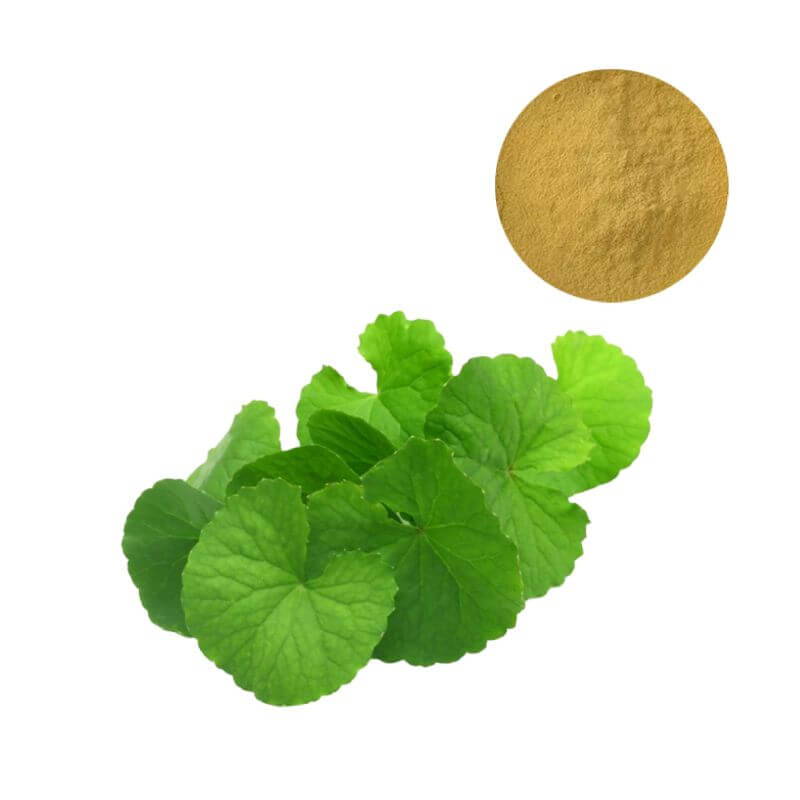
Gotu Kola Extract Powder
| Product Name | Gotu Kola Extract Powder (Centella Asiatica) |
| CAS Number | 84696-21-9 |
| Appearance | Yellow-brown to light yellow fine powder |
| Purity | 10%, 20%, 40% Total Triterpenes; 10% Asiaticoside (by HPLC) |
| Packaging | 1 kg/bag, 5 kg/bag, 25 kg/drum |
| MOQ | 1 kg |
Gotu Kola Extract Powder (10%-40% Total Triterpenes): Unlocking Standardized Efficacy for Cognitive & Skin Health Formulations
For brands developing evidence-based supplements or cosmeceuticals, the gap between traditional herbal reputation and batch-to-batch clinical reliability remains a core challenge. A premium bulk Gotu Kola Extract Powder requires a verifiable chemical fingerprint. Standardized to 10%, 20%, or 40% total triterpenes (asiaticoside, madecassoside, asiatic acid, madecassic acid) via HPLC, Gotu Kola (Centella Asiatica) Extract Powder provides that missing link. This ingredient transforms a legacy botanical into a predictable, quality-controlled functional component for nootropic, anti-aging, and skin barrier support applications. From a brand differentiation standpoint, a verified total triterpenes profile turns a commodity herb into a science-backed asset that commands premium pricing and defends against copycat formulations.
Quality Benchmarks: What Defines a Premium Gotu Kola Extract for Global Compliance
When sourcing bulk Gotu Kola Extract Powder raw material, the concentration of total triterpenes—not just the extract ratio—determines both efficacy and regulatory acceptance. Premium ingredients typically feature a clear HPLC-verified content of the four key actives. A 10% grade offers a cost-effective entry for general wellness blends, while 20% and 40% grades support targeted cognitive or skin health products with higher bioactivity per capsule. From a compliance standpoint, standardized extracts simplify the documentation needed for NDI notifications (US) or Novel Food dossiers (EU). For procurement teams, this directly translates to reduced risk of batch rejection and smoother market access. Key sourcing considerations include:
- Full Certificate of Analysis (COA) – including individual triterpene breakdown, not just total percentage.
- Heavy metal limits – Pb ≤2.0 mg/kg, As ≤1.0 mg/kg, Cd ≤1.0 mg/kg, Hg ≤0.1 mg/kg (meeting USP and EU thresholds).
- Microbial purity – TAMC ≤1,000 CFU/g, TYMC ≤100 CFU/g, absence of E. coli, Salmonella, and Staphylococcus aureus.
A 12-week randomized, double-blind, placebo-controlled trial (n=112) showed oral Centella asiatica extract (200 mg/day) reduced average wrinkle depth by 11.1% (Nutrients, 2026; doi: 10.3390/nu18101505); a Phase 1 pharmacokinetic trial confirmed plasma detectability of triterpene aglycones (asiatic acid and madecassic acid), while parent glycosides were absent in plasma (Frontiers in Pharmacology, 2023; doi: 10.3389/fphar.2023.1228030). For formulators, this human data provides a solid foundation for product liability files. Selecting a supplier that provides batch-specific COA with residual solvent and pesticide screens directly reduces the likelihood of import alerts or retail partner rejections. This level of purity documentation means brand developers can bypass costly re-testing and reduce time-to-market by several weeks, directly improving R&D efficiency.
Formulation in Practice: Stability, Synergy & Delivery Solutions
Incorporating wholesale Gotu Kola Extract Powder into finished products requires attention to its physicochemical behavior. The powder is water-soluble (≥95% through 80 mesh), making it suitable for capsules, tablets, stick packs, and even ready-to-mix beverages. However, the triterpene glycosides (asiaticoside, madecassoside) are heat-sensitive; processing conditions should be maintained below 70°C during wet granulation, as degradation is more temperature-dependent than pH-dependent. Practical recommendations for formulators:
| Dosage Form | Recommended Addition | Key Stability Consideration |
|---|---|---|
| Hard capsules / tablets | 50-200 mg per serving (based on total triterpenes target) | Low humidity (<45% RH) during encapsulation prevents clumping. |
| Functional beverages (dry mix) | 100-300 mg per stick pack | Avoid direct contact with ascorbic acid in high concentration; use separate pre-blend. |
| Topical creams / serums | 0.5-2% w/w | pH 5.5-6.5 optimal; triterpenes precipitate below pH 4.0. |
For cognitive health formulas, pairing Gotu Kola extract with Bacopa monnieri (standardized to bacosides) (50:50 ratio) provides complementary pathways—Bacopa enhances acetylcholine activity while Centella supports cerebral blood flow via triterpene-mediated eNOS modulation. For skin health, co-formulation with hydrolyzed bovine collagen (2:1 extract to collagen) has been shown to improve dermal matrix synthesis. This enables unique multi-ingredient blends that are harder for competitors to copy. The 40% total triterpenes grade is preferred for premium serums and clinical-dose supplements because it reduces excipient load and allows smaller capsule sizes—improving patient compliance.
Market Trends: Positioning Your Gotu Kola-Based Product for Cognitive and "Skin-from-Within" Segments
Consumer interest in adaptogens and brain health continues to rise, but differentiation now comes from clinical substantiation and clean labels. Two high-growth white spaces for Gotu Kola extract are:
- Stress & focus blends – Targeting "corporate warriors" and aging adults. A product positioned as "cortisol support + mental clarity" can leverage the herb's traditional use for nervous system tonic.
- Edible beauty / skin resilience – With the global collagen market saturating, brands seek botanical alternatives that boost endogenous collagen synthesis. Gotu Kola's triterpenes upregulate Type I collagen production, offering a science-backed "skin from within" angle.
Premium positioning requires transparent labeling. Instead of "proprietary blend," listing "Centella asiatica extract (standardized to 40% total triterpenes)" signals quality to educated consumers. For brands sourcing wholesale Gotu Kola Extract Powder 10% 20% 40% Total Triterpenes, the availability of three purity grades allows tiered product lines: an entry-level wellness shot (10%), a mid-range focus gummy (20%), and a high-efficacy clinical capsule (40%). This grade flexibility supports A/B testing and market segmentation without re-engineering the entire supply chain. Additionally, the 2026 RCT (n=112) provides a unique biomarker story for skin anti-aging claims—reduced average wrinkle depth and volume—a detail that regulatory and marketing teams can use to differentiate their product on shelf. From a consumer retention perspective, a biomarker-backed claim directly increases perceived product credibility, which historically correlates with higher repurchase rates in the nutraceutical segment.
Mitigating Risk: The Checklist for Sourcing Gotu Kola Extract Powder
Even with a well-defined specification, supplier variability can destroy formulation consistency. A robust sourcing strategy evaluates three hidden risk areas:
- Authenticity & adulteration – Does the COA include HPLC chromatogram fingerprints? Pure triterpene profiles should match reference standards for asiaticoside and madecassoside.
- Supply chain transparency – Can the supplier trace the raw herb back to the growing region? Centella asiatica from different climates shows up to 30% variation in triterpene ratios.
- Regulatory documentation readiness – For US exports, request a "dietary supplement" statement and evidence of cGMP compliance. For EU, the January 2026 EU Novel Food Catalogue classifies Centella asiatica extracts as "not yet authorized – novel food", while whole-leaf forms (stem, flower, leaf) remain listed as "not novel".
A vendor scorecard for a Gotu Kola Extract Powder supplier should prioritize batch-to-batch HPLC data, heavy metal results below the actionable limits, and a documented HACCP plan. An often-overlooked detail: moisture content. Loss on drying should be ≤5.0%; higher moisture accelerates degradation of triterpene glycosides during long-term storage. A reliable distributor will provide these documents within 24 working hours. This checklist helps avoid the hidden costs of failed finished product stability tests, regulatory rejection, or consumer complaints due to inconsistent efficacy. Adopting a total cost of ownership (TCO) lens, paying a modest premium for verified specifications prevents catastrophic batch failures—each rejected batch can wipe out the savings from cheaper, unverified material ten times over.
Next Steps for Your Product Development: From Specification to Market
You now have a clear technical roadmap: selecting the right total triterpenes grade, understanding stability constraints, leveraging clinical safety data, and vetting suppliers against objective quality criteria. Test the ingredient in your formulation matrix. A small-scale sample allows you to verify solubility, flavor profile, and compatibility with your other actives before committing to production volumes. Request your complimentary sample & complete technical dossier – including batch-specific COA, HPLC chromatogram, and stability report. Formulation support is available to help achieve the ideal release profile for your capsules, gummies, or functional beverages.
Frequently Asked Questions
Share this product
Related Products
Ready to get started?
Contact our team for technical specifications, pricing, and customized solutions.