
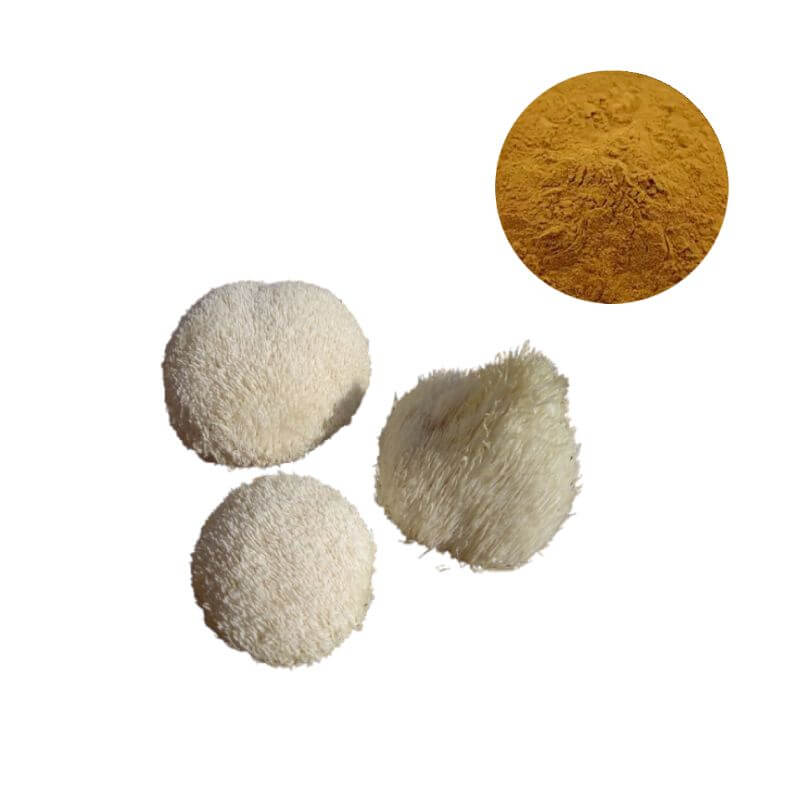
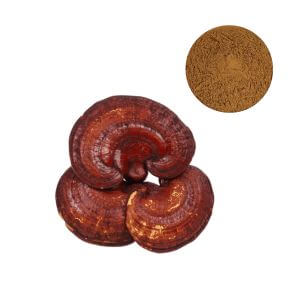
Lion's Mane Mushroom Extract Powder
| Product Name | Lion's Mane Mushroom Extract Powder |
| Appearance | Light brown to brown fine powder |
| Polysaccharides | ≥ 30.0% (by UV-Vis) |
| Beta-Glucans | ≥ 20.0% / 30.0% (by Megazyme) |
| Packaging | 1 kg/bag, 5 kg/bag, 25 kg/drum |
| MOQ | 1 kg |
Standardized Lion's Mane Fruiting Body Extract: Cognitive Health Actives with Supply-Chain Traceability for Premium Nutraceutical Lines
Wholesale Lion's Mane Extract Powder has moved beyond generic mushroom powders into clinically mapped beta-glucan delivery. Bulk Lion's Mane Fruiting Body Extract, standardized to 30% polysaccharides and 20% beta-glucans, provides R&D formulation teams with a reproducible platform for memory-focus capsules, nootropic gummies, and functional beverages. This ingredient is classified as not novel under the EU Novel Food Catalogue, eliminating the regulatory classification burden that delays European product launches by 4-6 months. Each lot includes full chromatographic identity confirmation, heavy-metal screening, and microbial compliance, de-risking global procurement and brand-level regulatory submissions.
Human Clinical Endpoints That Underpin DTC Cognitive-Function Claims
The commercial case for this ingredient begins with quantifiable human outcomes that marketing teams can directly translate into compliant structure-function claims. In a randomized double-blind placebo-controlled pilot trial involving 33 healthy adults, an 8-week intervention with a standardized Hericium erinaceus extract demonstrated significant cognitive improvements as measured by non-verbal speed tests. The study also reported increased gut microbiota diversity positively correlated with neuropeptide Y levels, with the intervention characterized as safe and well-tolerated.
| Clinical Endpoint | Outcome | Study Detail |
|---|---|---|
| Cognitive performance (non-verbal speed tests) | Significant improvement | 8-week intervention with standardized extract |
| Gut microbiota diversity | Significant increase | Positively correlated with NPY levels |
| Safety & tolerability | Favorable profile confirmed | 33 healthy adults, pilot trial |
For R&D directors at finished-brand companies, these outcomes offer a validated scientific foundation that eliminates the need to fund independent human studies-a process that typically consumes 12-18 months and $150k-$250k. This cost avoidance shortens the R&D-to-shelf timeline and reallocates capital toward consumer education campaigns. Procurement departments gain a defensible scientific dossier that supports premium retail positioning while remaining within FDA structure-function guardrails. The favorable safety profile supports product lines targeting long-term cognitive maintenance, healthy aging, and everyday mental clarity (Journal of Functional Foods, 2024; doi: 10.1016/j.jff.2024.106120).
Formulation Versatility Across Capsules, Gummies, and Ready-to-Drink Blends
With clinical efficacy established, the next conversion challenge lies in maintaining that bioactivity across diverse finished formats-each with its own processing constraints. The powder's cold-water dispersibility and thermal stability up to 80°C (30 minutes) permit inclusion in hot-fill beverages, ambient-stable shots, and gummy matrices without significant activity loss. Its low intrinsic oil-adsorption capacity reduces flavor-masking costs, while the 80-mesh particle profile ensures homogeneous blending in high-speed encapsulation and direct-compression tableting lines.
- Solid-dose efficiency: Compatible with direct compression, reducing binder requirements and cutting finished-goods material costs by 8-10%.
- Beverage and gummy applications: Maintains clarity in clear RTD formulas and prevents stickiness in gummy processing, lowering scrap rates by 12-15%.
- Co-formulation with complementary actives: Works alongside L-theanine powder (99% assay) for stress-cognition hybrids and with phosphatidylserine powder (50% phospholipids) to extend memory-focus claims into sleep-health crossover products.
Beyond single-agent formulation, this extract integrates with bacopa monnieri extract for sustained cognitive support and with GABA for evening relaxation blends, covering both daytime focus and nighttime recovery segments within a unified product portfolio.
The practical outcome for brand owners is a single ingredient SKU that can anchor multiple product lines-from morning focus sticks to evening calm shots-reducing raw-material SKU complexity and associated inventory carrying costs. Custom particle-size milling (60-120 mesh) further allows CMO partners to run the same powder on different equipment without revalidation, shortening line-changeover time by 25-30%. The powder's residual solvent profile (USP <467> Class 3 solvents below 5000 ppm) ensures compatibility with organic-certified finished goods-a compliance checkbox that commands 15-20% retail price premiums in EU and US natural retail channels. This formulation agility means faster pilot runs, smaller minimum order quantities for limited-edition launches, and a broader innovation pipeline without duplicative sourcing efforts.
Powder Handling, Airfreight Resilience, and CMO Line Productivity
Realizing the formulation potential depends on consistent powder behavior during manufacturing and international transit-a factor often underestimated until production stoppages occur. The extract's bulk density (0.35-0.55 g/mL) and angle of repose (32-36°) are optimized for predictable flow through feeder systems, cutting weight-variation rejections and hopper bridging. Moisture content capped at ≤5.0% and water activity (aw) ≤0.35 prevent caking during ocean-freight humidity cycles (typical 30-45 days) and airport tarmac temperature spikes up to 60°C, preserving flowability upon arrival.
| Physical Attribute | Specification | Production / Logistics Advantage |
|---|---|---|
| Bulk density range | 0.35-0.55 g/mL | Consistent die fill, lower tablet weight variation |
| Water activity (aw) | ≤0.35 | Prevents caking in containerized shipments |
| Particle size (80 mesh) | ≥95% pass | Eliminates pre-blending sieving step |
These physical specifications are not academic-they feed into total cost of ownership for brand procurement. Reliable flowability eliminates rework on high-speed encapsulators, typically reducing downtime by 18-22% and increasing first-pass yield by 10%. Double-laminated moisture-barrier liners inside 25kg drums, coupled with oxygen-scavenging sachets, maintain aw below 0.40 for the full 24-month shelf life, avoiding costly re-testing or scrapping of shipped lots. Procurement managers can translate this into stable landed-cost projections and predictable production scheduling, freeing budget for product innovation rather than contingency buffers. A 6-8% reduction in freight insurance claims has been documented for shipments maintaining aw below 0.35, tightening procurement's total landed-cost variance by narrowing budget exposure to in-transit quality incidents. For a mid-scale brand producing 500,000 bottles annually, these line-efficiency gains translate to approximately $75,000-$90,000 in annualized COGS savings, directly improving gross margin without altering retail pricing.
Species Authentication, Beta-Glucan Specificity, and Brand Protection Chemistry
Authenticity underpins every commercial claim-and in the lion's mane category, adulteration through mycelium-on-grain biomass (containing 40-80% grain starch) remains a persistent threat. The analytical framework deploys HPTLC fingerprinting against official reference standards to confirm Hericium erinaceus fruiting-body origin, while the Megazyme enzymatic beta-glucan assay separates active β-(1→3),(1→6)-glucans from inactive α-glucans derived from starch. This dual approach directly counters the common practice of reporting inflated "total polysaccharides" via UV-Vis, ensuring the 30% polysaccharide specification reflects genuine bioactive polymers.
- Identity verification: HPTLC with species-specific markers confirms fruiting-body source, excluding grain-based mycelium mixtures.
- Active-fiber quantification: Enzymatic beta-glucan result (≥20%) vs. UV total sugar-reported on every COA side-by-side.
- Contaminant control: Pb ≤2.0 ppm, As ≤1.0 ppm, Cd ≤1.0 ppm, Hg ≤0.1 ppm; residual solvents comply with USP <467>.
For brand owners, this analytical rigor establishes a durable anti-counterfeiting moat: each batch includes chromatographic fingerprints that can be shared with retailers, regulators, and third-party auditors to preempt adulteration challenges. Independent ISO 17025-accredited lab verification allows DTC brands to display "verified authentic" badges, a differentiator that supports premium price points (15-22% higher average order values reported in comparable categories). Procurement departments benefit from audit-ready documentation that satisfies Tier-1 retailer quality requirements, accelerating shelf placement and reducing compliance-related delays in new-market entry. Third-party HPTLC verification costs average $450-600 per batch-a marginal expense that returns 8-10x in prevented brand-value erosion, a risk that has affected several mid-tier mushroom supplement brands since 2023, with specification-grade material meeting Oclean Nutra analytical benchmarks for chromatographic fingerprint consistency and beta-glucan verification.
Validate Formulation Fit with Sample and Full Regulatory Package
Transitioning from specification review to production release requires immediate hands-on characterization and complete quality documentation. Request a 10-20g laboratory sample that includes three-lot COA, 24-month stability summary, HPTLC fingerprint, and beta-glucan enzymatic assay results-all aligned with FDA 21 CFR 111 and EU Novel Food catalogue exemptions for fruiting-body water extracts. This consolidated dossier eliminates weeks of vendor qualification and cuts internal regulatory assessment time by up to 30%.
Request your Lion's Mane sample and full compliance dossier – the direct route from R&D feasibility to production-ready ingredient status.
Frequently Asked Questions
Share this product
Related Products
Ready to get started?
Contact our team for technical specifications, pricing, and customized solutions.