
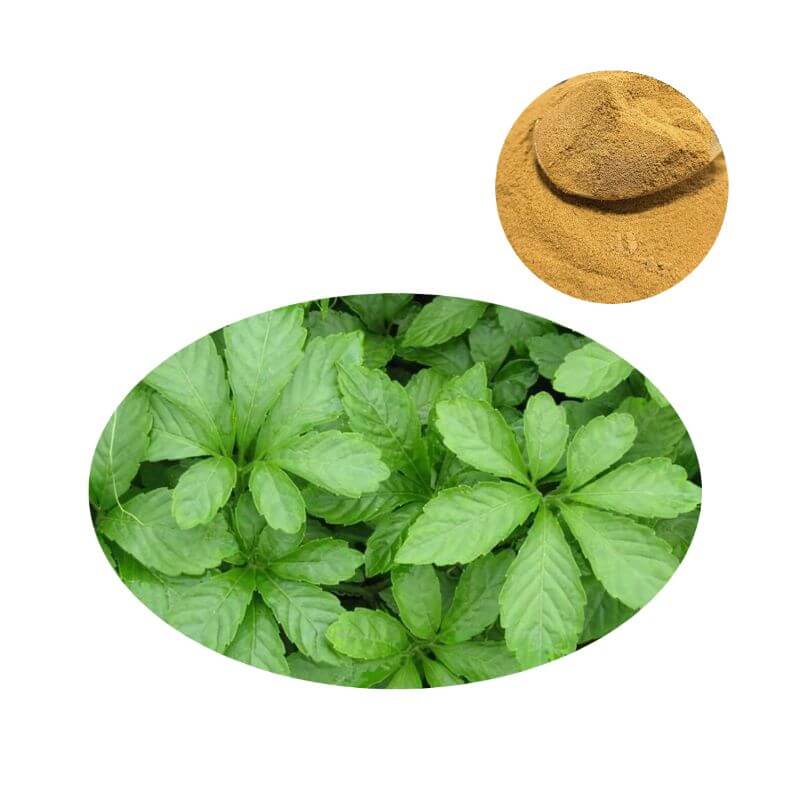
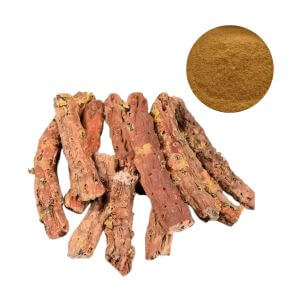
Gynostemma Extract Powder
| Product Name | Gynostemma Pentaphyllum Extract Powder |
| CAS Number | 15588-68-8 |
| Appearance | Brown yellow to light yellow fine powder |
| Purity | 40%, 80%, 98% Gypenosides (UV) |
| Packaging | 1 kg/aluminum foil bag; 25 kg/cardboard drum |
| MOQ | 1 kg |
Gynostemma Extract Powder (40-98% Gypenosides): A Clinically Supported Adaptogen for Metabolic & Cognitive Health Formulations
Formulating for sustained energy, metabolic balance, or stress resilience often requires blending multiple single-target ingredients—each adding cost and complexity. For brands seeking a scientifically backed, multi-functional botanical, Gynostemma Extract Powder offers a solution. Standardized to 40%, 80%, or 98% gypenosides by UV, this ingredient supports cardiovascular function, anti-fatigue, and antioxidant defense. Key sourcing considerations include batch-specific CoA and GMP certification, ensuring consistency across production runs. Selecting a higher-purity grade (80% or 98%) directly enables smaller capsule sizes and premium label claims, turning clinical science into a tangible competitive advantage.
Clinical Evidence for Fatigue Resistance: From Human Data to Formulation Strategy
A 2023 double-blind, placebo-controlled randomized trial in 100 healthy adults evaluated a Gynostemma pentaphyllum extract containing gypenoside L. After 12 weeks, significant improvements were observed: increased VO₂ max (p=0.007), elevated O₂ pulse (p=0.047), reduced free fatty acids (p=0.042), and lower subjective fatigue scores (p<0.05) (doi: 10.1002/ptr.7801). From a strategic formulation perspective, this human data confirms that a single standardized botanical can simultaneously support physical endurance, metabolic efficiency, and mental fatigue resistance—replacing multiple isolated actives like caffeine, BCAAs, and L-carnitine. For procurement teams, this directly translates to a simplified ingredient list, cleaner labeling, and lower supply chain complexity. The study also reported increased eNOS levels, suggesting vascular benefits that complement cardiovascular health formulations. For brand owners, leveraging this human efficacy data means shorter consumer validation cycles and higher confidence in clinical marketing claims, directly impacting repeat purchase rates.
Key clinical takeaways for formulation planning:
- Dose range used: The effective daily intake corresponds to approximately 450 mg of dry extract (standardized to gypenosides).
- Observed onset: Benefits were measurable within 4–8 weeks, supporting both acute and chronic product positioning.
- Safety profile: No serious adverse events were reported, confirming suitability for long-term supplementation.
These findings directly inform dosage and claim strategies. For brands targeting active nutrition, nootropic blends, or healthy aging, bulk Gynostemma Extract Powder offers a research-backed foundation.
Quality Benchmarks: Beyond Purity—Why Standardization and Contaminant Control Matter
Not all Gynostemma Extract Powder is equivalent. Premium ingredient suppliers provide three purity tiers—40%, 80%, and 98% gypenosides—but several hidden parameters determine real-world performance and regulatory acceptance. Key quality attributes to verify in a COA include:
- Loss on Drying (≤5.0%): Excess moisture promotes caking, microbial growth, and hydrolysis of active saponins.
- Ash Content (≤5.0%): Elevated ash suggests poor extraction cleanliness or inorganic adulterants.
- Heavy Metals: Premium lots maintain Pb ≤2.0 mg/kg, As ≤1.0 mg/kg, Cd ≤1.0 mg/kg, Hg ≤0.1 mg/kg—essential for US and EU market access.
From a strategic formulation perspective, these specifications directly impact finished product stability. A 2025 comprehensive review of gypenosides highlights that lack of extract standardization remains a major translational hurdle (doi: 10.3389/fphar.2025.1705946). For procurement teams, this translates to a clear mandate: sourcing from a GMP-certified Gynostemma Extract Powder distributor that provides full microbial testing (including Pseudomonas aeruginosa) and residual solvent analysis reduces regulatory filing risks and custom holds. Practically speaking, requesting batch-specific CoA with HPLC fingerprinting—even for UV-assayed material—adds an extra layer of quality assurance that distinguishes reliable suppliers from commodity traders. Manufacturers that enforce strict heavy metal and residual solvent limits effectively eliminate the #1 cause of finished product rejections in international markets, securing shelf access for retail partners.
| Quality Attribute | Premium Specification | Impact on Final Product |
|---|---|---|
| Particle Size | ≥95% through 80 mesh | Ensures uniform blending in tablets and prevents sedimentation in stick packs. |
| Residual Solvents | Complies with USP <467> | Necessary for clean-label claims and avoiding off-notes in beverages. |
| Microbial Limits | TAMC ≤1,000 CFU/g; Yeast/Mold ≤100 CFU/g | Directly affects shelf life and consumer safety. |
For brands exporting to the EU, meeting these heavy metal thresholds is non-negotiable under Regulation (EC) No 1881/2006, directly influencing customs clearance speed and audit outcomes.
Formulation in Practice: Stability, Synergy, and Delivery System Optimization
Successfully incorporating Gynostemma Extract Powder into finished products requires understanding its physical behavior and compatibility. The ingredient is moderately hygroscopic; thus, manufacturing environment controls are critical. For two common delivery formats, practical guidelines are:
- Capsules & Tablets: Use direct compression with microcrystalline cellulose. Keep granulation area humidity below 45% to prevent sticking. For 80% and 98% grades, add 0.5–1% colloidal silica as a flow aid.
- Drink Powders & Stick Packs: Gypenosides are water-soluble, enabling rapid dissolution. However, acidic conditions (pH <4.0) may accelerate degradation over 12 months. Solution: Pair with buffering agents (e.g., sodium citrate) or use moisture-barrier sachets.
An effective adaptogenic synergy pair involves standardized Ashwagandha extract. The combination supports both physical performance (gypenosides) and cortisol modulation (withanolides), covering the full stress-response spectrum. From a strategic formulation perspective, using a bulk Gynostemma Extract Powder at 200–300 mg per serving alongside 150–250 mg of Ashwagandha (5% withanolides) creates a differentiated recovery or daily stress product without over-engineering. This reduces development time and inventory complexity.
It's worth noting that while gypenosides have moderate oral bioavailability, micronization or co-administration with Black Pepper Extract (Piperine) has been explored in adjacent botanical categories—a consideration for premium product lines seeking maximal absorption. The 2025 review emphasizes gypenosides' multi-pathway activity (AMPK, Nrf2/HO-1, and PI3K). For procurement teams, this directly translates to formulation flexibility: the same ingredient can anchor products for metabolic health, sports recovery, or cognitive support, reducing the need for separate inventories.
Mitigating Risk: A Sourcing Checklist for Gynostemma Extract Powder
Selecting a Gynostemma Extract Powder supplier involves more than comparing price per kilogram. Hidden costs from batch rejection, supply interruptions, or failed audits can erase any initial savings. A robust sourcing framework should include:
- Complete traceability: From cultivated whole herb to final powder, with each shipment backed by a batch-specific CoA linking to harvest records.
- Safety stock policy: Supplier maintains minimum 3 months of forecasted demand, reducing your need to carry large, capital-intensive inventory.
- Regulatory documentation: Pre-prepared technical dossiers for US (NDI filing support) and EU (Novel Food compliance) accelerate market access.
- Third-party certifications: GMP, ISO 22000, or organic certification where applicable—verifiable via audit.
From a strategic formulation perspective, choosing a wholesale Gynostemma Extract Powder partner that provides these elements lowers total cost of ownership. You avoid rush-freight premiums, reduce in-house quality control retesting, and minimize wastage from degraded material. For procurement teams, this directly translates to predictable lead times, consistent product quality, and faster time-to-market. A checklist-driven approach transforms sourcing from a transactional purchase into a strategic partnership that protects brand reputation and margins.
Experienced procurement teams also evaluate a supplier's average response time for technical inquiries—24 hours or less indicates robust quality systems and reduces project delays significantly. Adopting a Total Cost of Ownership model that factors in COA reliability and batch-to-batch consistency prevents catastrophic line shutdowns, saving 3-5% of annual raw material spend by avoiding production failures.
Next Steps: Validate Gynostemma Extract Powder in Your Prototype
To move from concept to commercial reality, start with small-scale verification. Request a complimentary sample of the 80% gypenosides grade—the most versatile tier for most applications—plus a complete technical dossier including batch CoA, stability summary, and regulatory guidance for US and EU markets. Our team provides formulation support and documentation within 24 working hours. Request Your Complimentary Sample & Technical Dossier to de-risk your development timeline and ensure compliance from day one.
Frequently Asked Questions
Share this product
Related Products
Ready to get started?
Contact our team for technical specifications, pricing, and customized solutions.