
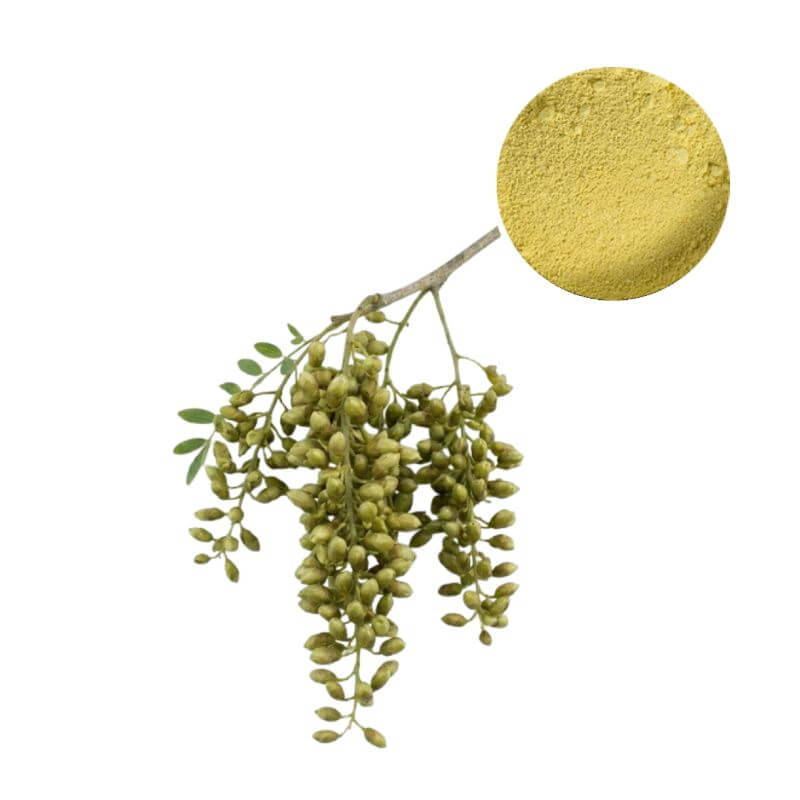
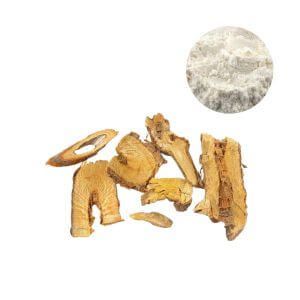
Kaempferol Powder
| Product Name | Kaempferol Powder |
| CAS Number | 520-18-3 |
| Appearance | Fine light yellow powder |
| Purity | 98% min. (by HPLC) |
| Packaging | 1 kg/foil bag, 5 kg/tin, 25 kg/fiber drum |
| MOQ | 1 kg |
Kaempferol Powder: Translating Human Clinical Data into High‑Performance Formulations for Active Nutrition
For supplement brands aiming to differentiate in the competitive active nutrition space, generic antioxidant blends no longer drive consumer conviction. What matters today is scientific credibility—ingredients supported by recent human clinical data that translate directly into measurable consumer benefits. Kaempferol powder, a flavonol derived from Sophora japonica L., offers precisely this advantage. Standardized to ≥98% purity by HPLC and validated through randomized controlled trials, it enables formulators to build products with evidence‑backed claims around endurance, recovery, and everyday vitality. While many brands struggle with the saturated “general antioxidant” market, kaempferol provides a rare bridge between mitochondrial efficiency and circadian health, allowing for premium pricing based on specialized metabolic claims rather than commodity competition. The following analysis outlines how sourcing high‑purity kaempferol—combined with rigorous quality documentation—supports both formulation excellence and regulatory confidence.
Clinical Validation: From Human Data to Consumer‑Facing Claims
For brands building evidence‑based product narratives, the translation of clinical data into meaningful consumer claims is the critical link. Kaempferol’s scientific foundation now rests on robust human studies. A 2024 crossover trial involving 33 healthy urban workers demonstrated that 14 days of daily supplementation with 10 mg kaempferol significantly increased daily step count, reduced heart rate across multiple activity levels, and improved sleep quality (RMSSD) (doi: 10.3389/fnut.2024.1386389). A second trial in well‑trained male athletes showed that a single 10 mg dose lowered oxygen uptake during submaximal exercise and extended time to exhaustion at maximal effort (doi: 10.14814/phy2.70369).
Practically speaking, this evidence translates into three clear formulation anchors:
- Endurance economy – lower oxygen cost during sustained activity supports claims for “improved exercise efficiency”;
- Cardiopulmonary load reduction – relevant for both athletic recovery and everyday wellness positioning;
- Recovery metrics – sleep quality data enables evening‑use product concepts with dual benefits.
For procurement and R&D teams, having peer‑reviewed human data on a botanical ingredient significantly reduces the risk of launching products that fail to resonate with evidence‑demanding consumers or retailers. It provides the substantiation needed for regulatory filings and third‑party verification programs. From a procurement strategy perspective, this dual‑clinical data (acute performance + chronic recovery) allows a brand to anchor multiple SKUs—from pre‑workouts to evening recovery blends—using a single validated raw material. This significantly optimizes inventory turnover and reduces the cumulative cost of separate ingredient qualifications.
Quality Benchmarks: What Experienced Sourcing Teams Look For
For brands sourcing bulk kaempferol, the difference between a commodity ingredient and a premium one lies in the depth of quality documentation. Experienced procurement teams evaluate beyond the purity percentage, focusing instead on traceable specifications that ensure batch‑to‑batch consistency and multi‑market compliance. A GMP‑certified kaempferol powder is typically defined by:
| Quality Parameter | Typical Specification | Business Relevance |
|---|---|---|
| Assay (HPLC) | ≥98.0% | Enables precise dosing in small‑volume capsules, reducing excipient burden and improving consumer adherence. |
| Residue on Ignition (Ash) | ≤2.0% | Indicates clean processing—essential for clean‑label positioning and minimizing potential contaminants. |
| Heavy Metals (Pb, As, Cd, Hg) | ≤1.0 mg/kg each (ICP‑MS) | Meets stringent global safety thresholds, allowing seamless market entry across US, EU, and Asian jurisdictions. |
| Microbiological Purity | ≤1,000 CFU/g TAMC | Prevents stability failures and protects brand reputation from microbial contamination risks. |
From a supply chain perspective, the availability of a batch‑specific Certificate of Analysis (COA) that includes these parameters—with test methods such as USP <281> for ash and USP <61>/<62> for microbiology—is non‑negotiable. For brands planning international distribution, this documentation serves as the foundation for regulatory dossiers and reduces the hidden costs of repeated qualification testing. Experienced production managers recognize that 98% purity is not just about labeling; it is about reducing “excipient burden.” Smaller dose requirements (10 mg) allow for smaller capsules, which directly translates to lower shipping costs and higher consumer compliance—key metrics for long‑term brand loyalty.
Formulation in Practice: Stability, Synergy & Development Decisions
For formulators, understanding how an ingredient behaves under real‑world manufacturing conditions is as important as its clinical profile. Kaempferol’s physicochemical properties—a flavonoid with limited water solubility—dictate its optimal applications. From a development efficiency standpoint, it is best suited for:
- Dry‑filled capsules – direct blending with excipients such as microcrystalline cellulose (MCC) or pre‑gelatinized starch, minimizing processing steps;
- Liposomal or emulsion systems – to enhance bioavailability in liquid formats, particularly for premium product lines;
- Tablets – with appropriate disintegrants, though granulation steps should avoid high‑shear conditions that may degrade the compound.
A key synergy consideration: kaempferol pairs effectively with other flavonols (e.g., Quercetin Dihydrate) and with ingredients like Curcumin Extract, as they act through complementary antioxidant pathways (NRF‑2 activation, NF‑κB modulation). The typical starting dose derived from clinical studies is 10 mg per serving, though brands targeting acute performance applications may consider higher doses up to 50 mg.
Stability practices directly impact total cost of ownership: kaempferol powder should be stored in airtight, light‑resistant containers below 25 °C with relative humidity <60%. During manufacturing, controlling humidity in the blending environment (ideally <45% RH) preserves potency throughout the 24‑month shelf life. Formulators using kaempferol in drink powders should employ microencapsulation or cyclodextrin complexes—a design choice that, while adding upfront cost, reduces the risk of sedimentation and consumer dissatisfaction.
Market Positioning & Supply Chain Integrity: Strategic Considerations
For brands evaluating kaempferol for their product pipeline, two distinct market opportunities emerge. First, the ingredient’s dual support for endurance and everyday physical activity enables product concepts that span from “daily metabolic support” blends (paired with green tea extract or CoQ10 Ubiquinone) to clean‑label pre‑workout formulations targeting stimulant‑sensitive consumers. Second, the sleep quality data opens a pathway into evening‑use recovery complexes—a category where evidence‑based botanicals are increasingly sought.
From a procurement risk perspective, the reliability of the kaempferol supply chain is as critical as the ingredient’s efficacy. Key considerations for an objective sourcing evaluation include:
- Botanical origin transparency – consistent sourcing from Sophora japonica ensures a stable flavonoid profile, reducing variability that could affect finished product consistency;
- Manufacturing compliance – GMP‑certified facilities with audited cleaning and cross‑contamination controls protect against adulteration risks;
- Documentation readiness – immediate availability of COA, allergen statements, and non‑GMO declarations accelerates product launch timelines;
- Supply chain redundancy – multiple harvest regions or inventory buffers mitigate crop‑related fluctuations, a critical factor for brands with fixed launch schedules.
A strategic supplier evaluation should include a “Documentation Readiness” audit. In a globalized market, the ability to provide a complete Technical Dossier within 24 hours is often the only difference between a successful product launch and a multi‑month regulatory delay. Choosing a partner that provides full traceability and a responsive technical support team reduces the hidden costs of quality failures and supply delays—ultimately protecting your brand’s launch timeline and market reputation. For brands planning multi‑SKU portfolios, this supply chain resilience becomes a competitive advantage in itself.
Next Steps: Accelerating Your Kaempferol Formulation Project
Incorporating kaempferol powder into your product pipeline offers a distinct strategic advantage: a rare combination of recent human clinical data, clean botanical origin, and versatile application across sports nutrition, functional foods, and daily wellness supplements. To reduce development risk and accelerate your R&D timeline, we invite you to request a complimentary sample and the complete technical dossier—including the latest COA from a GMP‑certified batch and formulation guidance tailored to your target dosage form. Request your sample and technical dossier today to move from concept to market with confidence.
Frequently Asked Questions
Share this product
Related Products
Ready to get started?
Contact our team for technical specifications, pricing, and customized solutions.