
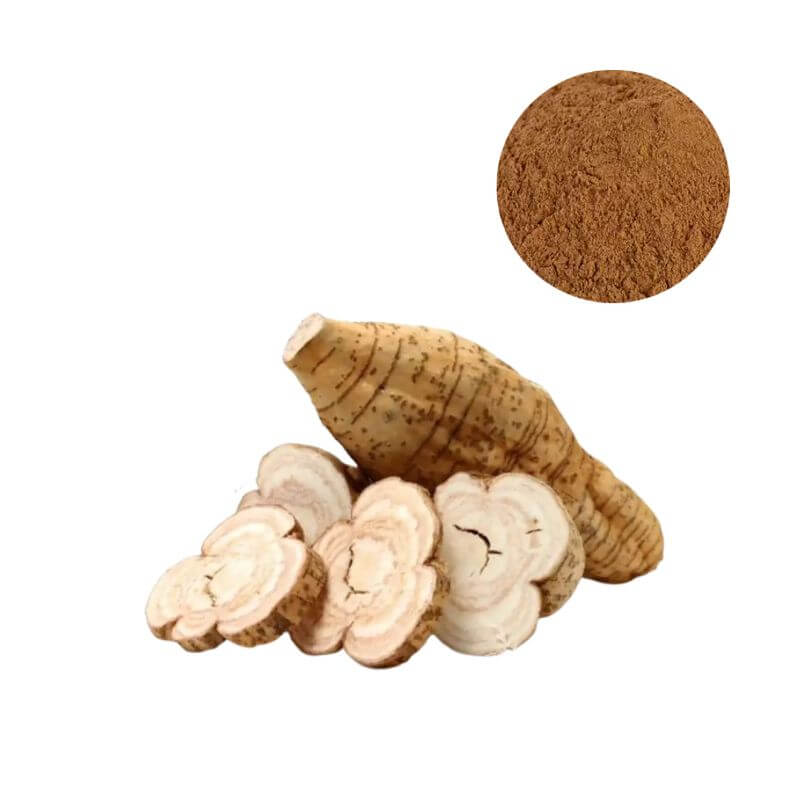
Kudzu Root Extract Powder
| Product Name | Kudzu Root Extract Powder |
| CAS Number | 3681-99-0 (for Puerarin) |
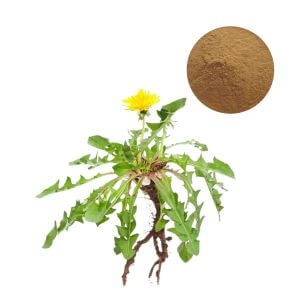
| Appearance | Yellow-brown to off-white fine powder (varies by purity) |
| Purity | 40%, 80%, 98% Puerarin (by HPLC) |
| Packaging | 1 kg/foil bag; 25 kg/paper drum |
| MOQ | 1 kg |
Kudzu Root Extract Powder (40%-98% Puerarin): Precision-Graded Isoflavone for Cardiovascular & Metabolic Health Formulations
For supplement brands and contract manufacturers, differentiating a heart health or metabolic support product increasingly relies on the quality of its active isoflavone backbone. The challenge is not just sourcing puerarin, but securing consistent, traceable purity grades that align with specific formulation goals—whether a cost‑effective functional beverage or a high‑potency capsule line. Premium kudzu root extract powder, standardized by HPLC to puerarin levels of 40%, 80%, or 98%, offers a flexible foundation. Key sourcing considerations include batch‑to‑batch isoflavone profile consistency, heavy metal control (Pb ≤1.0 mg/kg, As ≤1.0 mg/kg), and microbiological compliance (TPC ≤1,000 CFU/g). These parameters, when backed by a comprehensive COA, directly reduce finished product stability risks. Choosing the wrong purity grade for your target dosage form—tablet vs. softgel—often leads to avoidable reformulation delays and lost market windows; matching grade to application is a strategic lever to protect brand launch timelines.
Multi‑Target Mechanisms: Why Puerarin Supports Both Cardiometabolic and Vascular Health
Puerarin, the signature C‑glucoside isoflavone from Pueraria lobata root, has drawn considerable research interest for its ability to modulate several pathways relevant to modern dietary supplements. Unlike single‑action ingredients, puerarin simultaneously addresses inflammation, oxidative stress, and endothelial dysfunction. A 2024 review in Biomedicine & Pharmacotherapy highlights its protective effects on metabolic diseases, including improving insulin sensitivity, reducing hepatic steatosis, and lowering lipid accumulation (doi: 10.1016/j.biopha.2024.117319). From a strategic formulation perspective, this multi‑pathway profile allows brands to create products that support glucose metabolism and cardiovascular function simultaneously—a distinct advantage over single‑mechanism ingredients. Practically speaking, formulations targeting postprandial blood sugar or weight management can leverage puerarin’s AMPK‑mediated effects without requiring multiple actives, simplifying the label and reducing supply chain complexity. This mechanistic breadth translates into formulation flexibility: brand owners can confidently position the same puerarin grade across metabolic, heart health, and even post‑exercise recovery lines, lowering inventory SKUs and accelerating time‑to‑market for each new product variant.
Quality Benchmarks: What Defines a Premium Puerarin Supplier for Bulk Procurement
For procurement teams evaluating bulk kudzu root extract, purity percentage alone is an insufficient metric. Three critical quality dimensions determine real‑world performance:
- HPLC‑verified puerarin content – 40%, 80%, or 98% grades ensure predictable activity. A certified COA must report the exact value, not a range.
- Heavy metal profile – Export‑ready material maintains Pb ≤1.0, As ≤1.0, Cd ≤0.5, and Hg ≤0.1 mg/kg (ICP‑MS). This directly meets EU and US supplement limits, avoiding compliance delays.
- Microbiological stability – TPC ≤1,000 CFU/g and absence of pathogens (E. coli, Salmonella, Pseudomonas) guarantee safe integration into non‑sterile finished products.
It is worth noting that premium suppliers provide a batch‑specific COA within 24 working hours. For brands sourcing certified kudzu root extract powder, this documentation is the only way to verify that the 80% grade ordered matches the lot used in stability studies. From a compliance standpoint, the absence of such traceability has caused more product reformulations than any other single factor.
| Purity Grade | Typical Application | Color / Powder Behavior | Cost‑per‑unit Activity |
|---|---|---|---|
| 40% Puerarin | Functional beverages, low‑cost capsules, solid drinks | Yellow‑brown, free‑flowing | Lowest – ideal for volume formulations |
| 80% Puerarin | High‑potency softgels, small‑tablet supplements | Off‑white, light color | Balanced – premium appearance without 98% cost |
| 98% Puerarin | Research standards, ultra‑high‑concentration capsules, skin care | White to off‑white crystalline | Highest – for differentiation & small batch premium lines |
For procurement teams, this directly translates to a clear grade selection roadmap: 40% for cost‑driven mass market, 80% for value‑added mid‑tier products, and 98% for flagship or clinical‑grade lines. A reliable puerarin supplier will offer all three with consistent residual solvent and ash profiles (ash ≤5.0%, loss on drying ≤5.0%). From a compliance standpoint, each purity grade can be supported with a matching technical dossier, simplifying FDA‑compliant labeling or EU traditional food notifications for your target markets. Having HPLC‑verified COA data for every lot means your quality team can bypass lengthy incoming material validation—directly reducing production lead time by several days and eliminating quarantine‑related holding costs.
Formulation in Practice: Stability, Synergy, and Delivery Solutions for Puerarin
An effective formulation requires more than just adding the powder. Puerarin exhibits moderate water solubility and can be sensitive to prolonged high humidity (>60% RH), which may cause caking or gradual degradation over 24 months. To mitigate this, formulators should:
- Keep environmental humidity below 50% during blending and encapsulation.
- Use desiccant‑lined packaging for bulk storage.
- Avoid direct combination with strong alkaline excipients (pH >9) to preserve isoflavone integrity.
It is worth noting that a simple pre‑blend test with your main excipients at 50% RH for 24 hours can predict caking risk faster than relying solely on supplier stability claims.
Synergy is where puerarin shines. A well‑documented combination includes puerarin with hawthorn extract or CoQ10 for comprehensive cardiovascular support. The table below illustrates a sample two‑active formula concept for a heart health tablet:
| Ingredient | Suggested Inclusion (per serving) | Functional Role |
|---|---|---|
| Kudzu root extract powder (80% puerarin) | 150‑300 mg | Endothelial support, anti‑inflammatory |
| Coenzyme Q10 (ubiquinone) | 100 mg | Mitochondrial energy, antioxidant synergy |
| Vitamin C (as ascorbic acid) | 50 mg | Stabilizes isoflavones, adds immune benefit |
From a strategic formulation perspective, the 80% grade is particularly versatile: its lighter color suits white or transparent capsules, while its high activity allows smaller tablet sizes—directly enhancing consumer compliance. When creating a bulk puerarin‑based blend, always conduct a one‑month accelerated stability study (40°C/75% RH) to identify any unexpected interaction with minerals (e.g., iron or zinc, which may chelate with the isoflavone).
Market Trends & Risk‑Mitigated Sourcing: Positioning Your Puerarin‑Infused Product
The global demand for botanical extracts targeting “healthy aging” and “metabolic resilience” is growing at a CAGR of 8‑9%. Within this space, puerarin offers a rare combination of traditional use and modern clinical validation. A 2024 comprehensive review on cardiovascular applications notes that puerarin’s history of safe use, combined with recent data on its bioavailability enhancement via phospholipid complexes, makes it a prime candidate for next‑generation circulation support formulas (doi: 10.1007/s00210-024-03142-3). Consumer searches for “natural circulation support” and “metabolic wellness” have risen over 30% year‑on‑year in North America, indicating strong pull for puerarin‑based products. For brands, this enables two clear product positioning angles:
- Daily cardiometabolic defense – Combine with berberine or chromium for blood sugar and lipid management.
- Post‑exercise vascular recovery – Market to active consumers as a non‑stimulant circulation booster.
When evaluating a kudzu root extract supplier, procurement managers should verify not only the COA but also the supplier’s ability to provide allergen‑free (non‑GMO, gluten‑free) declarations and a clear chain of custody from Pueraria lobata root to finished powder. Premium partners will offer a free sample (10‑20 g) for pre‑qualification and full technical dossier including stability data. This due diligence directly impacts the total cost of ownership: a single batch failure due to undocumented heavy metal spikes or inconsistent purity can cost a brand upward of $20,000 in finished product recalls and lost retail trust—far outweighing any upfront savings on raw material cost.
Next Steps: Accelerate Your Product Launch with Verified Puerarin Specifications
Choosing the right puerarin grade—40% for cost efficiency, 80% for balanced performance, or 98% for premium differentiation—should be guided by your target price point and finished form. By requesting a batch‑specific COA and a 10‑20 g sample, you can directly test solubility, color impact, and compatibility before committing to bulk quantities. Start your formulation with confidence: Request your complimentary sample & full technical dossier to validate how consistent HPLC‑verified puerarin powder performs in your specific matrix.
Frequently Asked Questions
Share this product
Related Products
Ready to get started?
Contact our team for technical specifications, pricing, and customized solutions.