
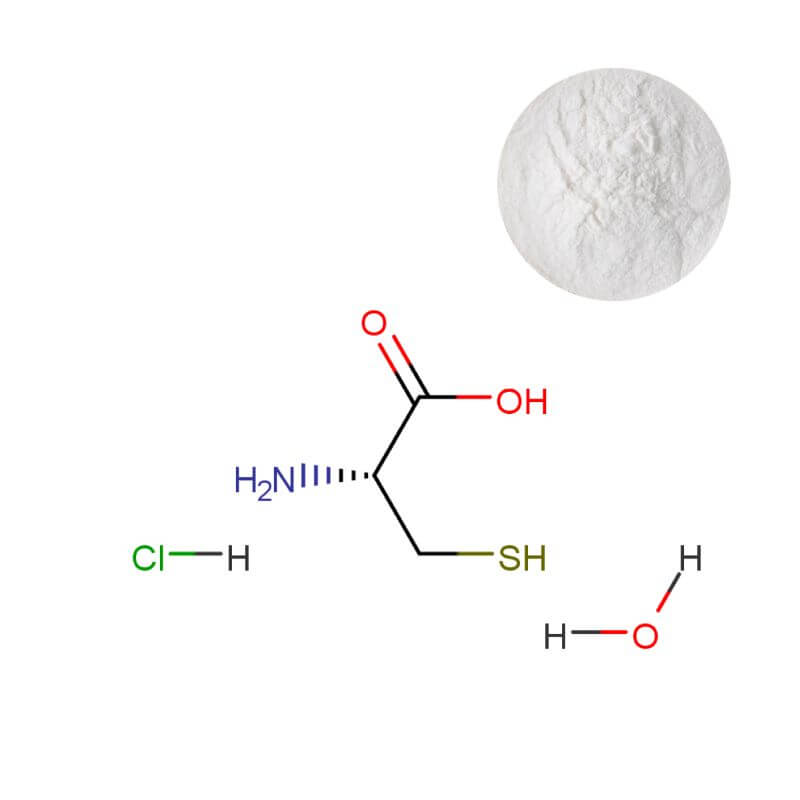
L-Cysteine HCl Monohydrate Powder
| Product Name | L-Cysteine HCl Monohydrate Powder |
| CAS Number | 7048-04-6 |
| Appearance | White to off-white crystalline powder |
| Purity | 99.0% - 101.0% (on dried basis, by titration) |
| Packaging | 25 kg/fiber drum (standard), 1 kg/bag (sample) |
| MOQ | 1 kg |
L-Cysteine HCl Monohydrate 99% Powder: Enabling Stable, Clinically‑Supported Antioxidant & Metabolic Health Formulas
Many antioxidant blends fail to deliver sustained cellular protection because they lack a mechanism to replenish the body’s primary redox buffer. For brands seeking credible differentiation, the solution lies in ingredients that support endogenous defense systems. Premium L‑Cysteine HCl Monohydrate (CAS 7048‑04‑6) addresses this gap as the rate‑limiting precursor for glutathione (GSH). With a 2024 double‑blind trial confirming its metabolic benefits, this ingredient provides both scientific validation and formulation‑friendly stability. From a brand differentiation standpoint, adopting a clinically validated, stable amino acid like this turns a commodity antioxidant into a defensible scientific asset—directly supporting premium pricing and consumer trust.
Why Bulk L‑Cysteine HCl Monohydrate Matters: From Cellular Mechanism to Clinical Evidence
L‑cysteine’s role as the limiting substrate for γ‑glutamylcysteine ligase determines the entire GSH synthesis rate. Unlike direct antioxidants that are consumed in equal molar ratio to free radicals, supporting GSH production creates a self‑replenishing defense network. A placebo‑controlled, double‑blind trial involving 165 healthy vitamin D‑deficient adults demonstrated that six months of co‑supplementation with 1000 mg L‑cysteine plus vitamin D produced:
- Significantly reduced C‑reactive protein (CRP) levels
- Lower neutrophil‑to‑lymphocyte ratio (NLR) – a practical inflammatory marker
- Improved HOMA‑IR and HbA1c, reflecting better insulin sensitivity (doi: 10.1136/bmjnph-2023-000856)
From a strategic formulation perspective, these endpoints allow brands to move beyond vague “antioxidant” claims and instead communicate measurable support for metabolic health and inflammatory balance. For procurement teams sourcing bulk L‑Cysteine HCl Monohydrate, ensuring that each batch matches the assay range (99.0%–101.0% on dried basis) and chiral purity (specific rotation +5.7° to +6.8°) directly replicates clinical efficacy. This level of analytical specificity means formulators can confidently cite the exact dose used in human research, shortening the time from concept to compliant label claims.
It’s worth noting that the monohydrate form (CAS 7048‑04‑6) is the industry standard for supplements due to its superior stability and solubility compared to the anhydrous form (52‑89‑1). This practical choice reduces oxidation risk during long‑term storage.
Critical Quality Benchmarks for a Certified L‑Cysteine HCl Monohydrate Supplier
Sophisticated buyers evaluate more than purity percentages. Key sourcing considerations include parameters that directly impact finished product safety and consistency. The table below contrasts industry‑standard specifications with premium thresholds that mature brands demand.
| Quality Attribute | Premium Specification | Commercial Impact |
|---|---|---|
| Specific Rotation [α]25/D | +5.7° to +6.8° (c=8 in 6N HCl, 25°C) | Confirms correct stereochemistry; deviation indicates synthetic impurities that alter bioactivity |
| Loss on Drying | 8.0% – 12.0% | Verifies monohydrate form; wrong water content changes dosing calculations for water‑sensitive formulations |
| Lead (Pb) / Arsenic (As) | ≤1.0 mg/kg each | Well below USP limits; essential for daily‑use supplements to meet global heavy metal regulations |
| Residual Solvents | Complies with USP <467> | Eliminates hidden liabilities in finished product testing, especially for export to regulated markets |
For procurement teams, this directly translates to lower compliance risk and faster regulatory filings. A reliable L‑Cysteine HCl Monohydrate distributor provides batch‑specific COA covering all these parameters, ensuring each lot arrives with identical quality profiles. Practically speaking, fermentation‑based (non‑animal) sources dominate premium supply chains because they eliminate allergen concerns and ethical issues linked to hair‑derived cysteine—a hidden differentiator for clean‑label brands. From a production efficiency standpoint, consistent chiral purity and tight loss‑on‑drying ranges eliminate batch‑to‑batch adjustments, cutting QC retesting costs and reducing time‑to‑market by weeks.
Third‑party GMP certifications (e.g., FSSC 22000) and full traceability from fermentation substrate to finished powder are expected from serious manufacturers. This reduces the risk of cross‑contamination and enables rapid root‑cause analysis if any deviation occurs.
Formulation Intelligence: Stability, Synergy, and Dose Optimization
L‑Cysteine HCl Monohydrate is water‑soluble but contains a free thiol (–SH) group prone to oxidation. Effective formulation requires managing three interdependent factors:
- pH environment – Oxidation rate is minimal at pH 3.0. For neutral pH products (e.g., ready‑to‑drink beverages), consider enteric coating or co‑encapsulation with reducing agents like vitamin C.
- Oxygen control – Use blister packs or nitrogen‑flushed bottles for solid doses. In liquid formats, add chelators (EDTA) and antioxidants (rosemary extract) to maintain potency.
- Synergistic combinations – The 2024 trial validated L‑cysteine + vitamin D3. Other evidence‑supported pairs include glycine (completes GSH tripeptide) and selenium (GPx cofactor).
From a strategic formulation perspective, starting at 500 mg per serving allows room for combination products while keeping capsule size reasonable. For high‑potency metabolic health formulas, 1000 mg/day aligns directly with the clinical study. The matrix below illustrates recommended ratios for synergistic stacks.
| Co‑ingredient | Rationale | Typical Ratio (L‑Cysteine : Partner) |
|---|---|---|
| Vitamin D3 (2000 IU) | Upregulates GSH and vitamin D‑metabolizing genes; clinically validated pair | 1000 mg : 50 µg |
| Glycine | Completes GSH tripeptide; shown to normalize GSH synthesis in aging populations | 1:1 to 1:2 (by weight) |
| Selenium (selenomethionine) | GPx enzyme cofactor; synergistic antioxidant network | 1000 mg : 55–100 µg |
A common industry mistake is overlooking the impact of headspace oxygen in finished packaging. Even a stable raw material will degrade rapidly if the final container contains ambient air. Nitrogen flushing and desiccant inclusion are inexpensive yet highly effective measures.
Supply Chain Resilience: Total Cost of Ownership for Wholesale L‑Cysteine HCl Monohydrate
Price per kilogram alone never tells the full story. Experienced procurement managers evaluate total cost of ownership (TCO), which includes quality consistency, logistics reliability, and regulatory support. When sourcing bulk L‑Cysteine HCl Monohydrate, consider the following checklist to mitigate long‑term risk:
- Fermentation‑based origin – ensures vegan, halal, and allergen‑free supply chains, avoiding ethical controversies of animal‑derived cysteine.
- Batch‑specific COA with full parameter set – including assay, specific rotation, loss on drying, heavy metals (ICP‑MS), residual solvents (GC), and microbiology.
- Stability data under ICH conditions – 24‑month real‑time and 6‑month accelerated (40°C/75% RH) studies.
- GMP certification and third‑party audits – e.g., FSSC 22000, ISO 22000, or equivalent.
- Supply chain transparency – documented traceability from fermentation substrate to final packaged material, including chain of custody.
For procurement teams, this directly translates to minimized recall risk, fewer production stoppages, and consistent finished product quality. A reliable L‑Cysteine HCl Monohydrate exporter will provide all technical dossiers within 24 working hours, enabling rapid regulatory submissions. Furthermore, dual‑sourcing agreements or safety stock programs can prevent costly line outages during raw material shortages. Adopting this due‑diligence framework effectively insulates your brand from catastrophic batch failures and market access delays—a Total Cost of Ownership perspective that far outweighs any upfront price difference.
It’s worth noting that the monohydrate form (CAS 7048‑04‑6) offers a clear TCO advantage over the anhydrous form for most supplement applications because it is less hygroscopic and does not require specialized low‑humidity manufacturing suites. Only for strict moisture‑controlled systems (e.g., effervescent tablets) does the anhydrous grade justify its higher handling cost.
Next Steps: Accelerate Your Product Development with Technical Dossiers
Integrating L‑Cysteine HCl Monohydrate 99% into your portfolio provides clinically validated metabolic support, formulation flexibility, and supply chain transparency. Whether developing capsules for daily antioxidant defense, powders for post‑exercise recovery, or liquid shots for immune health, this ingredient offers a science‑backed foundation. To de‑risk your next project, request a complimentary sample and complete technical dossier—including batch‑specific COA, stability reports, and regulatory documentation. Request Your Complimentary Sample & Technical Dossier – Use this sample to run your own compatibility studies and confirm performance in your specific delivery system before committing to volume orders. No obligations, just the data you need to formulate with confidence.
Frequently Asked Questions
Share this product
Related Products

Ready to get started?
Contact our team for technical specifications, pricing, and customized solutions.