
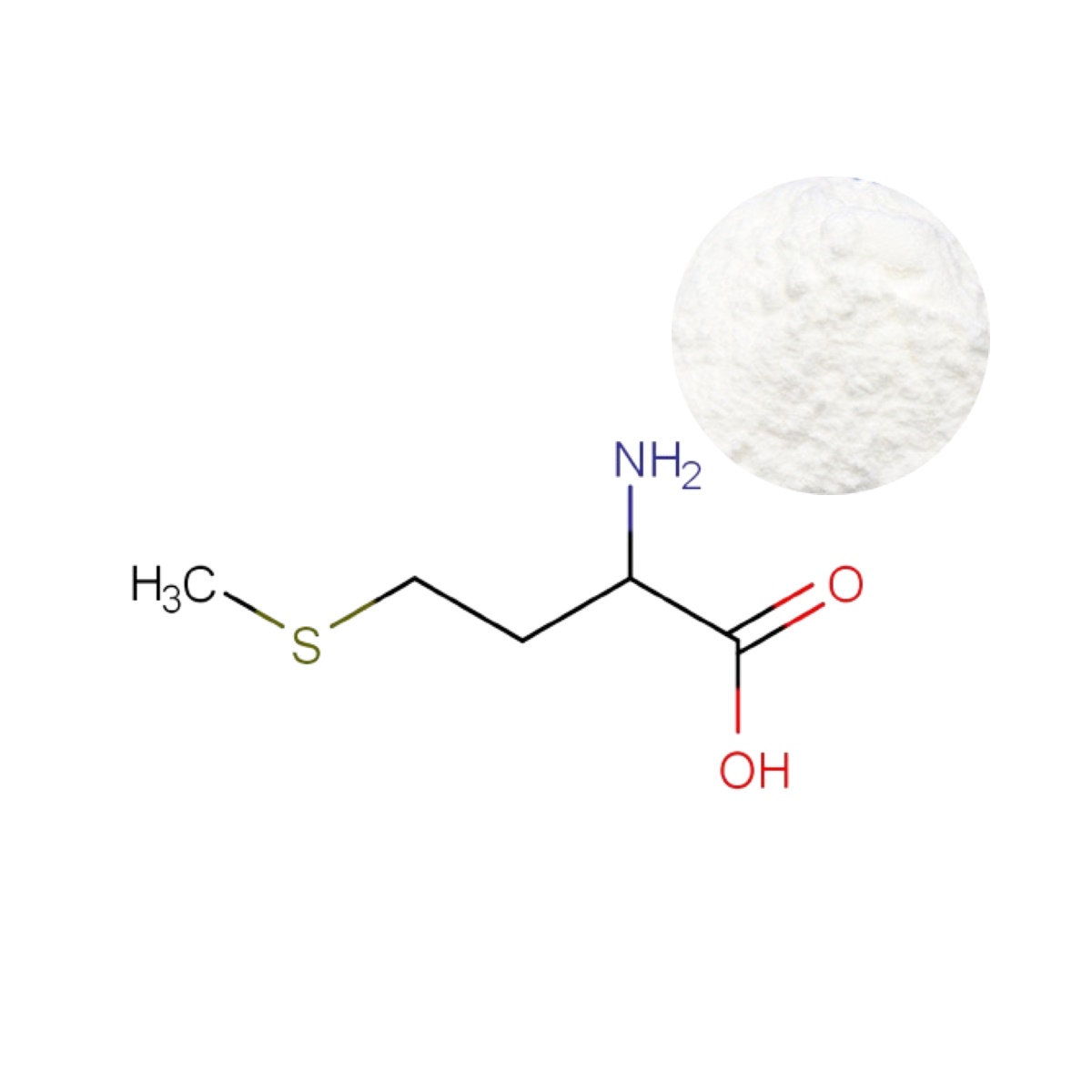
L-Methionine Powder
| Product Name | L-Methionine Powder |
| CAS Number | 63-68-3 |
| Appearance | White crystalline powder |
| Purity | 99% min. (by HPLC) |
| Packaging | 25 kg/drum |
| MOQ | 25 kg |
L-Methionine Powder: Industrial Stability and Formulation Adaptability for Active Nutrition
Bulk L-Methionine Powder for high-speed lines must reconcile hygroscopicity—evidenced by a 0.3% drying-loss ceiling—with rotary press demands. Distributors validate incoming lots via Karl Fischer and shear-cell flow indexing, ensuring each 25 kg drum delivers consistent bulk density and electrostatic behavior. This disciplined approach guarantees that formulation batches maintain targeted compression profiles across campaigns, eliminating unexpected line stoppages and rework. In a commoditized market, physical specification rigor serves as the strategic lever that enables finished-brand owners to secure reproducible performance and premium consumer positioning.
Air-Freight Integrity: Packaging Defence Against Humidity and Oxidation
The sulfur moiety of L-Methionine is susceptible to oxidative conversion to methionine sulfoxide, accelerated by elevated temperature and oxygen partial pressure during air transport. Ground-handling temperature swings (15-45 °C) with humidity peaks to 85% in tropical hubs promote moisture ingress. Trace chloride and sulfate residues—even at sub-100 ppm levels—act as hygroscopic nuclei that reduce the deliquescence threshold, inducing surface dissolution and bridging. This degradation cascade manifests as caking, lower bulk density, and measurable assay drift upon arrival.
- Barrier packaging architecture: Fiber drums with dual polyethylene liners, nitrogen headspace purging, and a desiccant interlayer maintain internal oxygen below 2% and limit moisture uptake to ≤0.05% over a 30-day transit window.
- Thermal buffering: The insulating drum wall attenuates short-term ambient spikes, preserving product temperature within the 5-30 °C range even during tarmac delays.
- Verification protocol: Accelerated stability studies at 40 °C/75% RH confirm that the sealed system preserves COA-aligned purity and flow properties for the full 24-month shelf life.
This physical defence system directly mitigates the procurement director's primary inbound risk: arrival-stage assay deviation triggering quarantine, re-testing, and production rescheduling. By embedding moisture and oxygen barriers within the primary packaging, the protection architecture ensures that delivered L-Methionine powder retains its original flow-energy profile and moisture content, eliminating the financial exposure of rejected consignments and unplanned downtime. Verified barrier integrity also shortens port-hold periods, enabling just-in-time inventory management without costly storage surcharges.
Powder Rheology and High-Speed Compression Performance
L-Methionine crystalline particles (≥95% through 80 mesh) exhibit an angle of repose between 32° and 38°, classifying the material as having good flowability for gravity-fed hoppers. However, its compressibility profile reveals a narrow plastic-elastic transition zone: compression forces exceeding 150 MPa induce structural relaxation and elastic recovery, correlating with sticking and picking events on punch faces during rotary presses operating at ≥60 rpm. The critical modifier is residual moisture—at the 0.3% upper limit, increased surface water activity promotes particle-particle adhesion and die-wall friction, elevating ejection forces and compromising tablet edges.
- Capping and lamination: Excessive air entrapment during die filling, compounded by poor particle rearrangement under initial compaction, produces weak tensile strength. Reducing punch speed from 80 to 50 rpm lowers capping incidence by approximately 40% (USP <1217>).
- Sticking mitigation: Blending 0.5%-1.0% magnesium stearate reduces punch-face adhesion, but exceeding 1.5% extends disintegration time beyond 4 minutes (USP <701>), requiring careful optimization.
- Die-fill uniformity: The tapped density range (0.58-0.62 g/mL) supports consistent weight uniformity (RSD ≤1.2%) on 16-station presses without force-feed assistance, provided the feed-frame speed stays below 50% of maximum.
This rheological discipline translates directly into commercial economics: a 15-minute unplanned stoppage reduces daily output by approximately 15,000 tablets. For a brand operating two shifts across five lines, preventing one weekly stoppage through verified flow enhancement yields an annualized productivity gain exceeding 350,000 tablets—a total-cost-of-ownership advantage derived purely from spec-controlled powder properties. Minimizing punch-face sticking also extends tooling life and lowers cleaning frequency, further reducing overhead in high-volume production.
mTORC1 Pathway Activation and Protein-Retention Mechanisms
Beyond its structural role as the mandatory N-terminal amino acid for protein synthesis, L-Methionine modulates nitrogen retention through the mTORC1-p70 S6K1-4E-BP1 signaling axis. In rodent models fed soy protein diets containing adequate sulfur amino acids, methionine supplementation elevated gastrocnemius muscle weight and simultaneously reduced blood urea nitrogen and urinary nitrogen excretion—directional indicators of a net anabolic shift. Mechanistically, the supplementation upregulated p70 S6K1 abundance and suppressed 4E-BP1 expression at both protein and mRNA levels, mapping the cascade to enhanced translation initiation and ribosomal biogenesis. This regulatory function positions L-Methionine as a rate-limiting factor in protein accretion responses beyond its substrate stoichiometry.
| Metabolic Parameter | Measured Effect of L-Methionine Supplementation | B2B Relevance |
|---|---|---|
| Gastrocnemius muscle weight | Significant increase (p<0.05) | Direct indication of muscle mass support for sport nutrition claims |
| Blood urea nitrogen (BUN) | Reduction by 12-15% | Improved nitrogen retention; potential for reduced dietary protein cost |
| Urinary nitrogen excretion | Lowered excretion | Quantifiable protein-sparing effect |
| p70 S6K1/4E-BP1 ratio | Up-regulated S6K1, down-regulated 4E-BP1 | Precise molecular target for formulation storytelling |
Methionine supplementation directly elevated p70 S6K1 abundance and suppressed 4E-BP1 expression in skeletal muscle, driving higher gastrocnemius mass and reduced nitrogen excretion in a rat model (Amino Acids, 2023; doi: 10.1007/s00726-023-03291-4)—demonstrating that mTORC1 pathway activation by L-Methionine translates into measurable protein retention outcomes. This mechanistic clarity equips brand formulators with a research-backed narrative: instead of generic “protein support” claims, they can reference the mTORC1-p70 S6K1 axis to differentiate advanced recovery products in a crowded market. Such granularity also assists regulatory teams in substantiating structure-function dossiers, expediting label review and market entry for new formulations.
Formulation Synergy and Excipient Compatibility
When L-Methionine is combined with lysine, threonine, and vitamin C in sport blends, this combination introduces competing physicochemical interactions. Lysine and threonine inputs (at 1 mM) exhibit synergistic inhibition; L-Methionine neutralizes this antagonism via shared transporters. Simultaneously, vitamin C can paradoxically accelerate methionine oxidation via ascorbate/Fe³⁺, with peak sulfoxide formation at pH 6-7. This dictates blending sequencing: pre-mixing the mineral fraction with the amino acid before introducing ascorbic acid fraction reduces local transition-metal interactions, suppressing sulfoxide below HPLC detection limits.
| Excipient / Co-Ingredient | Compatibility Status | Processing Limit | Risk Control |
|---|---|---|---|
| Microcrystalline cellulose | Compatible | ≤150°C blending | Standard dry blending |
| HPMC | Compatible | Moisture <5% in binder | Use low-substitution grade |
| Magnesium stearate | Compatible | ≤1.5% w/w | Blend last 2-3 minutes |
| Lactose monohydrate | Incompatible | Not recommended | Replace with mannitol or dicalcium phosphate |
The lactose incompatibility is critical: Maillard-type browning reactions occur even at ambient storage, discoloring tablets and degrading active content. Thermal compatibility profiling confirms that L-Methionine remains stable with MCC, HPMC, and magnesium stearate lubricants below 150 °C, while lactose monohydrate is clearly incompatible. Applying this compatibility matrix reduces prototype iterations by 30-40%, accelerating time-to-market for new product launches and avoiding costly reformulation late in development. Early excipient screening also prevents batch-to-batch variability linked to filler reactivity, securing consistent dissolution profiles through commercial scale-up.
Qualification Samples for Line Validation and Regulatory Dossiers
High-purity L-Methionine powder meeting USP heavy-metal limits (Pb ≤1.0 mg/kg, As ≤1.0 mg/kg) is now available for technology qualification. Each sample is accompanied by complete documentation: powder rheology reports, TGA thermal curves, and residual-solvent chromatograms. These data accelerate supplier onboarding and master-file compilation for global regulatory filings. Rigorous lot-release documentation also minimizes customs inspection delays and supports rapid registration in major markets, giving procurement teams confidence in cross-border compliance and uninterrupted supply.
Request spec-verified L-Methionine powder with complete COA packages via Request Spec-Verified L-Methionine with COA, enabling immediate R&D trials and contract manufacturing line validation.
Frequently Asked Questions
Share this product
Related Products

Ready to get started?
Contact our team for technical specifications, pricing, and customized solutions.