
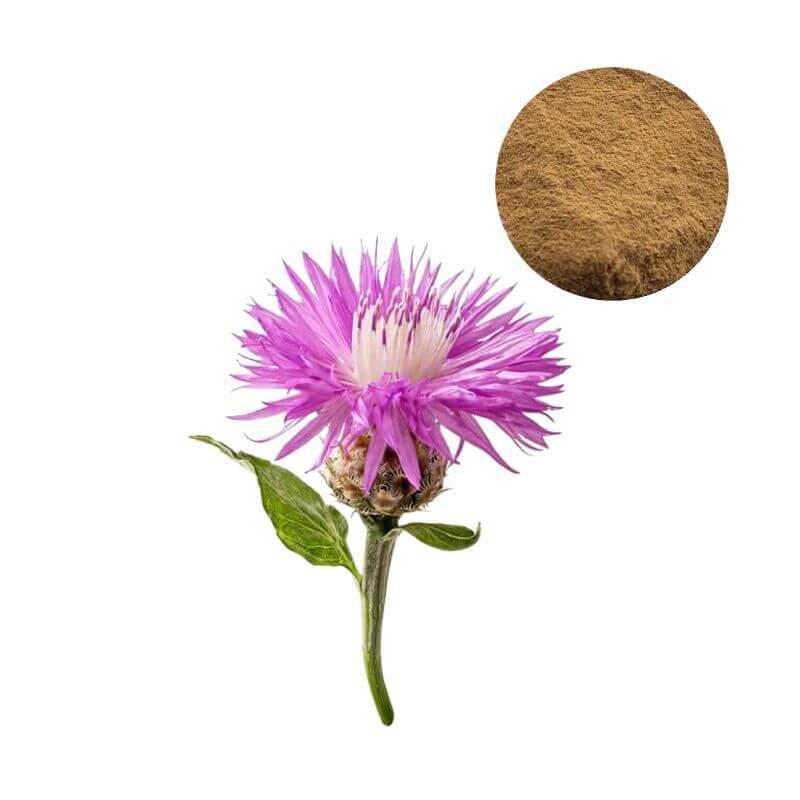
Maral Root Extract Powder
Maral Root Extract Powder (CAS 5289-74-7), Rhaponticum carthamoides root, 10:1 TLC or β-ecdysterone 2.0%/5.0% HPLC, for capsules and tablets.
| CAS Number | 5289-74-7 (20-Hydroxyecdysone) |
| Purity | 10:1 (TLC); β-Ecdysterone 2.0% / 5.0% (HPLC) |
| Source | Rhaponticum carthamoides Root |
| Packaging | 1 kg / aluminum foil bag; 25 kg / fiber drum |
| MOQ | 1 kg |
| Samples | Free sample available |
| Documents | COA, TDS on request; more upon inquiry |
What Form Does Maral Root Extract Powder Come In?
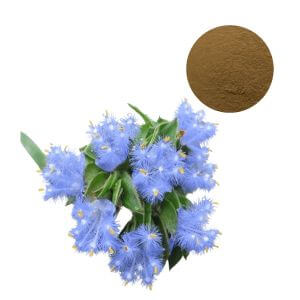
Maral Root Extract Powder is a botanical extract made from Rhaponticum carthamoides root. It comes in two grade families: a 10:1 extract ratio grade with TLC testing, and β-ecdysterone grades at 2.0% or 5.0% by HPLC. The plant also trades as Russian leuzea or maral root, and CAS 5289-74-7 is associated with the marker compound 20-hydroxyecdysone. The powder is brown-yellow to brown and fine enough for capsule and tablet work. First-time buyers usually settle three things before placing a bulk Maral Root Extract Powder order. They decide whether the grade is defined by extract ratio or by a standardized marker, and which test method the release specification will cite. They also check whether the particle size suits the intended dosage form. Those choices shape most Maral Root Extract Powder supplier enquiries.
Where Does Maral Root Extract Come From?
The commercial starting material is the root of Rhaponticum carthamoides, a herb native to the mountains of Siberia and Mongolia. Root is the plant part used across the main commercial forms: dried root, encapsulated dried root and tinctures. A 2025 HPLC–MS/MS analysis of R. carthamoides products covered these as the representative product types (Food Analytical Methods, 2025; doi: 10.1007/s12161-025-02805-y). Wild stands in the Kuznetsk Alatau carry an estimated 202 t of exploitable reserve with a possible annual harvest of 6.73 t, based on resource surveys reported by Nekratova & Shurupova (Key Engineering Materials). Cultivated supply is also established. Industry product documentation lists the botanical origin as cultivated or wild-crafted, and notes cultivation across Russia and Eastern Europe. Root extracts carry flavonoids and phenolic acids such as chlorogenic acid alongside ecdysteroids (Knížková et al., Food Analytical Methods, 2025). Both wild-collected and cultivated root enter the supply chain. Botanical identity, plant part and cultivation status are the practical supply questions for a wholesale Maral Root Extract Powder order.
Maral Root Extract vs. Cyanotis Ecdysterone Sources
Cyanotis arachnoidea and Cyanotis vaga extracts are the closest commercial alternatives because they also carry 20-hydroxyecdysone. The two materials differ in botanical source, ecdysteroid profile and sensory form. A single marker value alone is not a source-identity test.
| Point | Maral root extract | Cyanotis extract |
|---|---|---|
| Botanical source | Rhaponticum carthamoides root | Cyanotis species; roots are among the commercial sources |
| Marker basis | 10:1 ratio; β-ecdysterone 2.0% or 5.0% by HPLC | Often standardized to 20-hydroxyecdysone, including high-percentage grades |
| Ecdysteroid profile | Generally broad profile with many ecdysteroids | Generally narrower ecdysteroid profile |
| Appearance in trade | Brown-yellow to brown fine powder | Often described as pale yellow crystalline powder, odorless |
| Trade naming | Maral root, Russian leuzea | Often sold simply as ecdysterone extract |
Cyanotis species are a reported source of 20-hydroxyecdysone. Their narrower ecdysteroid profile is one important compositional difference from Rhaponticum root. Because a 20-hydroxyecdysone value does not identify the plant behind it, source verification relies on chromatographic fingerprint comparison. 20-hydroxyecdysone 2- and 3-acetate have been proposed as diagnostic markers in chromatographic differentiation of Cyanotis-derived material from spinach-derived material (Hunyadi et al., Scientific Reports, 2016). Appearance and odor differences between the two powders can flag a mismatch at goods-in, but they remain screening clues rather than identity tests. The 10:1 and 2.0%/5.0% grades on this page are tied to Rhaponticum root.
Which Maral Root Extract Powder Grade Fits Your Formula?
Two grade families are available: the 10:1 grade by TLC and the β-ecdysterone 2.0% or 5.0% grades by HPLC. The choice turns on whether the specification is defined by extract ratio or by a standardized marker. It also depends on how much extract the dosage form can carry.
| Grade family | Marker basis | Test method | What it means |
|---|---|---|---|
| 10:1 | Extract ratio | TLC | Ratio grade; marker not separately standardized |
| β-Ecdysterone 2.0% | ≥2.0% 20-hydroxyecdysone | HPLC | Standardized grade |
| β-Ecdysterone 5.0% | ≥5.0% 20-hydroxyecdysone | HPLC | Standardized grade |
A 10:1 grade is specified by the amount of root represented, so the marker is not separately standardized; the actual β-ecdysterone content in a 10:1 lot can vary with the starting root. The 2.0% and 5.0% grades are released against a measured β-ecdysterone content, which provides a defined marker specification for formulation and purchasing decisions. To deliver the same absolute β-ecdysterone amount, the 2.0% grade requires 2.5 times the extract mass of the 5.0% grade. That difference affects capsule fill weight and excipient space. Particle size is ≥90% through 80 mesh for both families. This particle-size specification can support powder handling, while capsule filling or direct compression should be confirmed with formulation trials. Wholesale Maral Root Extract Powder is packed in 1 kg aluminum foil bags or 25 kg fiber drums, with a 1 kg MOQ. Samples are available, and batch COA and TDS can be provided.
Maral Root Extract Powder in Capsules, Tablets and Drinks
Bulk Maral Root Extract Powder suits capsule filling, tablet compression and powder mixes. Limited water solubility shapes clear liquid formats. At ≥90% through 80 mesh, the powder is a fine, free-flowing grade for dry blending. Tablet formulas pair the extract with fillers and glidants to support compression. In water, 20-hydroxyecdysone itself is only sparingly soluble; in an extract powder, this translates to limited aqueous dispersibility unless formulation aids are used. Ethanol-based systems are commonly used to disperse the extract. Formulators may evaluate cyclodextrin complexation or particle-size modification when higher aqueous dispersion is required. For the 2-hydroxypropyl-β-cyclodextrin complex of 20-hydroxyecdysone, complexation has been shown to raise water solubility at 37 °C by 3.0-fold (Meteleva et al., Chemistry of Plant Raw Material, 2023). Ethanol-based and lipid-based delivery systems are among the formats used for ecdysterone ingredients.
How Is Maral Root Extract Adulteration Detected?
Two quality risks matter for this material: substitution with other ecdysteroid-bearing botanicals, and marker content below label. Both are controlled with marker-specific chromatography plus a source-identity check.
- Substitution with Cyanotis or Ajuga: appearance and odor can flag a mismatch, but chromatographic fingerprint comparison is needed to confirm botanical source; 20-hydroxyecdysone 2- and 3-acetate have been proposed as diagnostic markers for distinguishing Cyanotis-derived material from spinach-derived material.
- Marker content below label: a marker assay can verify declared β-ecdysterone content, with HPLC-UV or LC-MS/MS as the quantitation basis.
- Single-marker limitation: a 20-hydroxyecdysone value alone does not establish which plant the extract came from, so source identity is a separate specification item.
A 2026 LC-MS survey of commercial ecdysteroid products found that several products labeled 80–95% ecdysterone contained substantially lower 20-hydroxyecdysone than declared, ranging from below the limit of detection to approximately 50 mg per capsule (Molecules, 2026; doi: 10.3390/molecules31071090). The practical control set is therefore a marker assay plus a source-identity method where botanical origin is part of the purchase specification. Batch COA and TDS are available on request. Additional documents can be provided upon inquiry.
Frequently Asked Questions
Related Products
Request a Quote for Maral Root Extract Powder
Tell us your required quantity and application. Our team will help you evaluate product specifications, pricing, samples, and supply options.