
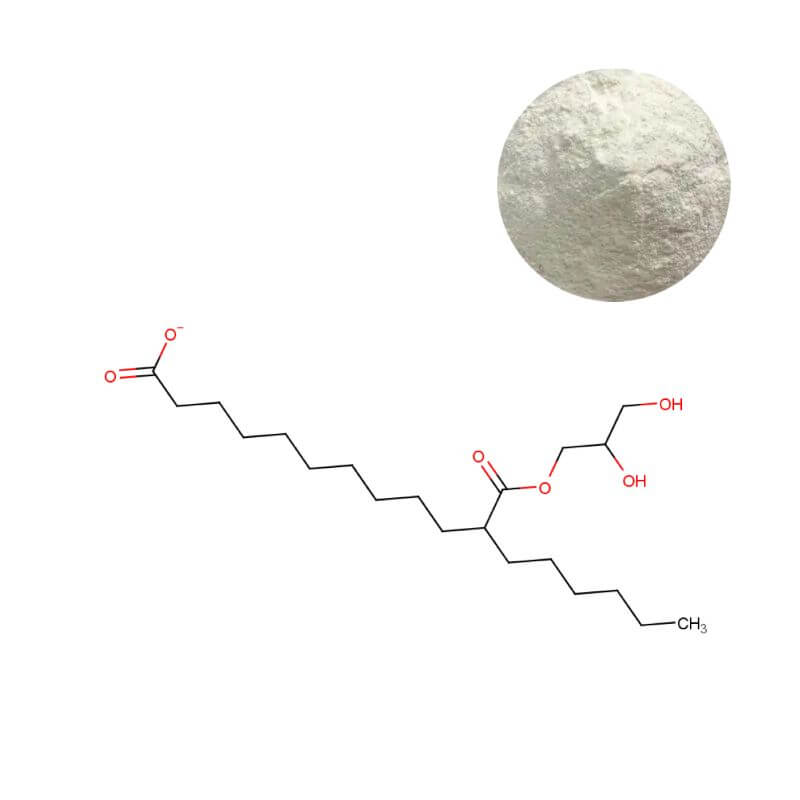
MCT Oil Powder
| Product Name | MCT Oil Powder |
| CAS Number | 73398-61-5, 65381-09-1 |
| Appearance | White to off-white free-flowing powder |
| Purity | 50%, 70% MCT content (by GC-FID) |
| C8:C10 Ratio | 60:40 or 70:30 (customizable) |
| Packaging | 25 kg/drum |
| MOQ | 25 kg |
MCT Oil Powder: Engineered for High-Speed Nutraceutical Production Lines
Validate Bulk MCT Oil Powder specifications before purchasing, as physical traits determine whether a 200-tablet/min rotary press runs continuously or halts every 20 min for cleaning. Lipid load and carrier (Gum Arabic or natural fiber matrices) affect compressibility, wall friction, and ejection force. Commercial lots undergo rheological profiling for stable dwell-time across high-tonnage cycles. Lot-to-lot consistency is verified via USP <1174> powder flow characterization, with each batch including a physical properties dossier for incoming inspection. Locking down these physical attributes at the sourcing stage offers brand owners a tangible competitive edge-translating raw-material compliance directly into consumer-facing product reliability and premium-tier market positioning.
Spray-Dried Lipid Load vs. Die-Table Compaction: A Zero-Stiction Protocol
Increasing the lipid fraction from 50% to 70% reduces tablet tensile strength by approximately 18-22% in direct compression formulations, based on compaction simulator studies. This physical constraint forces formulators to either adjust pre-compression force or switch to a roller-compaction granulation route. Gum Arabic or natural fiber wall systems-utilizing an optimized 30% polymeric wall stabilization matrix for 70% lipid-load powders-achieve mean droplet sizes approaching 0.177 ± 0.002 μm with encapsulation efficiencies up to 98.38 ± 0.01%, as demonstrated in spray-drying optimization studies ( Pharmaceutics, 2022; doi: 10.3390/pharmaceutics14061281 ). This translates directly into reduced punch-face adhesion and lower ejection force drift during extended production campaigns. Maintaining a sub-0.2 μm droplet profile enables CMO lines to sustain output speeds without mid-run calibration stops, directly linking particle control to production uptime.
| Parameter | 50% Lipid Load | 70% Lipid Load | CMO Production Impact |
|---|---|---|---|
| Ejection Force (kN) | 4.2 | 5.8 | Higher friction raises punch wear frequency by 40% |
| Tablet Friability (%) | 0.6 | 0.9 | Increased breakage in coating pans raises scrap rate |
| Pre-compression Force Setting | 15% of main | 30-40% of main | Extended setup time reduces effective OEE |
Spec-verified MCT powder with controlled particle size (≥95% through 40 mesh) reduces segregation in feed frames, ensuring uniform die fill across stations. The microencapsulated architecture (Gum Arabic wall systems) provides a Tg above 60°C, preventing sticky agglomeration in tropical environments. Batch-specific physical property data allows CMO teams to pre-set press parameters without trial runs, cutting line setup by 2-3 hours per SKU. Mandating these particle specifications in procurement contracts ensures that material behavior on the press matches lab-scale predictions-shielding global supply chains from variability-driven manufacturing surprises that erode margins.
Total Cost of Ownership: The Hidden Economics of Spec-Aligned Lipid Powders
Procurement decisions based on price-per-kg ignore three cost drivers: die/punch replacement, tablet rejects, and cleaning cycles. A 70% MCT powder with verified flow (angle ≤ 35°, Carr ≤ 22%) keeps feed-frame bridging below 0.5% of runtime versus 4-6% downtime for poorly characterized lots.
- Reduced punch-face cleaning cycles: Low-adhesion spray-dried particles minimize film build-up on tooling surfaces, extending compression runs from 4 hours to 8 hours between cleaning stops-halving sanitation labor costs per batch.
- Lower in-process weight variability: Consistent bulk density (0.30-0.55 g/mL) plus narrow particle size distribution holds individual tablet weight variation within ±3% of target, keeping rejection rates under 0.8% versus the industry average of 2.5% for non-spec lipid powders.
- Eliminated pre-blend conditioning: Spec-verified MCT oil powder flows directly from the drum into the blender without pre-sieving or de-lumping, removing an upstream step that typically consumes 45 minutes per 500 kg batch.
Procurement officers auditing total landed cost should weight these line-efficiency multipliers. A 25 kg/drum specification with full physical properties disclosure enables CMO planners to allocate press time with 97% confidence in first-pass yield-directly protecting the brand's unit economics without compromising finished-product quality. By shifting the purchasing lens from unit price to total landed performance, supply-chain leaders can intercept the hidden costs of rework, line downtime, and rejected batches that frequently erode the profitability of commoditized lipid ingredients.
Metabolic Kinetics & Sustained Cognitive Fueling During High-Intensity Efforts
C8/C10 fatty acids bypass chylomicron assembly, entering portal circulation within 20-30 min of ingestion. Hepatically processed, ketone body production (β-hydroxybutyrate, acetoacetate) rises within 60 min, delivering alternative fuel for skeletal muscle and cerebral tissue. Chronic MCT at 12 g/day (30:70 C8:C10) completely offset cognitive decline after 60-min exercise at 90% GET, with working memory sustained post-exercise ( Physiol Behav, 2023; doi: 10.1016/j.physbeh.2023.114284 ). While this trial utilized a specific 30:70 C8:C10 ratio, commercial MCT oil powder can be custom-standardized to 60:40 or 70:30 baseline configurations without compromising the rapid ketogenic and cognitive-supporting kinetics demonstrated in the literature.
- Rapid portal absorption: Direct hepatic uptake of C8/C10 avoids the lymphatic chylomicron pathway, delivering measurable blood ketone elevation (0.3-0.6 mM) within one hour-verifiable via finger-prick β-hydroxybutyrate meters.
- Glycogen-sparing during endurance: Increased fat oxidation during 60+ minute submaximal efforts reduces muscle glycogen depletion rate by an estimated 12-15%, delaying the onset of fatigue in trained individuals.
- Sustained mental acuity under physical stress: The observed post-exercise working memory maintenance supports cognitive resilience formulations aimed at athletes, military personnel, and active aging populations.
This mechanistic profile positions MCT oil powder as a dual-purpose ingredient-simultaneously addressing sports performance and cognitive wellness-without requiring high glycemic load carbohydrates. Finished products leveraging this pathway can substantiate structure-function claims related to "mental clarity during physical activity" and "sustained energy release," provided the label reflects the 12 g/day intake used in the referenced trial.
Formulation Synergies: Co-Active Pairing for Augmented Endurance & Recovery
Caffeine and MCT display complementary effects on substrate oxidation during submaximal exercise. Both agents increase fat-derived energy contribution, but through separate mechanisms-caffeine via adipose lipolysis stimulation, MCT via rapid hepatic β-oxidation. Combined protocols in cycling time-trials demonstrate additive improvements in respiratory exchange ratio (RER) depression, suggesting a non-redundant metabolic pathway synergy. Meanwhile, structured lipid constructs pairing MCT with EPA ester backbones (eicosapentaenoic acid)/DHA fractions (docosahexaenoic acid) have improved muscle force preservation after eight-week intervention, with maximal voluntary contraction (MVC) loss reduced significantly compared to placebo arms.
- Caffeine + MCT (powder format): Cold-water dispersible MCT powders blend seamlessly with caffeine anhydrous in ready-to-mix sachets. Both components remain stable under ambient storage conditions, with no observed Maillard reactivity when paired with low-moisture carriers.
- EPA/DHA-MCT structured triglycerides: Omega-3 integration through enzymatic interesterification improves the oxidative stability of the final oil phase, with peroxide values remaining below 5.0 meq/kg over the 24-month shelf life.
- Carbohydrate co-formulation: Combining MCT powder with clean-label carbohydrate sources such as highly branched cyclic dextrin at a 1:2 ratio optimizes energy delivery without triggering gastrointestinal distress-a common barrier in endurance formulations-provided total lipid per serving stays under 15 g.
Brands formulating multi-ingredient performance blends should account for the lipid load's impact on powder flow. A 70% MCT oil powder with Gum Arabic or natural fiber carriers maintains good blend uniformity even when combined with up to 40% crystalline actives, provided the mixing cycle stays under 12 minutes to avoid heat build-up. This compatibility reduces the need for specialized granulation processes, enabling simpler direct-compression or stick-pack filling lines for finished goods.
Technical Qualification Kits for Formula Prototyping
Qualification-grade MCT oil powder samples are available with full physical properties disclosure, including flow function coefficients and compaction profiles generated per ASTM D6773. These data sets enable R&D teams to model press behavior before committing to production-scale drum quantities. Technical service support covers custom lipid load adjustments and carrier system variations (gum arabic, agave inulin, or customizable plant-derived fiber matrices) to match specific clean-label or allergen-free positioning requirements. Request a spec-verified MCT powder sample with complete technical dossier to verify line compatibility and final-product performance prior to procurement.
Frequently Asked Questions
Share this product
Related Products
Ready to get started?
Contact our team for technical specifications, pricing, and customized solutions.