
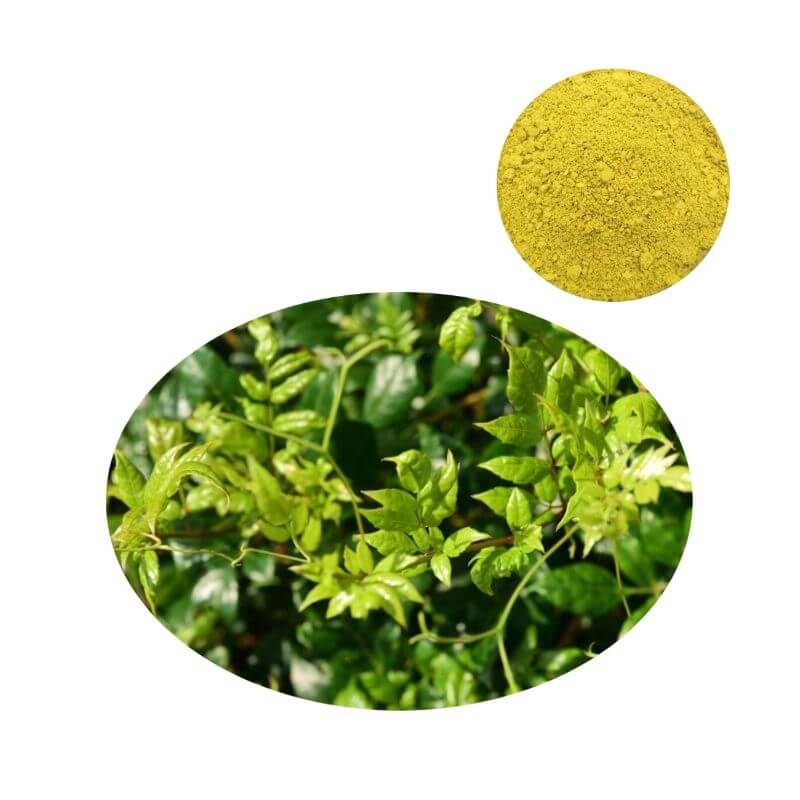
Myricetin Powder
| Product Name | Myricetin Powder (Vine Tea Extract) |
| CAS Number | 529-44-2 |
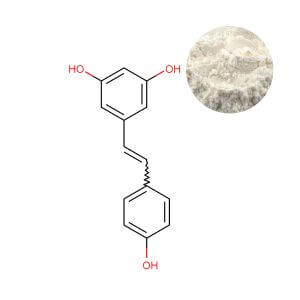
| Appearance | Fine yellow to green-yellow powder |
| Purity | 98% min. (Main); 90% min. available |
| Packaging | 1 kg/bag, 5 kg/tin, 25 kg/drum |
| MOQ | 1 kg |
Myricetin Powder: A Multi‑Target Antioxidant for Cognitive & Metabolic Health Formulations
Formulators aiming to move beyond single‑mechanism antioxidants now face a more sophisticated challenge: delivering sustained cellular protection while supporting distinct physiological pathways. Myricetin, a flavonol naturally occurring in Ampelopsis grossedentata (vine tea), offers a rare combination of potent radical scavenging, MAO‑B inhibition, and metabolic modulation. Standardized to 98% purity by HPLC, this ingredient provides batch‑to‑batch consistency verified through a comprehensive Certificate of Analysis (COA). For brands developing premium nootropic, sports nutrition, or glycaemic support products, understanding how myricetin’s multi‑target profile translates into formulation advantages is the first step toward differentiation. Choosing a 98% purity grade is a strategic move: it builds a credible science barrier that justifies premium pricing and streamlines regulatory documentation—key levers for market entry in crowded categories.
Multi‑Target Mechanisms: Why Myricetin Supports Both Brain and Metabolic Health
Unlike single‑action antioxidants, myricetin engages several clinically relevant pathways. Its ability to activate the Nrf2/ARE antioxidant response element upregulates endogenous defence enzymes, while direct MAO‑B inhibition (Ki = 0.22 μM) offers a neuroprotective angle relevant to cognitive longevity (doi: 10.1007/s00210-025-04648-0). From a strategic formulation perspective, this dual action allows a single ingredient to address both oxidative stress and neurotransmitter regulation – two pillars often tackled separately with multiple components. A recent meta‑analysis of 21 mouse studies (514 animals) quantified myricetin’s effect on metabolic parameters: standardized mean differences (SMD) were −1.45 for blood glucose, −1.78 for insulin, and −2.60 for triglycerides (all p < 0.00001) (doi: 10.3390/nu16213730). While human data remain limited, these large effect sizes (SMD > 1.0) provide a strong preclinical rationale for targeting metabolic health claims. For procurement teams, this directly translates to a science‑backed ingredient that can support multiple label claims – reducing the need for complex blends and simplifying regulatory dossiers. From a development efficiency standpoint, a single multi‑target ingredient effectively shortens formulation timelines and lowers the risk of ingredient incompatibility failures, allowing R&D teams to move faster from concept to pilot batch.
Quality Benchmarks: What Defines a Premium Myricetin Powder for B2B Sourcing
When evaluating bulk myricetin powder, purity percentage alone is insufficient. Experienced buyers focus on three critical quality layers that directly impact final product performance:
- HPLC purity ≥98% (with 90% option available): Ensures consistent bioactivity. Lower purity grades often contain variable levels of co‑extracted plant phenolics, which can alter dissolution rates and colour stability.
- Particle size (≥95% through 80 mesh): Directly influences blend uniformity and capsule filling efficiency. Coarser particles may segregate in powder blends, leading to dose variation.
- Loss on drying (≤5.0%) and ash content (≤1.0%): Low moisture prevents hydrolysis and microbial growth; low ash indicates minimal inorganic contaminants.
From a strategic formulation perspective, a complete COA that includes heavy metal limits (Pb ≤1.0 mg/kg, As ≤1.0 mg/kg) and absence of Pseudomonas aeruginosa is non‑negotiable for export to regulated markets. For procurement teams, this directly translates to reduced compliance risk and faster customs clearance. It is worth noting that myricetin is not currently listed as a New Dietary Ingredient (NDI) in the US, nor as an authorised Novel Food in the EU. However, its history as a botanical extract allows use under DSHEA, provided a full botanical source declaration and contaminant testing accompany each shipment. Reliable myricetin suppliers will always offer a batch‑specific COA and regulatory support documents within 24 working hours. This level of quality documentation effectively prevents costly batch holds at the port of entry and eliminates the need for last‑minute reformulation—directly protecting your brand’s launch calendar and import budget.
Formulation in Practice: Stability, Synergy & Delivery Solutions
Myricetin’s low water solubility (approx. 16 μg/mL) and sensitivity to alkaline pH present real formulation challenges. However, these can be turned into strategic advantages when addressed early in development. Below are practical guidelines for two common dose forms:
| Dosage Form | Key Considerations | Recommended Strategy |
|---|---|---|
| Capsules / Tablets | Direct blending; avoid high‑humidity environments (>45% RH) during mixing | Use microcrystalline cellulose or pre‑gelatinised starch as carrier; keep blend moisture <3% |
| Functional beverages | pH >6.5 accelerates degradation; light sensitivity | Formulate at pH 3–5; use amber glass or opaque packaging; consider cyclodextrin encapsulation |
For enhanced bioavailability, nano‑formulation strategies such as solid lipid nanoparticles or HP‑β‑cyclodextrin complexes have been shown to improve solubility by up to 2,858‑fold in experimental models. From a strategic formulation perspective, even without advanced delivery systems, myricetin works synergistically with other flavonoids. A commercially proven combination is myricetin + PQQ (pyrroloquinoline quinone) for mitochondrial antioxidant support – a pairing that has entered clinical pilot studies.
The table below illustrates synergistic pairings with three well‑established ingredients – all available as standalone products for custom blending:
| Co‑ingredient | Synergistic Effect | Typical Ratio (Myricetin : Partner) |
|---|---|---|
| 95% Quercetin Dihydrate | Broad‑spectrum flavonoid antioxidant network; enhanced free radical scavenging | 1:1 to 1:2 |
| 95% Piperine (Black Pepper Extract) | Potential absorption support via inhibition of glucuronidation | 10:1 (myricetin:piperine) |
| PQQ (Pyrroloquinoline Quinone) | Mitochondrial biogenesis + antioxidant synergy for cognitive health | 2:1 to 4:1 |
For procurement teams, this directly translates to formulation flexibility: the ingredient can anchor a standalone product or act as a powerful co‑active in multi‑ingredient blends, especially for cognitive health and sports recovery lines. When prototyping, always test blend uniformity with a small‑scale trial (1–5 kg) before scaling to production.
Mitigating Risk: The Sourcing Checklist for Bulk Myricetin Powder
With myricetin gaining traction, the market now includes variable‑quality offerings. A disciplined sourcing approach reduces the risk of batch rejection and product failure. Key items every buyer should verify with their myricetin supplier include:
- Full disclosure of botanical source: Ampelopsis grossedentata (vine tea) is the most consistent commercial source. Ambiguous “plant extract” labels may hide inconsistent raw material.
- Residual solvent profile: Must comply with USP <467>. Ethanol/water extraction is preferred; avoid material extracted with chlorinated solvents.
- Microbiological limits: TPC ≤1,000 CFU/g, yeasts & molds ≤100 CFU/g, absence of E. coli, Salmonella, P. aeruginosa, and S. aureus.
- Stability data: 24‑month real‑time stability in original packaging (cool, dry, dark conditions) is the industry benchmark.
For procurement teams, this directly translates to lower total cost of ownership: a slightly higher upfront investment in a certified myricetin powder eliminates downstream costs associated with failed batches, reformulation, or regulatory holds. From a strategic formulation perspective, partnering with a supplier that provides custom blending (e.g., myricetin with quercetin, piperine, or PQQ) and offers free 10–20g samples for R&D validation reduces the risk of scaling up from lab to production. Always request a batch‑specific COA before placing bulk orders – this single document verifies all the critical parameters above and serves as your first line of quality defence. From a Total Cost of Ownership (TCO) perspective, a fully traceable myricetin powder with complete contaminant testing prevents catastrophic batch rejection and import delays—two events that can erase any initial price advantage within weeks.
Next Steps for Your Product Development
Now that you have a clear understanding of myricetin’s multi‑target science, quality benchmarks, formulation tactics, and sourcing risks, the most efficient next step is to obtain a physical sample and its accompanying technical dossier. A 10–20g free sample allows you to evaluate blend uniformity, solubility in your specific matrix, and stability under your production conditions. Request your complimentary sample and complete technical datasheet – including the batch‑specific COA, stability report, and regulatory support documentation. With these in hand, your R&D team can move from assessment to prototyping with full confidence.
Frequently Asked Questions
Share this product
Related Products
Ready to get started?
Contact our team for technical specifications, pricing, and customized solutions.