
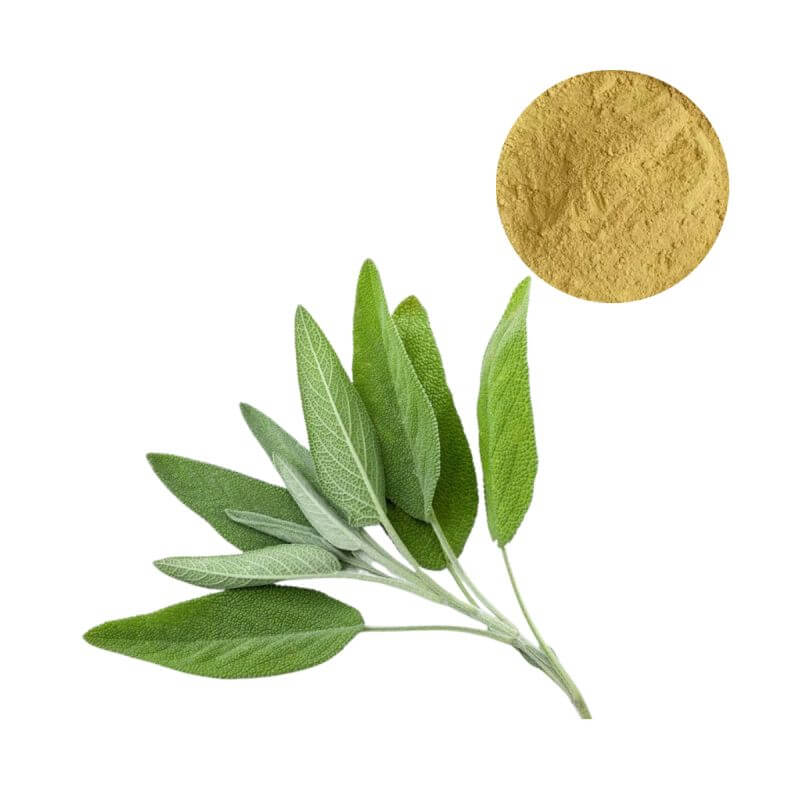
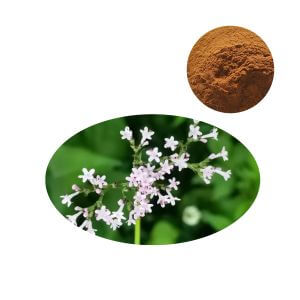
Sage Extract Powder
| Product Name | Sage Extract Powder |
| CAS Number | 84082-79-1 |
| Appearance | Fine brown to greenish-brown powder |
| Purity | 2.5%, 5%, 10% Rosmarinic Acid (by HPLC) |
| Packaging | 1 kg/foil bag, 5 kg/tin, 25 kg/cardboard drum |
| MOQ | 1 kg |
Sage Extract Powder (2.5%–10% Rosmarinic Acid): A Clinically Supported Cognitive & Antioxidant Ingredient for Healthy Aging Formulations
Formulating a differentiated brain health or anti-aging supplement today demands more than generic antioxidant blends. Brands face increasing pressure to provide clinically substantiated, batch-consistent ingredients that resonate with informed consumers. Sage Extract Powder, standardized to rosmarinic acid (2.5%, 5%, or 10% by HPLC), offers a science‑backed botanical solution. Premium extracts typically feature rigorous HPLC fingerprinting to ensure consistent polyphenol profiles — a critical quality benchmark for any B2B sourcing strategy. This ingredient directly addresses formulation needs for nootropic support, oxidative stress management, and long‑term cognitive wellness. For brands navigating crowded nootropic and healthy aging categories, choosing a standardized extract with validated clinical endpoints directly shortens the path to a defensible product claim and premium margin, while reducing regulatory filing uncertainty.
Clinical Evidence for Cognitive Support: From Bench to Bedside
Rosmarinic acid (RA), the primary active marker in sage, modulates key neuroprotective pathways including acetylcholinesterase (AChE) inhibition, BDNF maintenance, and Nrf2‑mediated antioxidant defense. However, not all sage extracts are created equal. A 2024 two‑stage study (in vitro human neural stem cell screening + 12‑week randomized, double‑blind, placebo‑controlled trial) demonstrated that a Salvia officinalis extract significantly improved memory recall in adults aged 50+ with mild cognitive concerns (doi: 10.3390/app142411869). The research noted that higher doses produced more pronounced benefits, and combining sage with rutin showed additional synergistic effects beyond sage alone. From a strategic formulation perspective, this means you can design a differentiated product claim around “healthy aging memory support” using a well‑characterized, clinically studied extract — not just a generic herbal powder.
Furthermore, a 2021 randomized controlled trial involving 94 healthy adults (30–60 years) examined both acute (single 600 mg dose) and chronic (29 days) supplementation (doi: 10.3390/nu13010218). The results showed consistent, significant improvements in working memory and accuracy across several cognitive tasks (Corsi block, numeric working memory, face‑name recall). For procurement teams, this directly translates to a lower risk formulation: you have two independent human trials (acute/chronic and short‑term/long‑term) supporting distinct cognitive endpoints, which strengthens any regulatory claim dossier and provides marketing flexibility. This multi‑trial validation means that R&D teams can confidently reference human data in their marketing materials, reducing the need for costly post‑launch substantiation studies.
Quality Benchmarks: What Defines a Superior Sage Extract for B2B Sourcing?
When sourcing bulk sage extract, the purity percentage alone is insufficient. Premium ingredients are defined by three critical, verifiable attributes:
- Standardized rosmarinic acid content (2.5%/5%/10% by HPLC) – ensures batch‑to‑batch bioactivity, unlike ratio extracts (e.g., 10:1) that vary with harvest.
- Particle size ≥95% through 80 mesh – guarantees flowability and blend homogeneity for capsule or powder mixes.
- Complete Certificate of Analysis (COA) – must include heavy metals (Pb ≤1, As ≤1, Cd ≤1, Hg ≤0.1 mg/kg), microbiological limits (TPC ≤1,000 CFU/g), and residual solvents per USP <467>.
It's worth noting that many generic sage extracts fail to control for ash content (≤5%) or loss on drying (≤5%), leading to clumping and reduced shelf life in finished products. Practically speaking, a simple moisture test (USP <731>) can prevent costly manufacturing issues. For brands targeting the US or EU markets, a COA that includes USP‑compliant methods for heavy metals (ICP‑MS) and pathogens (negative for Pseudomonas aeruginosa) is non‑negotiable. From a compliance standpoint, these data directly reduce customs delays and product rejection risks. Key sourcing considerations include verifying that your supplier can provide a batch‑specific COA within 24 working hours — a sign of a professional, transparent operation. Implementing these quality gates effectively minimizes production line interruptions and ensures that every finished batch meets the same label claim, directly supporting brand integrity.
| Quality Attribute | Typical Specification (Premium Grade) | Why It Matters |
|---|---|---|
| Rosmarinic Acid (HPLC) | ≥2.5%, ≥5.0%, ≥10.0% | Guarantees clinical efficacy & batch reproducibility |
| Loss on Drying | ≤5.0% | Prevents microbial growth & extends shelf life |
| Heavy Metals (Pb, As, Cd, Hg) | ≤1.0, ≤1.0, ≤1.0, ≤0.1 mg/kg | Meets international supplement safety standards |
Formulation in Practice: Stability, Synergy & Delivery Solutions
Effective formulation with sage extract requires addressing three practical aspects: dosage synergy, particle integration, and stability challenges. Based on clinical data, a daily dose of 150–300 mg (standardized to ≥2% RA) is sufficient for cognitive support, while higher doses (600 mg) may be used for acute effect products. The 2024 study highlighted a powerful synergy: combining sage extract with rutin (e.g., from Sophora japonica) enhanced BDNF expression and reduced AChE activity by more than 60%, offering a natural alternative to single‑ingredient nootropics. For brands, this enables a clean‑label “herbal + flavonoid” formula with scientific backing.
Regarding physical integration, the powder’s 80‑mesh size flows easily into capsule fill machines without extra excipients. For drink mixes, it disperses in water but has a bitter, camphor‑like taste. Mask it with natural sweeteners (high-purity stevia extract, standardized monk fruit extract) or fruit flavors (lemon, berry). Stability is the most common pitfall: rosmarinic acid degrades under strong light and alkaline pH (≥7.0). However, it remains stable at pH 3–5 — ideal for chews or effervescents. It's also sensitive to Ca²⁺ and Mg²⁺ ions, so avoid direct mixing with mineral premixes. For procurement teams, this directly translates to the need for foil packaging (light barrier) and dry, cool storage (≤25°C, RH <60%). An advanced tip: encapsulating the extract (e.g., with starch or alginate) further boosts bioavailability, allowing a premium positioning.
Mitigating Risk: A Sourcing Checklist for Bulk Sage Extract
Selecting a reliable supplier involves more than price negotiation. Use this industry‑standard checklist to evaluate any bulk sage extract partner:
- Identity verification – Does the COA confirm botanical species (Salvia officinalis L.) via HPLC fingerprint?
- Traceability – Is the extract derived from leaf material with documented supply chain from farm to factory?
- Allergen & GMO status – Is it declared GMO‑free with no added carriers (e.g., maltodextrin) unless disclosed?
- Regulatory support – Does the supplier provide NDI or Novel Food status documentation for US/EU filings?
- Sample and technical data – Can you obtain a free 10‑20 g sample with a batch‑specific COA before committing to 25 kg drums?
From a strategic formulation perspective, ticking all these boxes reduces hidden costs: failed lab tests, production line stoppages, and regulatory rejections. For instance, one common oversight is ignoring residual solvents — a premium supplier always provides USP <467> compliance (ethanol ≤5,000 ppm or solvent‑free). Another real‑world pitfall: many brands only request a COA for the first batch; insisting on a fresh COA per shipment ensures ongoing consistency. Ultimately, working with a partner that offers transparent documentation, custom blending (e.g., mixing sage with rutin for synergistic pre‑blends), and 24‑h technical response time de‑risks your entire product development cycle. Adopting this sourcing checklist shifts procurement from a price‑driven exercise to a risk‑managed investment, where the hidden costs of inferior batches are eliminated upfront.
Next Steps: Accelerate Your Cognitive Health & Antioxidant Product Launch
You now have a complete technical picture: clinically validated memory benefits, robust quality specifications, formulation know‑how, and a sourcing risk checklist. The remaining step is to test the powder in your own matrix. Request a complimentary sample and complete technical dossier — including a batch‑specific COA, stability study summary, and proposed regulatory statement for US/EU markets. This low‑commitment move allows your R&D team to verify particle size, solubility, and compatibility before scaling. Request Your Complimentary Sample & Technical Dossier and turn clinical evidence into your next bestseller.
Frequently Asked Questions
Share this product
Related Products
Ready to get started?
Contact our team for technical specifications, pricing, and customized solutions.