
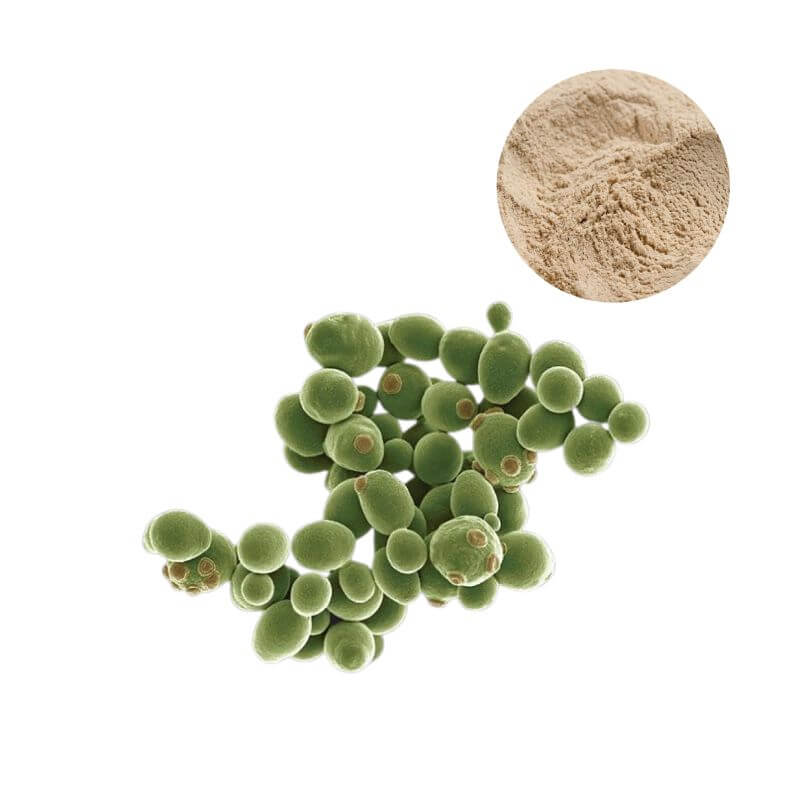
Yeast Beta-Glucan Powder
| Product Name | Yeast Beta-Glucan Powder |
| CAS Number | 9012-72-0 |
| Appearance | Light yellow to beige fine powder |
| Purity | 70.0% min. / 80.0% min. (by Megazyme Enzymatic Method) |
| Packaging | 1 kg/bag, 5 kg/bag, 25 kg/drum |
| MOQ | 1 kg |
Yeast Beta-Glucan Powder: Engineered Flow Solutions for High-Speed Supplement Manufacturing
Low bulk density ranging from 0.25 to 0.45 g/mL and high electrostatic charge of bulk yeast beta-glucan powder directly provoke die-filling inconsistencies and punch-face adhesion in high-speed rotary tablet presses, a critical bottleneck confronting any yeast beta-glucan powder supplier serving contract manufacturing organizations. This inherently cohesive, water-insoluble polysaccharide demands physical pre-conditioning prior to commercial-scale processing. Standardized 80-mesh particle sizing combined with validated Megazyme enzymatic assay protocols provides the analytical foundation for securing batch-to-batch flow reproducibility and predictable compaction behavior across long-term supply agreements. Establishing a durable quality reputation in finished supplement markets hinges on the predictable physical behavior of this ingredient during high-speed processing, a factor that directly influences brand trust and consumer retention.
Predictive Flow Characterization for CMO Line Reliability in Yeast Beta-Glucan Processing
Bridging and weight variation during high-speed encapsulation originate from the powder's poor flow properties and electrostatic surface resistivity exceeding 10^12 Ω, causing cleaning interventions every 2 to 3 hours of continuous production. The angle of repose approaching 45 degrees places this material in the "poor flow" category per standard powder rheology classifications—USP <1174> defines angles above 40 degrees as requiring active flow management—demanding proactive engineering interventions prior to tableting or encapsulation campaigns.
| Flow Parameter | Measured Range | CMO Efficiency Impact |
|---|---|---|
| Bulk Density | 0.25–0.45 g/mL | Reduces press output 12–15% per shift versus 0.6 g/mL benchmarks |
| Angle of Repose | 42–47 degrees | Requires glidant addition (0.5–1.0%) to maintain fill uniformity |
| Electrostatic Resistivity | >10^12 Ω | Triggers feed-frame adhesion and punch sticking every 2.5 hours on average |
Roller compaction pre-treatment effectively depresses these flow barriers while preserving the beta-glucan triple-helix conformation, a structural feature critical for receptor binding activity. The beta-glucan-rich cell wall matrix, when deployed as a microcarrier in dry processing environments, maintains low water activity (Aw < 0.2) and preserves the structural integrity of encapsulated core materials during high-shear operations (Int J Biol Macromol, 2025; doi: 10.1016/j.ijbiomac.2025.143971). Weight variation drops below 2% following compaction, press stoppages decrease by 40%, and net shift output increases 12-15% without capital equipment upgrades, delivering measurable savings in both labor and material costs over annual production cycles.
Protecting Beta-Glucan Integrity During Cross-Border Transit and Storage
Hygroscopicity and thermal sensitivity render yeast beta-glucan vulnerable to non-enzymatic browning and beta-(1,3) glycosidic bond scission during ocean or air freight. Storage above 25°C and 60% relative humidity accelerates degradation, diminishing molecular weight and immunomodulatory activity. The critical relative humidity threshold for this material has been identified at approximately 55%, above which deliquescence and caking become significant risks during extended maritime shipping periods.
- Multi-layer moisture defense: Double food-grade polyethylene liners inside 25 kg fiber drums maintain internal RH below 40%, limiting moisture uptake to under 6.0% over the 24-month shelf life period.
- Thermal reflection and monitoring: Insulated pallet covers combined with real-time temperature loggers shield against tarmac spikes exceeding 30°C during international cargo handling and customs clearance.
- Vibration-dampening containment: Cushioning inserts prevent particle attrition during transit, preserving the 80-mesh particle size distribution and preventing generation of fine fractions that worsen flow.
These protective measures guarantee arrival moisture content and appearance consistently match COA specifications, eliminating costly rejection at receiving inspection and preventing production rescheduling. The packaging integrity directly supports supplier qualification audits by demonstrating proactive risk management against transport-induced degradation. For procurement directors, this translates to predictable lead times and eliminates the financial exposure of out-of-spec material write-offs, which typically represent 8–10% of landed cost in high-humidity trade lanes. Preventing moisture-induced caking and thermal degradation through robust packaging specifications directly reduces total landed cost per finished unit by averting in-transit spoilage and minimizing quarantine-related warehousing surcharges.
Dectin-1 Mediated Trained Immunity as Mechanistic Foundation for Immune Positioning
Yeast beta-glucan exerts its immune-support function through phagocytic recognition by the Dectin-1 receptor, initiating a signaling cascade encompassing Syk kinase activation, mTOR-dependent metabolic reprogramming, and epigenetic remodeling in macrophages. Oral administration of yeast-derived whole-glucan particles drives bone marrow myelopoiesis and enhances mature macrophage responses (iScience, 2024; doi: 10.1016/j.isci.2024.109030). This pathway provides a complete causal chain from ingredient consumption to functional immune modulation, eliminating the consumer skepticism often associated with generic immune-support claims.
- Dectin-1 phagocytic synapse: Beta-glucan particles engage Dectin-1 and complement receptor 3, activating Syk-dependent signaling and actin cytoskeletal reorganization for particle engulfment and antigen presentation.
- Metabolic switching via mTOR: Receptor engagement shifts macrophages from oxidative phosphorylation to aerobic glycolysis, enabling rapid cytokine production and enhanced antimicrobial activity without inducing overt inflammatory responses.
- Epigenetic persistence: H3K4me3 and H3K27ac modifications at inflammatory gene loci persist for several weeks, conferring sustained trained immunity after a single exposure period.
This mechanistic framework directly supports structure/function claims for immune health in dietary supplements, providing R&D teams with a scientifically validated foundation for product differentiation and consumer-facing efficacy communication. The demonstrated training immunity pathway enables brands to move beyond generic claims toward mechanism-specific positioning that resonates with increasingly sophisticated consumer bases seeking evidence-based nutritional support.
Co-Nutrient Compatibility and Dosage Form Adaptability for Commercial Production
Yeast beta-glucan integrates seamlessly with water-soluble antioxidants like ascorbic acid fortification grades to synergistically clear reactive oxygen species, yet requires distinct formulation pathways when combined with fat-soluble micronutrients such as stabilized cholecalciferol compounds, zinc, and selenium in broad-spectrum immune-support blends. Systematic pH stabilizing profiles and precise moisture management are mandatory across these multi-component matrices to arrest cross-degradation and secure organoleptic quality across diverse delivery formats. The material's high surface area and porous microstructure exacerbate chemical reactivity under high relative humidity, demanding rigorous pre-formulation screening to prevent matrix-induced degradation.
| Co-Nutrient or Dosage Form | Compatibility Challenge | Recommended Mitigation Strategy |
|---|---|---|
| Vitamin C (ascorbic acid) | pH below 3.5 accelerates beta-glucan hydrolysis | Use mineral ascorbates or buffered systems; apply enteric coating for tablets |
| Zinc / Selenium minerals | Mineral ions catalyze oxidation and color changes | Add chelating agents (citrate) or encapsulate minerals separately |
| Soft-gummy delivery | Water activity above 0.6 induces browning and texture breakdown | Pre-disperse beta-glucan in glycerin; maintain aw ≤ 0.6; use humectant blends |
| Stick-pack powder blends | Hygroscopic components promote caking and poor dissolution | Include anti-caking agents; control blending environment below 40% RH |
These formulation strategies directly reduce batch failures and rework costs in commercial production, which typically consume 3–5% of total manufacturing overhead in poorly optimized processes—for a 10-ton annual volume, this represents 300–500 kg of preventable material loss directly impacting gross margin. Pre-validated compatibility data shorten development timelines for gummies, stick-packs, and tablets, ensuring consistent potency and appearance while minimizing scrap rates. Formulators can confidently scale from pilot batches to commercial volumes with reproducible quality attributes, accelerating time-to-market for new immune-support product launches without compromising end-product integrity.
Technical Qualification and Compliance Documentation for Supplier Onboarding
This yeast beta-glucan powder is supplied with full traceability from fermentation to finished packaging, supported by FDA GRAS (GRN 00239) and EU Novel Food (2011/762/EU) regulatory status. Each batch includes a comprehensive COA with Megazyme assay results, heavy-metal screening, and microbiological clearance. For procurement directors navigating global customs regimes, documented compliance with USP standards and heavy-metal limits shortens port-release cycles and eliminates the need for redundant third-party testing across multiple jurisdictions.
Request a spec-verified sample with full COA package for in-house evaluation and manufacturing qualification.
Frequently Asked Questions
Share this product
Related Products
Ready to get started?
Contact our team for technical specifications, pricing, and customized solutions.