
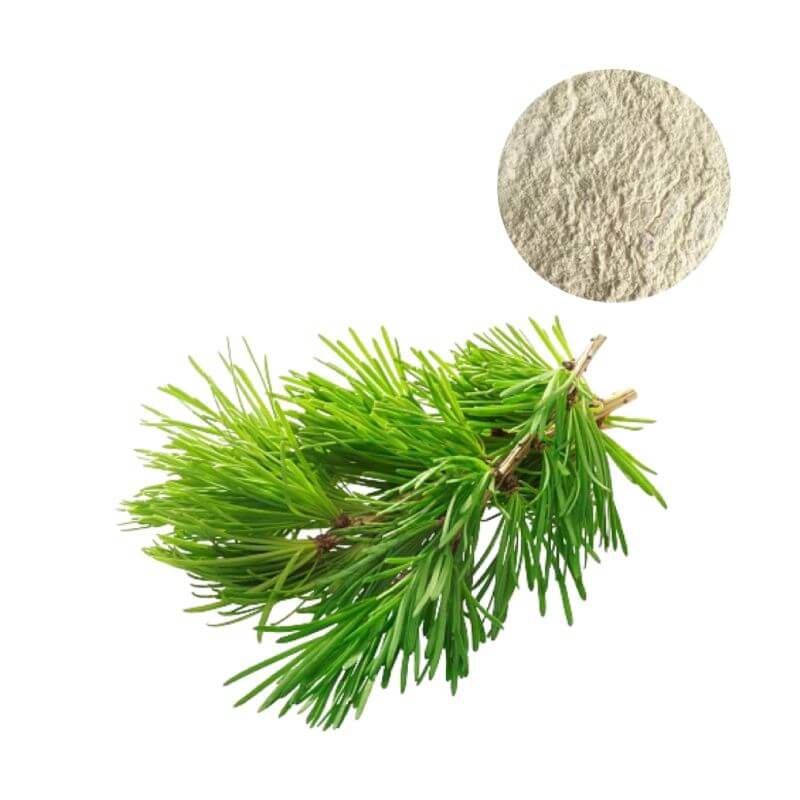
Arabinogalactan Powder
| Product Name | Arabinogalactan Powder |
| CAS Number | 9036-66-2 |
| Appearance | Off-white to light beige fine powder |
| Purity | 85% as-is / 90% on dry basis (by HPLC) |
| Packaging | 1 kg/bag, 5 kg/bag, 25 kg/drum |
| MOQ | 25 kg |
Arabinogalactan Powder for High-Speed Formulation Lines
Rotary press performance at speeds exceeding 100,000 capsules per hour is directly compromised by powder flow irregularities, a physical constraint that Bulk Arabinogalactan Powder Supplier networks address through stringent moisture and particle size management. Spec-verified Arabinogalactan Powder from documented supply chains eliminates reformulation adjustments when switching lots, with batch-specific COA documentation providing the technical audit trail that guarantees consistent high-speed compression outcomes across multiple production campaigns.
Critical moisture control dictates the physical boundary between uninterrupted production and costly line stoppages
For contract manufacturers operating high-RPM encapsulation equipment, the transition from free-flowing powder to adhesive mass occurs when ambient relative humidity exceeds the product's critical relative humidity threshold. Arabinogalactan's hygroscopicity demands active environmental controls in blending suites—maintaining 22 ± 2°C and ≤ 40% RH during processing directly correlates to reduced cleaning cycles and extended runtime between scheduled maintenance interventions.
- Feed-hopper bridging prevention: Controlled particle morphology and anti-caking flow agents protect against erratic powder discharge that compromises capsule weight uniformity.
- Tooling surface adhesion mitigation: Strict LOD compliance reduces punch face fouling, minimizing scrap rates from weight-adjusted rejects and in-process sampling failures.
- Batch-to-batch flow consistency: Spec-verified particle size distribution eliminates the need for reformulation adjustments when switching raw material lots.
Flow property deviations trigger downstream weight control failures in automated inspection systems, where fill-weight relative standard deviations exceeding 3.5% force line speed reductions of up to 20% to maintain USP <905> uniformity compliance—a productivity penalty fully preventable through rigorous inbound powder characterization.
Logistics transit degradation pathways demand engineering-grade barrier protection across temperature-excursion corridors
Cross-border express logistics expose Arabinogalactan to pressure differentials and tarmac temperature spikes accelerating moisture migration through standard packaging. The polysaccharide's glycosidic bonds exhibit susceptibility to thermal and hydrolytic cleavage, impacting molecular weight distribution and immunomodulatory performance upon arrival. High-barrier aluminum-foil liners (WVTR ≤0.1 g/m2·24h) with desiccant inserts maintain internal microenvironments at ≤20% RH throughout 15-30 day freight cycles.
| Logistics Risk Factor | Degradation Mechanism | Engineering Countermeasure |
|---|---|---|
| Aerial pressure cycling (cabin 0.75 atm) | Package expansion-compression; seal fatigue | Multi-layer foil laminate with heat-sealed closures |
| Tarmac temperature spikes (up to 65°C) | Accelerated moisture-driven hydrolysis | Thermal reflective outer wrapping + 100-200 g desiccant per drum |
| Transit humidity (>80% RH in tropical hubs) | Surface moisture condensation; caking initiation | Food-grade silica gel or molecular sieve desiccant pouches inside liner bags |
Oxidative degradation pathways depolymerize larch arabinogalactan via hydroxyl radical-mediated glycosidic bond cleavage, a mechanism directly translatable to temperature-fluctuated transit environments where arabinose-to-galactose molar ratio shifts quantitatively correlate with immunomodulatory activity attenuation (Front Bioeng Biotechnol, 2024; doi: 10.3389/fbioe.2024.1461343). Validating inbound moisture content against the certified ≤6.0% LOD specification upon arrival ensures the incoming material preserves its intended bioactivity profile for the contracted formulation. This inbound compliance checkpoint functions as a customs-clearance accelerator, substantially reducing the probability of quarantine-related batch holds across FDA and EFSA jurisdictions through pre-validated specification alignment.
- Container microclimate mapping: Data-loggers positioned within shipping containers track temperature and humidity excursions, enabling evidence-based carrier selection for sensitive routes.
- Breakthrough moisture modeling: Barrier integrity testing under accelerated aging conditions quantifies the safety margin for 30-day sea freight vs. 5-day express air options.
- Receiving inspection protocol: Inbound LOD verification against COA establishes a clear liability boundary, protecting brand owners from accepting moisture-compromised material.
Multi-omics fermentation validation establishes the mechanistic foundation for immune-support formulation claims
In vitro fermentation profiling confirms larch arabinogalactan drives gut microbial compositional shifts, establishing a mechanistically validated prebiotic framework for immune-support formulation architectures (Food Chem Toxicol, 2021; doi: 10.1016/j.fct.2021.112522). Short-chain fatty acid production—specifically acetate, propionate, and butyrate—serves as the primary signaling mechanism linking colonic fermentation to systemic immune parameters, offering formulators a clearly defined biomarker pathway for finished product substantiation.
- Acetate (C2) production: Primary fermentation end-product providing energy substrates for peripheral tissues; correlates with GPR43-mediated immune cell trafficking.
- Propionate (C3) generation: Hepatic gluconeogenesis precursor with documented associations to regulatory T-cell induction and oral tolerance mechanisms.
- Butyrate (C4) bioavailability: Colonocyte primary fuel; histone deacetylase inhibition pathway central to epithelial barrier integrity and local inflammatory modulation.
The multi-omics workflow quantifies taxonomic shifts at the genus and species level, with consistent enrichment of Bifidobacterium and Bacteroides populations across donor-independent fermentation models. For product developers, this translates to a defensible probiotic-stimulation efficacy claim backed by replicated in vitro evidence—materially reducing clinical trial risk for finished product substantiation. For formulation chemists, this translates directly to capsule volume reduction capability—lowering per-unit excipient load without sacrificing active delivery performance, a critical cost driver in high-volume contract manufacturing.
Synergistic prebiotic blends require moisture-aware co-processing strategies to preserve stability and consumer acceptance
Commercial prebiotic blends frequently combine arabinogalactan with complementary fibers like fructo-oligosaccharides and inulin to extend fermentation kinetics along the colonic axis. Blending hygroscopic components depresses the critical relative humidity of the total powder—a formulation hazard demanding active moisture management during manufacturing and in the final closure system. The critical relative humidity of pure arabinogalactan at 25°C typically falls within the 60-65% range, and blending with other hygroscopic fibers further reduces the mixture's threshold, intensifying the need for strict environmental controls.
| Blend Component | Processing Requirement |
|---|---|
| Arabinogalactan | Blend at ≤40% RH |
| Fructo-oligosaccharides (FOS) | Add desiccant during mixing |
| Inulin (chicory-derived) | Limit exposure time to less than 45 min |
Colorimetric shifts and dissolution rate reductions in mineral-fortified matrices arise from metal-polysaccharide interactions when processing temperatures approach 40°C. Chilled milling and low-shear blending protocols preserve the expected solubility profile (dissolution time ≤2 minutes in 20°C water) while maintaining the white-to-off-white visual specification critical for tablet and capsule product identity. The Arabinogalactan Supplier's technical dossier includes trial blend compatibility data for up to 12 co-ingredients at inclusion levels from 2% to 65%.
- Critical relative humidity suppression: Blending two hygroscopic materials depresses the mixture's overall moisture uptake threshold; active control at ≤40% RH prevents stickiness and flow failure.
- Mineral-polysaccharide interactions: Processing temperatures below 30°C minimize color darkening; slow dissolution from metal-induced hydroxy bridging is mitigated through delayed release granulation.
- Visual homogeneity assurance: Blending protocols that incorporate anti-caking silica carriers (0.5%-1.0%) maintain consistent color and flow across production batches.
Spec-verified Arabinogalactan Powder protects margin integrity across the full sourcing-to-production cycle
Commercial procurement decisions benefit from rigorous specification alignment that eliminates hidden costs: 80-mesh particle standard prevents feed-hopper bridging, while sub-6% moisture preserves flow for rotary presses at rated speed without unscheduled stops. Physical standard anchored in batch-to-batch consistency, verified by reference samples and COA audits, provides procurement leverage in supplier reviews. Total cost of ownership audits consistently reveal that moisture-related flow failures—not raw material price—constitute the dominant variable in full-scale production economics. Each production lot undergoes pre-shipment flowability profiling—including Hausner Ratio and Carr Index quantification per USP <1174>—with these parameters pre-validated on the COA, enabling receiving QC teams to expedite incoming inspection by 2-3 days. Qualification samples validate flow against specific press models and production conditions; Request spec-verified Arabinogalactan samples with COA packages to confirm die-fill and speed compatibility before full-scale commitment.
Frequently Asked Questions
Share this product
Related Products
Ready to get started?
Contact our team for technical specifications, pricing, and customized solutions.