
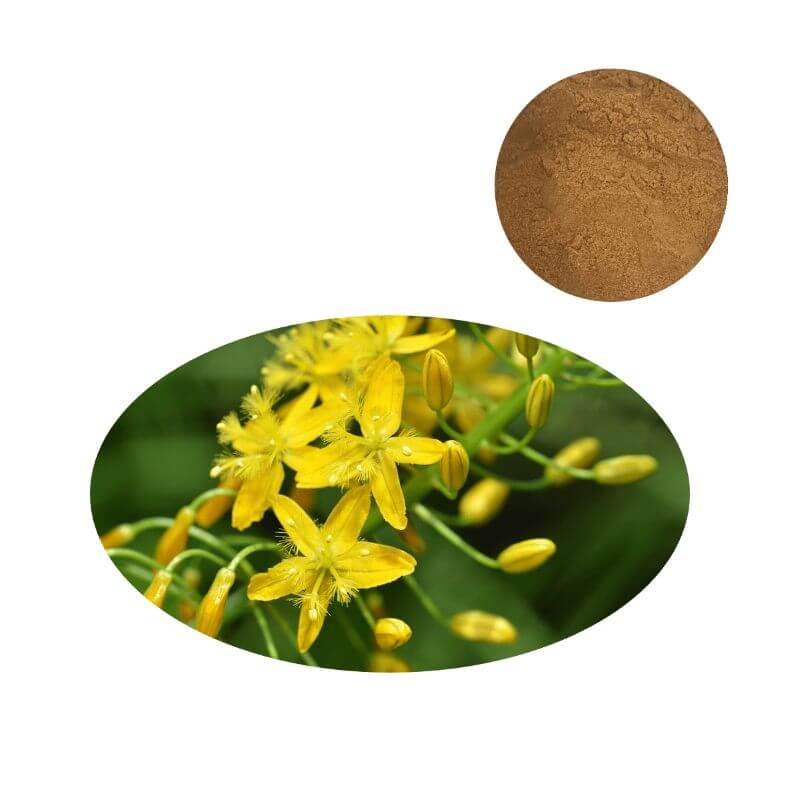
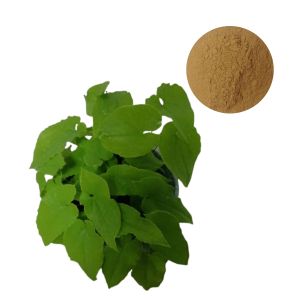
Bulbine Natalensis Extract Powder
| Product Name | Bulbine Natalensis Extract Powder |
| Extraction Ratio | 10:1, 20:1 (or custom ratios) |
| Appearance | Fine Brownish-Yellow Powder |
| Primary Marker | Knipholone |
| Packaging | 1 kg/bag, 5 kg/bag, 25 kg/drum (or customized) |
| MOQ | 1 kg |
Bulbine Natalensis Extract: A Strategic Botanical for Differentiated Vitality and Sports Nutrition
In the crowded men's health and sports nutrition sectors, product differentiation has shifted from simple ingredient inclusion to strategic, story-backed formulation. Procurement and R&D teams now face a dual challenge: they must identify botanicals with both authentic traditional use and robust scientific intrigue, while also ensuring these raw materials meet uncompromising standards for safety, consistency, and compliance to mitigate brand risk. Bulbine Natalensis Extract meets this need. Its value is defined not by a generic purity claim but by strategic standardization—such as a verifiable 10:1 or 20:1 extraction ratio—and the quantification of key marker compounds like Knipholone. This precise specification, supported by full-spectrum contaminant testing, transforms the ingredient from a commodity into a reliable, brand-protective asset. The following analysis provides a decision-making framework for sourcing and formulating with this botanical, turning technical data into competitive advantage.
Rooted in Tradition, Examined by Science: Translating Research into a Credible Narrative
For brands, the scientific profile of an ingredient is the foundation of both regulatory compliance and consumer marketing. Bulbine natalensis carries the traditional cachet of names like ibhucu or rooiwortel ("red root"), but its modern application rests on interpretable science. Preclinical research provides a plausible mechanism for its traditional use, showing that oral administration can modulate key endocrine markers. A pivotal animal study demonstrated that specific doses significantly increased serum levels of testosterone, luteinizing hormone (LH), and follicle-stimulating hormone (FSH) (DOI: 10.1016/j.theriogenology.2009.01.026).
This research does not grant direct human claims, but from a product positioning standpoint, it offers a scientifically-grounded narrative of supporting the body's natural endocrine balance. It enables R&D teams to bridge traditional wisdom with contemporary biochemical pathways. Modern in vitro studies further substantiate its broader phytochemical potential. Notably, research indicates the extract can inhibit key enzymes like alpha-glucosidase, which is relevant for healthy carbohydrate metabolism (DOI: 10.1111/dme.14770). For a product manager, this evolving science supports a multi-faceted story of vitality—rooted in tradition yet validated by contemporary research—that can extend into metabolic wellness sub-categories.
Key Sourcing Insight: Therefore, a supplier’s documentation should emphasize the holistic, standardized extract—verified by its extraction ratio and marker compounds—rather than promoting a single, isolated active. This full-spectrum approach aligns with both the traditional use and the observed multifactorial activity.
Decoding the Specification Sheet: Quality Metrics as Risk Mitigation Tools
A Certificate of Analysis (CoA) is more than a quality report; it is a primary tool for de-risking your supply chain. For procurement specialists, the ability to critically interpret each parameter for Bulbine Natalensis Extract directly ensures final product safety and consistent market performance.
| Parameter | Commercial & Formulation Implication | Industry Benchmark |
|---|---|---|
| Extraction Ratio (e.g., 10:1) | Defines material potency and cost-in-use. A 20:1 ratio enables lower inclusion weight, which is crucial for optimizing capsule fill or creating high-potency blends without compromising dosage form size. | Clearly stated on CoA; verifiable through mass balance. |
| Primary Marker (Knipholone) | Acts as a chemical fingerprint for batch-to-batch consistency and supplier reliability, safeguarding your product's predictable performance. | Identified via HPLC/UPLC, confirming plant identity and extraction integrity. |
| Heavy Metals & Microbiological Limits | Non-negotiable for global market access (e.g., Prop 65, EU regulations). Failure here can lead to product recalls, destruction, and brand reputation damage. | Must meet or exceed USP/EP standards for dietary ingredients. |
| Residual Solvents | Refines the safety profile and indicates a superior, controlled manufacturing process (e.g., food-grade ethanol extraction). | Must comply with ICH Q3C or USP <467> guidelines. |
A practical detail often missed in initial sourcing reviews is particle size (e.g., 100% through 80 mesh). For the production manager, consistent fineness ensures uniform dispersion in powders, prevents segregation in blends, and enables smooth, high-speed encapsulation runs. Investing in an extract with this physical specification directly translates to higher manufacturing efficiency, lower waste, and reduced batch failure risk. Similarly, tight controls on Loss on Drying (≤5.0%) and Total Ash (≤5.0%) indicate a clean, professional process that minimizes inactive fillers in your finished product.
Proactive Safety: Transforming Potential Interactions into Responsible Brand Positioning
An expert-level sourcing strategy doesn't just avoid problems—it anticipates and manages them transparently, turning potential liabilities into demonstrations of due diligence. A critical piece of intelligence for any mainstream brand is the recognition that botanical extracts can interact with biological systems beyond their target benefits. Specifically for Bulbine natalensis, toxicological research highlights a consideration for responsible formulation: in vitro studies show its extract can modulate the activity of cytochrome P450 enzymes (CYP1A2 and CYP2B6), which are crucial for the metabolism of many pharmaceuticals (DOI: 10.1055/a-1557-2113).
For a brand manager, this data mandates a responsible framework for product development and communication:
- Labeling and Compliance: It necessitates a standard precautionary disclaimer (“Consult your healthcare provider if you are taking medication.”), a now non-negotiable component of compliant labeling and a marker of brand integrity.
- Market Positioning: It solidifies the need to position the product firmly within the wellness and lifestyle supplementation category, steering clear of any therapeutic language that could increase regulatory scrutiny.
- Supplier Qualification: It makes a supplier’s transparency and willingness to provide full toxicological and safety dossiers a key selection criterion, as this data is essential for your own regulatory due diligence.
For brands planning to enter mass retail or digital marketplaces with strict compliance audits, proactively addressing this scientific data in your internal documentation is a strategic advantage. It demonstrates a level of scientific rigor and consumer care that builds trust with retailers and discerning consumers alike, effectively de-risking your market entry.
Formulation Intelligence: From Theory to Cost-Effective Application
The final test of any ingredient is its performance in a real-world formulation. Successfully integrating Bulbine Natalensis Extract requires moving from general data to applied knowledge that balances efficacy, cost, and production feasibility.
Dosage Strategy and Cost-in-Use: While human clinical dosing is being established, a responsible and common daily inclusion range is 50 mg to 200 mg of a 10:1 extract. The choice between a 10:1 and a 20:1 extract is a direct cost and formulation efficiency decision. The 20:1 material allows you to deliver a comparable phytochemical payload with half the powder mass. This is critical for capsule products where fill volume is a constraint, as it can reduce the need for additional expensive actives or allow for a smaller, more consumer-friendly capsule size.
Synergistic Combinations for Market Differentiation:
- With Ashwagandha: Creates a powerful adaptogenic duo targeting vitality and stress resilience, appealing to the modern holistic health consumer.
- With Zinc and Vitamin D: Builds a comprehensive nutritional foundation for male health, allowing for tiered product lines (e.g., “Core” vs. “Advanced” formulas).
- In Sports Nutrition Blends: Positions the ingredient within a performance matrix alongside creatine and BCAAs, enhancing the product’s story for recovery and natural athletic support.
Production & Stability Best Practices: To protect your investment and ensure shelf-life stability:
- Store in a cool, dry place in sealed, light-resistant containers to prevent potency degradation.
- Incorporate it post-excipient blending in dry mixes to minimize thermal and oxidative stress during processing.
- For liquid formats, a pre-formulation solubility study is essential, often requiring the use of emulsifiers—a key consideration for R&D timelines and cost.
Validating the Ingredient for Your Product Pipeline
Bulbine Natalensis Extract represents a calculated opportunity to develop a differentiated product in the vitality and sports nutrition space. Its value is secured through non-negotiable quality benchmarks, proactive safety consideration, and intelligent formulation strategy that turns technical specifications into market-ready advantages.
The most effective way to evaluate its fit for your specific brand and products is through hands-on analysis. We recommend requesting a complimentary sample alongside the complete technical dossier. This package provides the tangible data—batch-specific CoAs, stability studies, and safety information—necessary for your team to conduct pilot runs, assess compatibility, and make a final, low-risk sourcing decision backed by evidence.
Frequently Asked Questions
Share this product
Related Products
Ready to get started?
Contact our team for technical specifications, pricing, and customized solutions.