

L-Phenylalanine Powder
| Product Name | L-Phenylalanine Powder |
| CAS Number | 63-91-2 |
| Appearance | White to off-white crystalline powder |
| Purity | ≥ 99.0% (by HPLC) |
| Packaging | 1 kg/bag, 5 kg/bag, 25 kg/drum |
| MOQ | 25 kg |
L-Phenylalanine Powder: Strategic Neurotransmitter Support for Cognitive and Metabolic Formulations
For brands navigating the increasingly crowded cognitive health and weight management sectors, the challenge lies in moving beyond basic "me-too" formulations to achieve meaningful market differentiation. Consumers are no longer satisfied with generic blends; they demand physiological transparency and evidence-based efficacy. A premium L-Phenylalanine supplier provides more than just a raw ingredient; they offer a critical precursor for dopamine and catecholamine synthesis that serves as the strategic foundation for high-performance nootropics. For procurement professionals, securing bulk L-Phenylalanine raw material with a consistent ≥ 99.0% purity profile (by HPLC) is not merely a quality check - it is a sophisticated risk-mitigation strategy. By utilizing advanced HPLC verification and standardized microbial controls, formulators can ensure batch-to-batch consistency that directly translates into consumer trust and long-term brand equity.
The Science of Neurotransmitter Precursors: Driving Cognitive Resilience and Executive Function
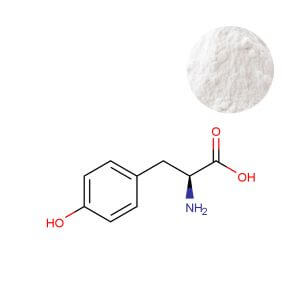
Understanding the metabolic pathway of neurotransmitter precursors is essential for R&D teams aiming to formulate for "mental energy" without the sensory volatility of stimulants. In the context of brain health, L-Phenylalanine functions as a vital upstream component of the catecholamine pathway. As an essential amino acid, it is converted into L-Tyrosine by the enzyme phenylalanine hydroxylase. The subsequent tyrosine hydroxylase step is rate-limiting for dopamine, norepinephrine, and epinephrine production. From a formulation perspective, this places L-Phenylalanine upstream of the catecholamine pathway, without implying a stand-alone cognitive endpoint. Unlike temporary stimulants that often lead to a "crash," providing a steady supply of wholesale L-Phenylalanine allows the body to maintain its natural neurotransmitter equilibrium, offering a more sustainable value proposition for the end consumer.
Practically speaking, the safety profile of an ingredient is the primary gateway for R&D approval and regulatory compliance. Phenylalanine (L- and DL-forms) is listed as GRAS under 21 CFR 582.5590, and L-Phenylalanine is also listed as a permitted food additive amino acid under 21 CFR 172.320, with FCC specifications on pages 794-795. AESAN has proposed a combined acceptable intake of 1,900 mg/day for L-tyrosine plus L-phenylalanine. This safety-based reference intake supports versatile dosing strategies in multi-ingredient stacks, enabling brand owners to scale potency safely to meet specific consumer needs. For brands, this regulatory grounding clarifies the safety basis, although EFSA has not authorized any health claim for L-phenylalanine, so structure-function positioning must be jurisdiction-specific. Conversion efficiency depends on specific co-factors, which formulators can leverage.
Metabolic Signaling and Satiety: Expanding the Application into Weight Management
Diversifying applications can improve ROI and supply chain efficiency. While often categorized solely as a nootropic, L-Phenylalanine holds significant potential in the metabolic health and weight management categories. The mechanism here is driven by its ability to stimulate the release of Cholecystokinin (CCK), a gastrointestinal hormone that signals satiety to the brain. This "satiety cascade" is associated with CCK and PYY signaling, while the glucoregulatory effect may be independent of slowed gastric emptying. This allows brands to position L-Phenylalanine for weight management formulas as a compelling alternative to traditional thermogenic stimulants, which may carry side effects like jitteriness that alienate sensitive consumer segments.
| Target Health Goal | Synergistic Ingredient Pairings | Commercial & Formulation Rationale |
|---|---|---|
| Cognitive Focus | Caffeine, L-Theanine, Vitamin B6 | B6 acts as a cofactor in dopamine synthesis; it does not by itself substantiate "focus" claims. |
| Satiety & Appetite Control | Soluble Fiber (Glucomannan), 5-HTP | Combines mechanical gastric filling with hormonal signaling for a premium "fullness" claim. |
| Mood Support | L-Tyrosine, Magnesium Glycinate | Supports the entire catecholamine pathway while reducing physical stress markers. |
A randomized, double-blind, controlled crossover trial in 16 healthy males (Nutrients, 2020; doi: 10.3390/nu12061788) reported that 10 g, but not 5 g, L-phenylalanine stimulated CCK (p = 0.01) and suppressed energy intake (p = 0.012), while also lowering peak glucose (p = 0.017). This quantitative evidence supports structure-function positioning for appetite control under the specific acute intragastric conditions tested, where such claims are permitted. This diversification - from "brain fuel" to "appetite regulator" - means procurement teams can leverage larger volume purchases of bulk L-Phenylalanine across multiple product lines, significantly optimizing unit costs and enhancing overall margin performance.
Quality Benchmarks for Manufacturing Excellence: Why Purity and Particle Size Dictate Yield
Physical specifications affect total cost of ownership. When brands decide to source L-Phenylalanine raw material, the decision often hinges on the price per kilogram, yet the true cost is realized on the production floor. A standardized ≥ 99.0% purity supports consistent downstream processing.
Furthermore, particle size distribution is a critical determinant of manufacturing throughput. A specification of ≥ 95% through 80 mesh is commonly specified to support flowability in encapsulation and reduce stratification risk in powder-mix drinks. From a logistics and quality standpoint, if particles are too coarse, they settle at the bottom of the packaging, causing inconsistent dosages - a major compliance risk. Conversely, ultra-fine dust can create cross-contamination hazards. A certified bulk L-Phenylalanine with a consistent mesh size directly reduces machine downtime and batch rejection rates. For the technical buyer, verifying specific rotation against the applicable pharmacopeial monograph is a key identity check for the biologically active L-isomer, ensuring the formula delivers the exact performance promised on the label.
Mitigating Supply Chain Risks: The Checklist for Sourcing Wholesale L-Phenylalanine
In a globalized market, procurement teams must evaluate suppliers based on their ability to provide consistent technical documentation that satisfies both QA departments and third-party auditors. Choosing a GMP L-Phenylalanine supplier who provides comprehensive, batch-specific COAs is the most effective way to lower the hidden costs of quality failures and regulatory delays. For brands entering highly regulated markets like the EU or Australia, this level of transparency is a prerequisite for market entry.
To protect the product line from future disruptions when sourcing wholesale L-Phenylalanine, procurement officers should use this expert sourcing checklist:
- What is the production route? Confirm whether the material is fermentation-derived, and request non-GMO documentation where required.
- Are microbial limits strictly controlled? Total Aerobic Microbial Count ≤ 1,000 CFU/g is critical for finished product stability, especially in aqueous or high-moisture functional foods.
- Is there a verifiable traceability system? Each drum should be traceable to its production batch, a vital requirement for brands maintaining FSSC 22000 or SQF certifications.
- Are heavy metal limits verified via ICP-MS? Precision testing for Lead and Arsenic is essential for compliance with California Proposition 65 and other international safety thresholds.
Strategically, managing moisture is the most effective way to preserve the material's physical integrity. In a professional warehouse environment, maintaining a dry warehouse environment limits hygroscopic clumping that can render bulk powder unusable for automated filling lines. Implementing these industry-standard practices ensures that the material received today will behave identically to the material received in the next quarter, protecting the brand's reputation for quality and consistent efficacy.
Next Steps for Your Product Development and Formulation Strategy
The integration of premium L-Phenylalanine into your product development roadmap offers a scientifically validated pathway to address two of the fastest-growing consumer demands: cognitive performance and metabolic health. By focusing on high-purity sources with verified production routes, your brand can provide the efficacy that discerning consumers demand while maintaining the operational manufacturing efficiency required for commercial success. Whether you are developing a targeted nootropic stack or a comprehensive satiety-based weight management powder, the quality of these primary amino acid building blocks will define your product's competitive position in the global market.
To help your R&D team validate compatibility with your specific formulation and accelerate speed-to-market, request a complimentary sample and technical dossier. Technical experts can provide detailed COAs, stability data, and custom blending support.
Frequently Asked Questions
Related Products
Request a Quote for L-Phenylalanine Powder
Tell us your required quantity and application. Our team will help you evaluate product specifications, pricing, samples, and supply options.