
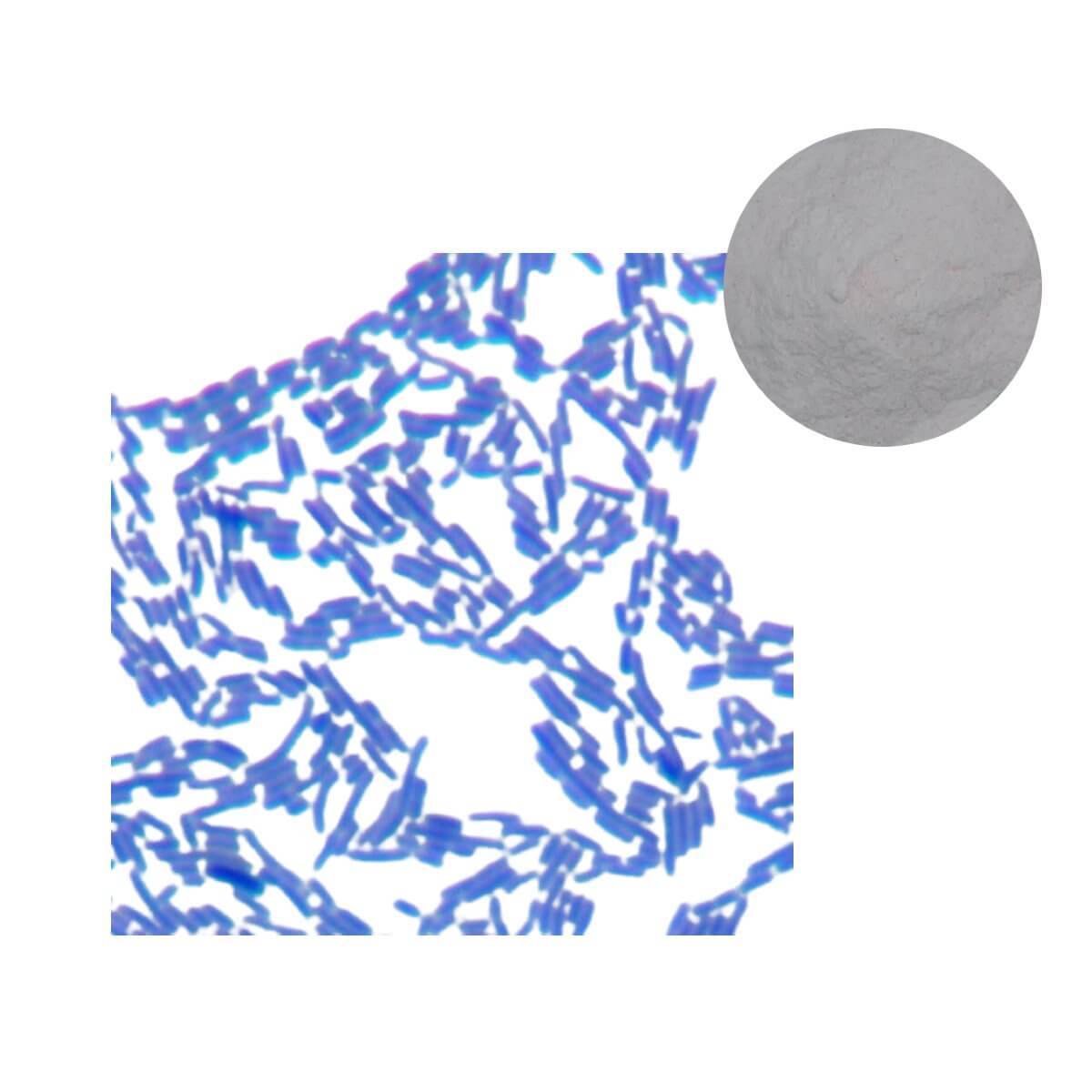
Lactobacillus Gasseri Probiotic
| Product Name | Lactobacillus Gasseri Probiotic Powder |
| Appearance | White to light yellow fine powder |
| Potency | 100B CFU/g, 200B CFU/g (by Plate Count) |
| Packaging | 1 kg/bag, 5 kg/bag, 25 kg/drum |
| MOQ | 1 kg |
Strain-Verified Lactobacillus Gasseri Probiotic Powder for Women’s Metabolic and Body-Composition Formulations
Strain-level clinical substantiation separates premium Lactobacillus Gasseri Probiotic Powder from commodity CFU powders. A wholesale Lactobacillus Gasseri Probiotic Powder supplier delivering lot-to-lot strain identity records, end-of-shelf-life potency data, and audit-ready COAs converts R&D validation into procurement confidence. Bulk Lactobacillus Gasseri Probiotic Powder at 100B/200B CFU/g anchors metabolic and body-composition claims on strain evidence, compressing qualification cycles and satisfying Tier-1 audit thresholds.
Strain-Specific Clinical Evidence as the Foundation of DTC Claim Substantiation
Species-level identity does not transfer clinical benefits across strains. SBT2055 has been shown to promote fecal fat excretion in human study settings, while BNR17 has demonstrated reductions in visceral fat accumulation versus placebo, with waist circumference reductions observed relative to baseline in a randomized, double-blind, placebo-controlled trial. These strain-anchored endpoints give formulators a defensible pathway to structure/function claims, but only when the incoming raw material is verified at strain resolution.
| Clinical Anchor | Documented Endpoint | Formulation Implication |
|---|---|---|
| SBT2055 | Fecal fat excretion promotion (7-day study); visceral fat reduction in 12-week RCT | Supports metabolic positioning in capsule and sachet formats |
| BNR17 | Visceral fat reduction vs placebo; waist circumference reduction vs baseline (double-blind RCT) | Supports weight-management claim architecture |
| Strain identity | 16S rRNA + WGS verification | Supports strain-specific GRAS/QPS dossier alignment and audit readiness |
The clinical endpoints summarized above pertain to specific studied strains (SBT2055 and BNR17); commercial strain designation for this specification is confirmed per order agreement, with identity records at lot release.
A 100B/200B Lactobacillus Gasseri Probiotic Powder specification tied to a named strain transforms a generic ingredient into a claim-ready asset. Brands pursue premium positioning through substantiated structure/function language, while procurement secures a supply chain node surviving scrutiny. Without strain identity, the CFU number is inert.
Dosage-Format Engineering and Synbiotic Compatibility for Premium Delivery Systems
Commercial value from strain-level evidence depends on the viable count surviving processing into the finished format. Capsule filling, sachet blending, and synbiotic co-formulation each impose distinct physical and viability constraints that determine whether a clinically relevant dose reaches the consumer.
- Pre-blending with maltodextrin or microcrystalline cellulose carriers achieves uniform distribution of 100B or 200B CFU/g powder in low-dose capsule and sachet formats.
- Synbiotic pairing with resistant starch, oligofructose, or inulin creates a metabolic-positioning narrative that may support 30-50% retail price premiums over standalone probiotic SKUs in premium markets.
- Microencapsulation options extend gastric survival and enable differentiated delivery formats without requiring secondary granulation at the CMO.
A bulk Lactobacillus Gasseri Probiotic Powder specification meeting flowability and particle-size tolerances for direct capsule filling removes a granulation step from the CMO's critical path, compressing time-to-market and reducing scrap. Synbiotic co-formulation differentiates the SKU in a crowded women's health shelf, justifying premium pricing through a clinically anchored metabolic-microbiome story rather than CFU count.
Low Water Activity Control and End-of-Shelf-Life Potency as a TCO Lever
A claim-ready CFU label is meaningless if potency decays below the declared threshold before expiry. Water activity control and moisture-barrier packaging determine whether the strain-specific clinical investment survives the shelf-life window.
Freeze-dried probiotic powders require water activity targets at or below 0.12 aw for optimal stability, and protective desiccant systems have been shown to extend viable-count retention under controlled storage. For Lactobacillus Gasseri Probiotic Powder 100B and 200B specifications, packaging format, whether aluminum foil sachets or high-density polyethylene containers, becomes a potency-determining specification, not a procurement afterthought.
| Stability Control Point | Commercial Consequence |
|---|---|
| Water activity ≤0.12 aw | Reduces viability decay rate; minimizes overage required to meet label claim at expiry |
| Moisture-barrier packaging | Protects end-of-shelf-life CFU; supports end-of-shelf-life potency claim substantiation |
| Desiccant integration | Supports extended viable-count retention under controlled storage |
Procurement frameworks evaluating suppliers on $/kg rather than $ per delivered CFU at expiry undervalue stability. A raw material with moisture control may carry a higher nominal unit cost yet reduce total cost of ownership through lower overage and scrap, without changing strain or claim position. Low water activity becomes margin-protection strategy, not a technical footnote.
Particle Physics and CMO Line Efficiency as Time-to-Market Determinants
Powder physics determines whether that potency can be filled efficiently and consistently at commercial scale. A wholesale Lactobacillus Gasseri Probiotic Powder supplier that specifies particle-size distribution and flowability upfront removes a hidden source of CMO line downtime and scrap.
Probiotic powder meeting the ≥95% through 80 mesh specification is typically compatible with high-speed dosator capsule filling, where outputs can reach 200,000 capsules per hour, subject to flowability and bulk density confirmation on the specific CMO platform. Loss on drying at ≤5.0% supports moisture control relevant to flowability and reduces bridging risk in feed hoppers. In sachet lines, uniform particle-size distribution minimizes segregation during blending and ensures consistent fill weights across high-volume runs. These tolerances reduce incoming inspection burden and support straight-through processing at the CMO.
- Specified particle-size distribution eliminates trial-and-error screening at the CMO, reducing line changeover time.
- Controlled bulk density and flowability support direct capsule filling without secondary granulation, preserving viable count and reducing scrap.
- Consistent lot-to-lot physical properties enable scale-up from pilot batches to commercial runs without reformulation.
Powder physics validated against the CMO's filling platform compress the qualification timeline and reduce late-stage line rejection risk. In a 100B/200B Lactobacillus Gasseri Probiotic Powder program, this means earlier retail launch, lower working-capital exposure during scale-up, and predictable unit cost, factors influencing the brand's ability to hit seasonal or subscription-launch windows.
Regulatory Dossier Readiness Across FDA and EFSA Jurisdictions
Line efficiency and stability performance deliver a product that can be manufactured and shipped; regulatory dossier readiness determines whether that product can be lawfully marketed with the claims that justify its premium. The final commercial gate becomes the alignment of strain identity, safety documentation, and claim wording with the destination market’s framework.
GRAS Notice No. 1089 covers strain NCIMB 30370 for conventional food uses at levels up to 1011 CFU/serving; GRAS status is strain-specific and does not extend automatically to other L. gasseri strains or to dietary supplement applications. EFSA’s QPS framework supports the safety presumption for L. gasseri and related taxonomic units in the EU, subject to current classification and qualification conditions, but “probiotic” is treated as an implied health claim under the Nutrition & Health Claims Regulation, meaning marketing language must be calibrated to strain-specific, structure/function formulations rather than generic probiotic assertions.
| Jurisdiction | Regulatory Anchor | Claim Architecture |
|---|---|---|
| United States | GRAS Notice 1089 (NCIMB 30370); DSHEA structure/function | Strain-specific metabolic and microbiome support claims |
| European Union | EFSA QPS list; Nutrition & Health Claims Regulation | Strain-identified safety narrative; avoid implied “probiotic” health claims |
A Lactobacillus Gasseri Probiotic Powder supplier that provides WGS-based strain identity records, AMR screening summaries, and jurisdiction-specific claim guidance converts regulatory complexity into a procurement advantage. Brands can enter multiple markets with a single strain-verified raw material platform, reducing duplication in dossier preparation and accelerating international launch timelines.
Accelerating R&D Validation and Procurement Risk Assessment
Technical documentation alone does not close a sourcing decision; the decisive step is verifying that the specified strain, potency, and physical properties perform in the buyer’s actual formulation and packaging system. Secure a Lactobacillus Gasseri Probiotic Powder sample with complete technical dossier. Sample dispatch includes strain identity records, lot-specific COA, water activity and particle-size data, and regulatory summary documentation, enabling R&D to complete formulation feasibility and procurement to assess supplier qualification without sequential information requests. This pathway reduces the validation cycle from weeks of document exchange to a single evaluation window.
Frequently Asked Questions
Related Products
Request a Quote for Lactobacillus Gasseri Probiotic
Tell us your required quantity and application. Our team will help you evaluate product specifications, pricing, samples, and supply options.