
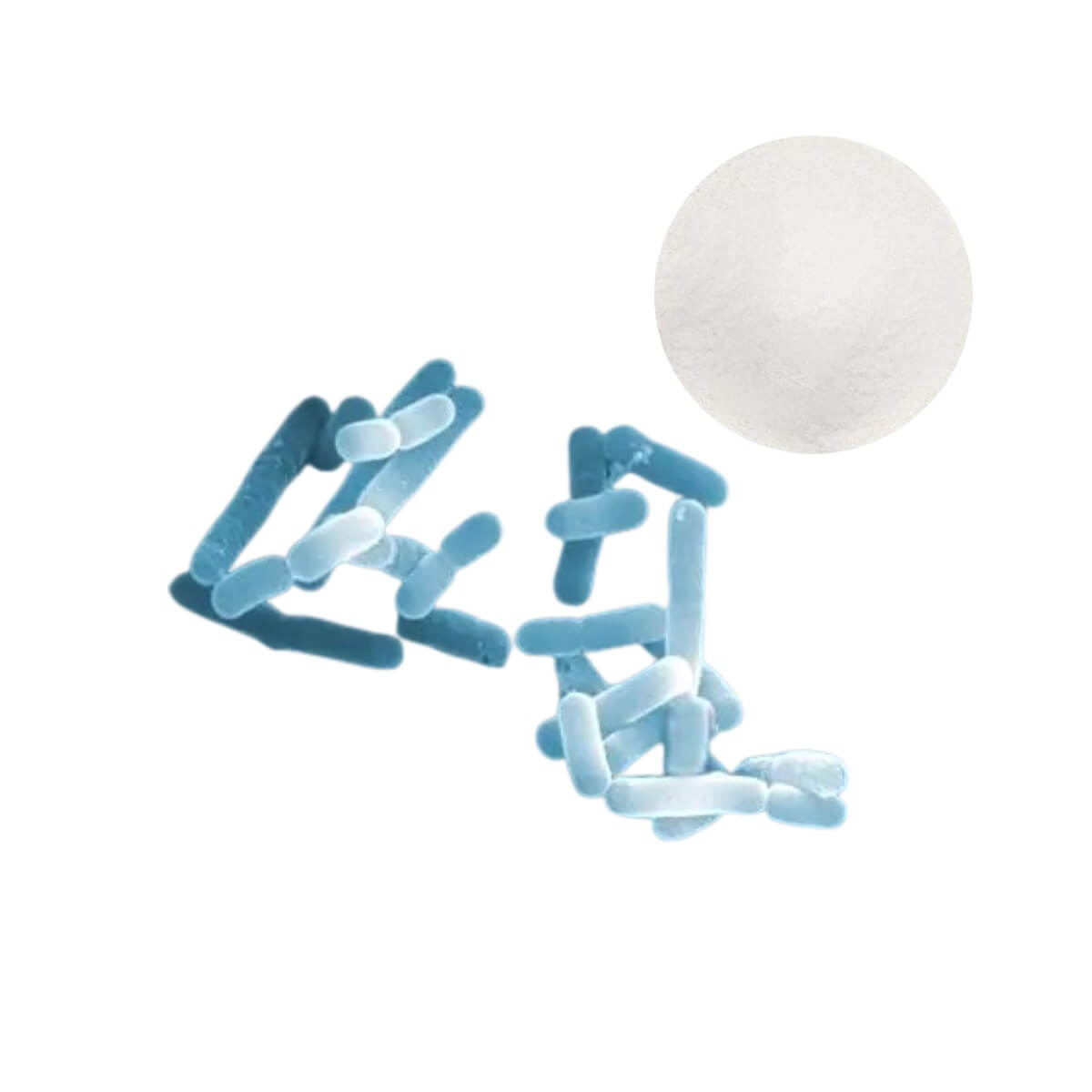
Lactobacillus Reuteri Powder
| Product Name | Lactobacillus Reuteri Powder |
| Appearance | Off-white to light yellow powder |
| Potency | 100 Billion CFU/g & 200 Billion CFU/g min. |
| Testing Method | Plate Count Method (Colony-Forming Units) |
| Packaging | 1 kg/bag, 5 kg/bag, 25 kg/drum |
| MOQ | 1 kg |
Lactobacillus Reuteri Powder: Bulk Probiotic Supply for Gut Health Formulations
Bulk L. reuteri powder viability hinges on moisture activity (Aw) control, with viable cell counts dictating finished product efficacy. Spec-verified distributors prioritize strain identity (16S rRNA) and lot-to-lot potency consistency - documented via standardized Plate Count Method in each COA to ensure batch reproducibility. Precise management of these physical parameters provides the scientific differentiation necessary for brands to build formulation credibility in an increasingly crowded gut health market.
Viability Retention Under Aw Control - The Decisive Parameter for Probiotic Stability
Freeze-dried L. reuteri viability follows first-order decay kinetics, with Aw serving as the primary accelerant. Elevating Aw from 0.11 to 0.30 triggers 1.5-2.0 log CFU/g reduction at 37°C. Lower Aw maintains a rigid glassy cryomatrix, effectively arresting molecular mobility and metabolic reactivation.
| Storage Parameter | Aw 0.11 (Glassy State) | Aw 0.30 (Rubbery State) |
|---|---|---|
| Viable Count Decline (37°C, 6 months) | 1.5-2.0 log CFU/g | 2.0-2.5 log CFU/g |
| Protective Matrix Physical State | Rigid glass (Tg > storage temp) | Softened / rubbery (Tg < storage temp) |
| Cell Membrane Integrity (FTIR confirmation) | Preserved secondary protein structure | Altered protein conformation & surface deformation (SEM-visible corrugation) |
This Aw-control paradigm extends shelf-life economics. Oil-suspended L. reuteri with desiccant strip technology achieves >24 months ambient stability at 25°C, versus <6 months for desiccant-free batches (Food and Bioprocess Technology, 2026; doi: 10.1007/s11947-026-04353-7). The 4-fold extension (p=0.0025) reduces cold-chain dependency and logistics overhead, protecting TCO. Maintaining Aw below 0.15 directly depresses high-speed encapsulation line rejects by preventing powder agglomeration that otherwise triggers hopper flow interruptions.
Air-Freight Degradation Dynamics and Cross-Border Logistics Protection
L. reuteri powders face two distinct physical threats during express airfreight: tarmac temperature spikes (exceeding 60°C surface temperature during ground handling) and reduced cabin pressure (equivalent to 2,400-2,800 meters altitude), which stresses sealed packaging integrity. These transient environmental shocks, combined with 5-14 day transit windows, create cumulative viability stress that conventional packaging cannot fully mitigate.
- High-barrier aluminum foil laminate (≥12 μm foil + PE composite): Oxygen transmission rate (OTR) ≤ 0.5 cc/m²/24h and water vapor transmission rate (WVTR) ≤ 0.01 g/m²/24h - blocks moisture and oxygen ingress that accelerate cell death during prolonged storage.
- Medical-grade desiccant sachets (built-in, product-isolated): Maintains internal microenvironment Aw ≤ 0.15 throughout the entire logistics chain, irrespective of external humidity fluctuations.
- Temperature data loggers embedded in each shipping container: Provides continuous thermal monitoring with auditable records for quality dispute resolution and carrier compliance verification.
These protective layers ensure that upon customs clearance and drum opening, the powder's physical flowability, moisture content (≤5.0%), and viable count match the factory-release COA without deviation. For procurement directors, this translates to zero rejection risk at incoming inspection and eliminates costly quarantine disputes. Comprehensive logistics validation further fortifies the supply chain against temperature excursion claims that typically trigger full container holds and forensic investigation delays.
Reuterin-Mediated Antimicrobial Mechanisms - Molecular Evidence for Gut Health Efficacy
L. reuteri secretes reuterin (3-hydroxypropionaldehyde / 3-HPA) - a broad-spectrum antimicrobial metabolite that depresses pathogen colonization in the gastrointestinal tract. Reuterin exerts bactericidal activity through intracellular redox disruption and reactive oxygen species (ROS) accumulation, validated by systematic genomic screening of the E. coli Keio collection.
- 159 hypersensitive mutants identified: Gene deletions in aromatic amino acid synthesis, sulfur metabolism, and glutathione biosynthesis pathways significantly increase reuterin susceptibility - confirming precise molecular targets.
- 117 resistant mutants characterized: omrA and aaeR gene deletions enhance biofilm formation, acting as structural barriers that reduce compound uptake and confer adaptive tolerance.
- Dual oxidative and electrophilic stress: Reuterin simultaneously disrupts thiol-redox homeostasis and alkylates cellular nucleophiles, creating a multi-hit antimicrobial mechanism that pathogens cannot easily circumvent.
This molecular-level action supports gastrointestinal barrier function by depressing enteropathogen loads. The mechanistic architecture, confirmed through 276 mutant screens (mBio, 2025; doi: 10.1128/mbio.01432-25), provides a scientifically defensible foundation for gut health claims.
Formulation Compatibility and Synergistic Pairings for Multi-Component Blends
Integrating L. reuteri into complex supplement matrices introduces four critical compatibility risks: thermal degradation during high-temperature processing, osmotic shock from concentrated sugars/salts, acid inactivation in gastric environments, and oxidative membrane damage. Each requires targeted formulation architecture.
| Compatibility Risk | Critical Parameter | Protective Strategy |
|---|---|---|
| Thermal inactivation | Viability loss >50% above 50°C; complete loss above 70°C | Low-temperature processing (<40°C) or post-addition granulation after cooling |
| Osmotic pressure shock | High sugar/salt matrices depress viability via plasmolysis | Microencapsulation with protective wall materials (e.g., alginate, starch) |
| Gastric acid (pH 1.5-3.5) | Acid exposure reduces viable counts by 2-4 log CFU within 60 minutes | Enteric coating or acid-resistant microcapsule formulations |
| Oxidative stress | Membrane lipid peroxidation from oxygen exposure | Nitrogen flushing + antioxidant excipients (vitamin E, rosemary extract) |
Synergies with prebiotic fibers (FOS, GOS, native chicory inulin) provide fermentation substrates for L. reuteri colonization in the distal gut. stabilized Vitamin D3 cholecalciferol complements immunomodulatory effects via cathelicidin upregulation, while zinc maintains barrier integrity. For multi-component blends, pre-drying excipients to Aw ≤ 0.15 and incorporating desiccants prevents moisture-driven potency loss. Managing pre-blend moisture equilibrium ensures finished tablet hardness remains consistent across production runs, avoiding the capping and lamination defects that typically emerge when hygroscopic excipients migrate moisture into probiotic granules.
Global Regulatory Status and Compliance Infrastructure for Market Access
L. reuteri's regulatory landscape has undergone significant clarification in recent years. The European Commission's December 2025 Novel Food Catalogue update formally assigned 34 probiotic strains - including L. reuteri - as "not novel," eliminating the need for formal pre-market authorization under Regulation (EU) 2015/2283 for products marketed prior to May 1997.
- United States FDA: Multiple GRAS notifications (GRN No. 254 for DSM 17938; GRN 409/410 for NCIMB 30242) approved, with dosage ranges from 3.3×10⁸ to 1×10¹⁰ CFU/serving. L. reuteri is also classified as "grandfathered" under DSHEA, requiring no NDI filing for established strains.
- European Union EFSA: Listed in the QPS (Qualified Presumption of Safety) inventory. The "not novel" status (confirmed December 2025) simplifies market entry; however, no specific health claims are authorized under Regulation (EC) 1924/2006 - only structure/function claims are permissible.
- China: Approved for use in health foods (2003) and infant foods (2014 NHFPC approval for DSM 17938). Requires compliance with local health food registration or filing systems.
This clarified regulatory infrastructure reduces compliance uncertainty. Spec-verified distributors with batch-specific COA, strain identity, and audit trails streamline onboarding and reduce legal review timelines by 30-40%. Full regulatory dossiers additionally accelerate customs clearance by enabling ports to verify product status against pre-filed compliance documentation, effectively compressing the typical 5-7 day border hold into a 24-hour electronic verification window.
Technical Documentation and Batch-Specific COA for Supplier Onboarding
Commercial-scale L. reuteri powder procurement demands more than specification sheets - it requires full audit-ready documentation including strain identity verification (NCBI Taxonomy ID: 1606475), heavy metal ICP-MS profiles (Pb ≤ 0.5 mg/kg, As ≤ 0.5 mg/kg, Cd ≤ 0.5 mg/kg, Hg ≤ 0.1 mg/kg), and microbiological purity certification (USP <61> and <62>). Each batch undergoes mandatory potency verification via Plate Count Method to ensure 100B or 200B CFU/g minimum specifications are consistently met.
Brands can Request spec-verified L. reuteri samples with full COA packages to accelerate R&D qualification and procurement validation workflows.
Frequently Asked Questions
Share this product
Related Products
Ready to get started?
Contact our team for technical specifications, pricing, and customized solutions.