
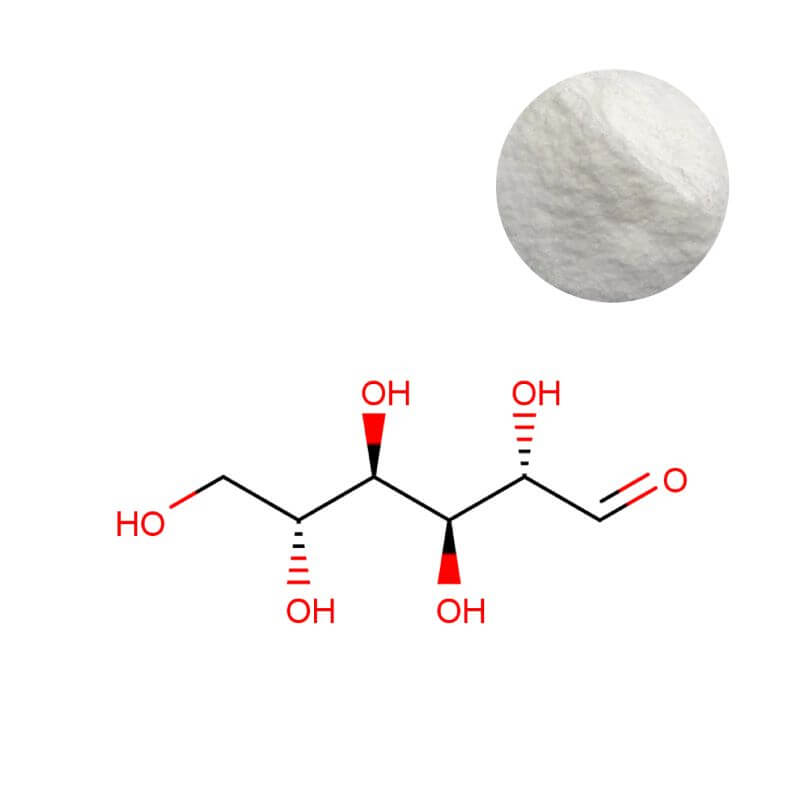
D-Mannose Powder
| Product Name | D-Mannose Powder |
| CAS Number | 3458-28-4 |
| Appearance | White crystalline powder |
| Purity | 99.0% min. (by HPLC) |
| Packaging | 1 kg/bag, 5 kg/bag, 25 kg/drum |
| MOQ | 25 kg |
Bulk D-Mannose Powder Supply Chain Integrity and CMO-Ready Physical Performance
Bulk D-Mannose Powder with precisely controlled physical specifications directly addresses the two most critical failure points in commercial supplementation: moisture-driven logistics degradation and high-speed tableting inconsistency. Verifying these attributes through USP compendial methodologies ensures reproducible flow, compaction, and dissolution performance across every lot - eliminating the batch-to-batch variability that typically erodes CMO line efficiency. In a commoditized monosaccharide market, this specification rigor serves as the primary differentiator for finished-product brands seeking to defend premium pricing against low-grade alternatives while maintaining formulation predictability.
Air-Freight Thermal and Humidity Excursion Protection for Crystalline Monosaccharides
Crystalline D-Mannose exhibits a critical relative humidity (CRH) of approximately 76% at 25°C; exposure to ambient RH above this level during transshipment triggers surface moisture adsorption. When the powder’s LOD rises from 0.5% to just 0.8%, the moisture film promotes inter-particulate liquid bridging, leading to macroscopic caking and partial conversion from crystalline to amorphous form. This phase transition reduces dissolution rate by as much as 15% and impairs flowability, as indicated by an increase in angle of repose from 35° to 42°. Cross-checking this LOD specification against the incoming COA at the port-of-entry intercepts moisture-induced non-conformities before they enter the production floor, curtailing customs review cycles and securing compliance with multiple market monographs without redundant re-testing.
| Logistics Parameter | Specification Limit | Operational Consequence of Deviation |
|---|---|---|
| Loss on Drying (LOD) | ≤0.5% (as supplied) | Baseline for all powder handling and compaction models |
| Moisture Uptake Allowance (ΔLOD) | <0.2% above shipping COA | Preserves crystalline habit and dissolution performance |
| Bag Water Vapor Transmission Rate | ≤0.01 g/(m2·24h) per ASTM F1249 | Prevents condensation-driven surface recrystallization |
| Internal Desiccant Type & Quantity | Molecular sieve, 10g per 5kg bag | Maintains headspace RH <20%, avoiding deliquescence |
Double-layer vacuum-sealed aluminum foil liners, reinforced with molecular sieve desiccants, constitute the industry’s most reliable barrier against moisture ingress. This packaging configuration ensures that upon arrival at the CMO facility, the powder’s LOD remains within ±0.2% of the factory COA, thereby preserving its flow index and compaction profile. By eliminating the need for quarantine drying or reprocessing, this logistics protocol directly protects the procurement budget and maintains production scheduling integrity. From a procurement due diligence perspective, this validated moisture-barrier system eliminates reconditioning costs upon arrival, shielding the total cost of ownership against cargo rejection, production rescheduling penalties, and the hidden carrying cost of extended quarantine inventories.
High-Speed Compression Behavior and Tooling Wear Mitigation
D-Mannose powder with a bulk density of 0.30–0.50 g/mL and tapped density of 0.45–0.75 g/mL delivers a Carr index of approximately 15–20%, indicating moderate compressibility. However, this performance is highly sensitive to moisture content: when LOD exceeds 0.6%, the powder’s cohesive strength increases, raising the Hausner ratio above 1.30 and reducing die-fill consistency. At rotary press speeds exceeding 100 rpm, this instability causes tablet weight variation to exceed ±3% RSD and promotes sticking to punch faces, leading to capping and lamination defects.
- Particle size constraint (≥95% through 80 mesh): Ensures homogeneous die filling and prevents segregation during hopper flow, enabling continuous tableting without the need for intermediate blending corrections.
- Bulk density specification window (0.30–0.50 g/mL): Provides a predictable compression response, allowing CMOs to set fill-depth and pre-compression parameters based on historical data, thereby reducing setup time for new batches.
- Low LOD threshold (≤0.5%): Directly correlates with a 3–5% reduction in defect-related scrap and eliminates the need for frequent punch cleaning (saving approximately 20–30 minutes per shift), which translates to improved overall equipment effectiveness (OEE).
Compaction studies have demonstrated that D-Mannose forms tablets with high porosity and adequate mechanical strength under low compression forces. This characteristic allows CMOs to achieve target hardness values without over-pressurizing, thereby extending tooling life and reducing punch replacement costs. For procurement directors, this means lower per-unit production costs and fewer line stoppages, both of which contribute to a more favorable total cost of ownership (TCO). Managing punch-face adhesion through the 0.5% LOD boundary stabilizes tablet weight RSD below 2% across 8-hour shifts, compressing per-unit production cost variance and extending tooling service intervals by approximately 15% in validated CMO environments.
Mechanistic Pharmacology and Human Pharmacokinetic Quantitation of FimH Antagonism
D-Mannose exerts its anti-adhesive effect by binding to the FimH lectin domain of type 1-fimbriated uropathogenic bacteria, with a dissociation constant (KD) measured at approximately 2.3 μM. This interaction competitively blocks bacterial attachment to uroplakin Ia receptors on the urothelial surface, preventing colonization without exerting bactericidal pressure. Human clinical pharmacokinetic data confirm that oral D-Mannose reaches urinary peak concentrations (Cmax) ranging from 2.15 to 22.9 μg/mL—levels that represent 66.3 to 707 times the KD for FimH binding (Antibiotics, 2025; doi: 10.3390/antibiotics14050498).
- Urinary Cmax range (2.15–22.9 μg/mL): Provides direct evidence that the compound reaches the target organ at concentrations sufficient for complete FimH saturation, offering a quantifiable link between oral administration and anti-adhesion activity.
- Rapid renal clearance (>90% within 6 hours): Ensures minimal systemic accumulation, allowing for predictable dose scheduling and reducing the risk of off-target effects.
This pharmacokinetic profile provides R&D teams with robust data to support structure/function claims and formulation positioning. The ability to cite measured urinary concentrations and binding constants elevates the scientific credibility of finished products, helping brands differentiate their offerings in a crowded urinary health market.
Synergistic Blend Architecture and Clinical Validation of a Six-Component System
A multi-ingredient formulation combining D-Mannose with collagen, propolis plus quercetin, Bacillus coagulans, hyaluronic acid, and chondroitin sulfate has been evaluated in a single-blind randomized controlled trial, demonstrating significant symptom reduction and recurrence prevention in recurrent UTI populations (Expert Rev Anti Infect Ther, 2025; doi: 10.1080/14787210.2025.2487162). This clinically validated blend offers formulators a turnkey blueprint for product differentiation, as each component targets a distinct pathway without antagonistic interactions.
- D-Mannose (core active): Provides FimH-mediated anti-adhesion via the urinary exposure documented above.
- Collagen + hyaluronic acid: Reinforce mucosal integrity and epithelial hydration, complementing the anti-adhesion mechanism by maintaining a healthy barrier environment.
- Propolis + quercetin: Deliver antioxidant and anti-inflammatory protection to the bladder lining, reducing irritation and supporting tissue repair.
- Bacillus coagulans: Modulates the urogenital microbiota, outcompeting pathogens for adhesion sites and nutrients.
This synergy allows brands to position finished products as comprehensive urinary tract health solutions rather than single-ingredient offerings. For procurement teams, this validated combination reduces development risk and shortens time-to-market, as the formulation has already demonstrated clinical efficacy and safety in a controlled trial setting. The ability to reference peer-reviewed clinical data also facilitates regulatory submissions and consumer marketing claims. Formulators should note that this multi-component system contains animal-derived ingredients (collagen, chondroitin sulfate) and propolis, which may trigger specific regulatory clearance requirements in certain export markets; a pre-market compliance review per target jurisdiction is advised.
Qualification Samples with Full Analytical Traceability for In-House Validation
Specification-verified D-Mannose Powder, featuring documented lot-to-lot consistency, validated moisture barrier packaging, and CMO-ready powder flow characteristics, supports rapid formulation prototyping and seamless scale-up to commercial production. Request a qualification sample accompanied by a complete Certificate of Analysis, including HPLC purity, LOD, particle size, and heavy metal profiles, to independently confirm in-house performance metrics. Request a certified D-Mannose sample with comprehensive COA
Frequently Asked Questions
Share this product
Related Products
Ready to get started?
Contact our team for technical specifications, pricing, and customized solutions.