
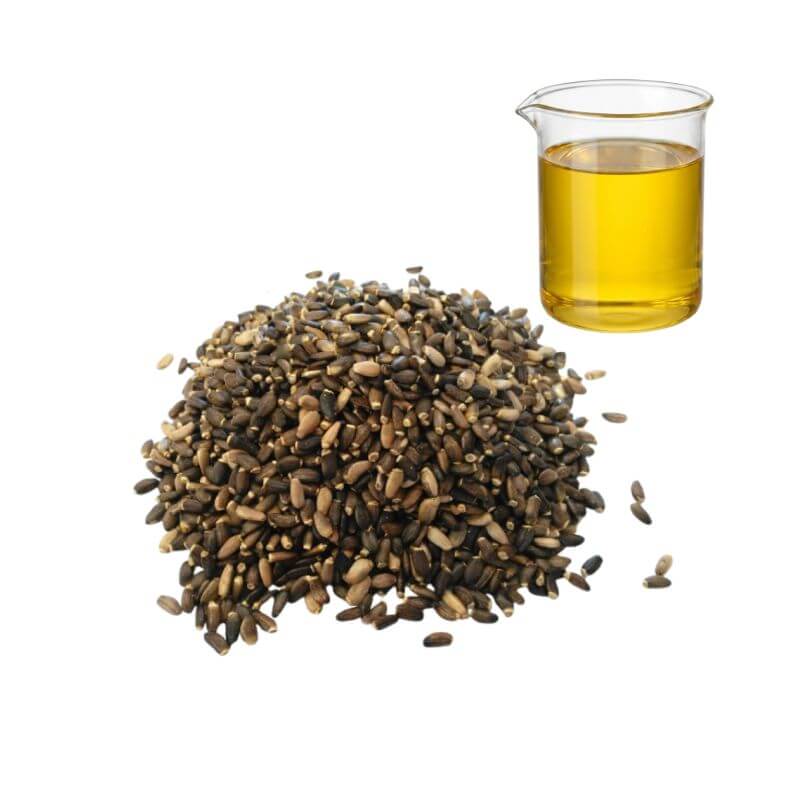
Milk Thistle Seed Oil
| Product Name | Cold Pressed Milk Thistle Seed Oil |
| CAS Number | 84604-20-6 |
| Appearance | Clear, pale yellow to golden yellow liquid |
| Purity | 100% Pure & Natural (50% min. Linoleic Acid) |
| Packaging | 25 kg/plastic drum, 190 kg/iron drum |
| MOQ | 25 kg |
Cold Pressed Milk Thistle Seed Oil (≥50% Linoleic Acid): A Lipophilic Foundation for Metabolic Health & Liver Support Formulations
Formulators targeting metabolic syndrome, weight management, or hepatic health face a recurring challenge: most lipid ingredients offer generic fatty acid profiles without clinically relevant bioactivity. Cold pressed milk thistle seed oil — standardized to ≥50% linoleic acid — delivers a complex matrix of polyunsaturated fatty acids, natural tocopherols, and phenolic compounds. Preclinical evidence confirms its impact on fasting glucose, inflammation, and liver fibrosis, making it a science‑backed, clean‑label oil for next‑generation supplements. For brand owners, locking in a consistent linoleic acid baseline of ≥50% creates a defensible product story in the increasingly crowded metabolic health space, directly supporting premium pricing.
Evidence‑Based Mechanisms: How This Oil Modulates Metabolic and Hepatic Pathways
Bulk milk thistle seed oil is not merely an omega‑6 carrier. In a 20‑week diet‑induced obese mouse model, eight weeks of cold pressed milk thistle seed oil (MTO) supplementation significantly attenuated weight gain, fasting hyperglycemia, hypertension, and systemic inflammatory markers (doi: 10.1111/jfbc.13522). Histological analysis also showed improved liver fibrosis — a key endpoint for metabolic dysfunction‑associated steatotic liver disease (MASLD). From a formulation perspective, this means the oil can be positioned as an active contributor to multi‑target products, not just a base oil.
The synergy driving these effects includes:
- Linoleic acid (48–64%) — Supports membrane fluidity and eicosanoid balance.
- Oleic acid (26–35%) — Provides oxidative stability and monounsaturated benefits.
- Natural tocopherols & polyphenols — Scavenge free radicals without synthetic additives.
For procurement teams, this directly translates to a quality priority: verify linoleic acid content (≥50% by GC) and oxidative stability markers (peroxide value ≤10.0 meq O₂/kg, acid value ≤4.0 mg KOH/g) on every batch‑specific COA. These parameters ensure that the biological activity observed in research is preserved in your finished product. This traceability from lab data to final goods means shorter R&D validation cycles and faster regulatory submission readiness, effectively compressing time‑to‑market for new product lines.
Quality Benchmarks: What Defines a Premium Cold Pressed Milk Thistle Seed Oil
When evaluating a certified milk thistle seed oil supplier, three non‑negotiable quality indicators go beyond “100% pure” claims and directly impact regulatory acceptance and shelf life:
- Authentic fatty acid fingerprint — The characteristic profile (linoleic 48–64%, oleic 26–35%, palmitic 6–10%, stearic 3–7%) should match the Silybum marianum standard. Significant deviations indicate adulteration with cheaper vegetable oils.
- Oxidative stability under accelerated conditions — A recent characterization of S. marianum and S. eburneum seed oils reported a rancimat induction time of approximately 14.65 hours for cold pressed samples, confirming good resistance to autoxidation (doi: 10.1371/journal.pone.0304021). For brands, this translates to a 24‑month shelf life without synthetic preservatives when stored properly.
- Full contaminant control — Heavy metals (Pb ≤1.0, As ≤1.0, Cd ≤0.5, Hg ≤0.1 mg/kg), residual solvents compliant with USP <467>, and microbiological purity (total plate count ≤1,000 CFU/g, absence of pathogens).
Sourcing a GMP milk thistle seed oil ingredient that provides batch‑specific data on these three pillars reduces formulation risk and accelerates time to market. Key sourcing considerations include requesting the supplier’s standard Rancimat value and confirming that the oil is stored (10‑25°C, light‑protected) throughout the supply chain. For export‑oriented brands, a COA that includes these parameters directly supports regulatory filings in markets such as the EU, Canada, and Australia, reducing approval delays. Consequently, procurement teams reduce the risk of customs holds or rejection letters, protecting both launch timelines and brand reputation.
Formulation in Practice: Softgels, Functional Oils & Synergistic Combinations
The lipophilic nature of milk thistle seed oil makes softgel encapsulation the most straightforward delivery format, but it also performs well in liquid functional oils and emulsified powders. Below is a formulation guide based on common end‑product types:
| Finished Product Type | Serving Size (Oil Content) | Critical Formulation Tips |
|---|---|---|
| Softgel (500‑1000 mg) | 1‑2 softgels/day (500‑2000 mg) | Use oxygen‑barrier shells; add mixed tocopherols (0.1‑0.2%) as antioxidant; avoid high humidity during encapsulation. |
| Liquid functional oil (dropper) | 5‑10 mL (approx. 1‑2 tsp) | Package in amber glass with nitrogen flushing; advise refrigeration after opening. |
| Emulsified powder (stick pack) | 50% oil load via microencapsulation | Spray‑dry with modified starch or gum Arabic; keep water activity (aw) below 0.3. |
For synergistic blends, milk thistle seed oil combines effectively with:
- Phospholipids (lecithin) — Enhance emulsion stability and may improve liver cell integration.
- Artichoke leaf extract — Complementary bile‑flow and hepatoprotective pathways.
- Vitamin E (mixed tocopherols) — Natural antioxidant synergy, extending shelf life.
- Rosemary extract (CO₂ extract) — A natural antioxidant that synergizes with tocopherols, extending the oil's induction period by up to 40% in Rancimat tests.
An effective formulation requires controlling environmental humidity during manufacturing (below 45% RH) to prevent moisture‑induced oil degradation before encapsulation. Practically speaking, request a pilot stability study from your contract manufacturer, especially for products with more than 30% polyunsaturated fatty acids. This proactive step reduces rancidity risk and consumer complaints. Batch‑to‑batch nitrogen blanketing during storage and transfer is an industry best practice that many formulators overlook until mid‑shelf oxidation issues appear.
Supply Chain Resilience: A Technical Sourcing Checklist for Bulk Milk Thistle Seed Oil
For procurement teams, the true total cost of ownership for a wholesale milk thistle seed oil includes not only the unit price but also batch‑to‑batch consistency, COA accuracy, and supply reliability. When evaluating a supplier, use this objective checklist:
- Full fatty acid profile by GC — Confirm linoleic ≥50% and no unexpected peaks (e.g., erucic acid, indicating adulteration).
- Batch‑specific COA — Must include heavy metals, residual solvents, microbial tests, peroxide value, and acid value.
- Documented cold press process — No solvent residues; extraction temperature ≤50°C to preserve thermolabile antioxidants.
- Traceability from seed origin to final drum — Country of origin and harvest year should be provided.
- Third‑party certifications — Non‑GMO, organic (if required), Kosher/Halal.
Investing in a supplier with Rancimat oxidative stability data and accelerated testing protocols (e.g., 40°C/75% RH for 3 months) directly reduces product development risk. This translates to fewer stability failures, lower reformulation costs, and a stronger regulatory dossier. For procurement teams, partnering with a supplier that conducts third‑party audits of cold press facilities and publishes annual sustainability reports adds verifiable supply chain security. Adopting a total cost of ownership lens reveals that paying marginally more for a supplier with guaranteed oxidative stability data eliminates catastrophic batch failures that can cost over fifty times the ingredient premium.
Next Steps: Validate, Sample, and Scale Your Formulation
Moving from concept to commercial supplement requires more than a specification sheet. It demands verified performance under your specific manufacturing conditions. Oclean Nutra supports brands with pre‑shipment samples, full technical documentation (batch‑specific COA, Rancimat data, stability summaries), and formulation consultation within 24 working hours. Request your complimentary sample and technical dossier — request a sample of our Cold Pressed Milk Thistle Seed Oil — and test its oxidative stability, compatibility, and bioactive consistency in your own prototype before committing to bulk orders. Our technical support team can also provide a pre‑filled stability protocol template customized to your target market's registration requirements and dosage form.
Frequently Asked Questions
Share this product
Related Products
Ready to get started?
Contact our team for technical specifications, pricing, and customized solutions.