
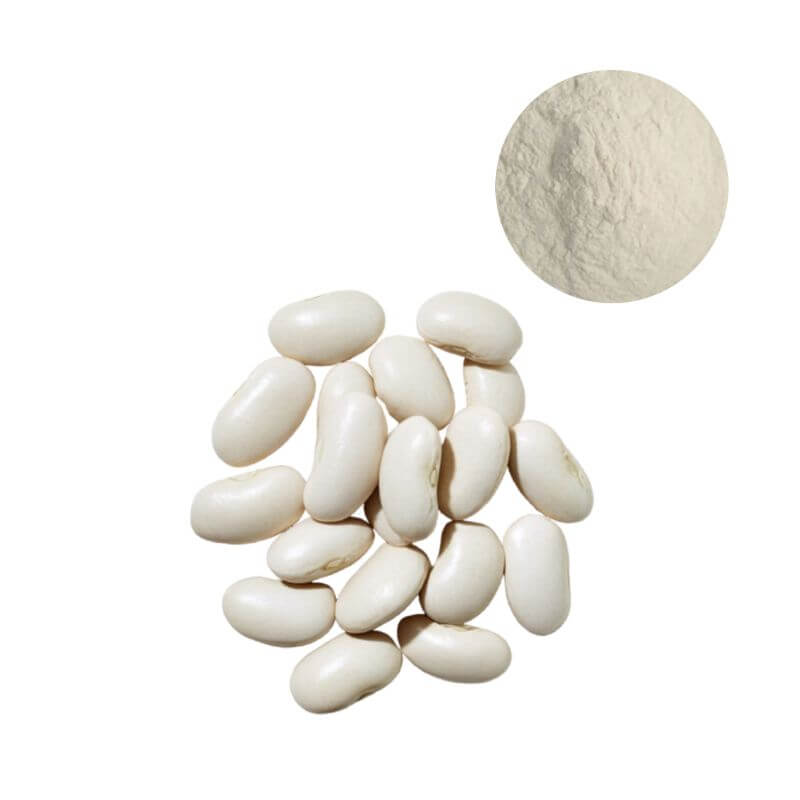
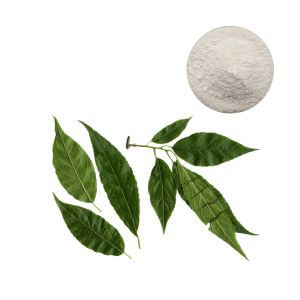
White Kidney Bean Extract Powder
| Product Name | White Kidney Bean Extract Powder |
| CAS Number | 85085-22-9 |
| Appearance | Off-white to pale yellow fine powder |
| Purity | 1%, 2% Phaseolamin (by HPLC) |
| α-Amylase Inhibitory Activity | 1,000 U/g - 4,000 U/g (by UV-Vis) |
| Packaging | 1 kg/bag, 5 kg/bag, 25 kg/drum |
| MOQ | 5 kg |
White Kidney Bean Extract Powder: Industrial-Scale Formulation & Supply Chain Compliance
Bulk White Kidney Bean Extract Powder demands rigorous process validation to mitigate high-speed tableting failures—where hygroscopic protein-polysaccharide matrices trigger sticking, picking, and weight variation drift beyond >6% RSD on rotary presses. Spec-verified distributors serving metabolic health brands enforce lot-to-lot phaseolamin consistency via HPLC fingerprinting and USP <61> microbial clearance, with full traceability dossiers (seed-to-extract) securing incoming inspection release within 4-hour quarantine windows. Controlling particle-specific flow parameters functions as the primary competitive moat, enabling finished-brand premium positioning within a heavily commoditized metabolic health ingredient landscape.
High-Speed Compression Behavior: Mitigating Sticking, Picking, and Weight Variation Drift
White Kidney Bean Extract Powder exhibits a bulk density range of 0.45-0.65 g/mL and Hausner ratio of 1.25-1.40, with ≥95% passing 80 mesh. At ambient RH exceeding 60% or die temperatures above 35°C, surface polar groups (glycoproteins) promote hygroscopic bridging, elevating weight variation RSD from ≤3% to ≥6% on 400,000-tablet/hour rotary presses. This directly triggers a 15-20% output loss per shift due to mandatory die cleaning every 1.5 hours versus the standard 8-hour interval. Maintaining processing environment at ≤45% RH effectively depresses moisture-induced agglomeration, preserving feed-frame mass flow uniformity across full 8-hour shifts.
- Flowability threshold & hopper bridging risk: Angle of repose exceeding 35° correlates with arch formation in feed frames—prevented by specifying ≥95% through 80 mesh and maintaining bulk density above 0.45 g/mL.
- Sticking kinetics under frictional heat: Glycoprotein adhesion to punch faces intensifies above 35°C; direct-compression formulations require magnesium stearate (0.5-1.0%) as a boundary lubricant to depress ejection forces.
Spec-verified lots with documented Hausner ratio ≤1.30 and moisture content ≤5.0% (USP <731>) reduce punch-face cleaning frequency by 400%—from every 90 minutes to a full 8-hour shift—directly lowering CMO downtime costs and preserving TCO margins for high-throughput encapsulation campaigns. Engineering particle morphology and flowability directly depresses high-speed encapsulation rejects, compressing per-unit production overhead while optimizing finished dosage form consistency across full-scale campaigns.
Contaminant Clearance: Source-Specific Residue Eradication Across the Supply Chain
Three contamination vectors threaten export compliance: (A) soil-derived heavy metals (Pb, As, Cd, Hg) from mining-adjacent cultivation zones; (B) organophosphate/pyrethroid pesticide residues from conventional Phaseolus farming; (C) ethanol carryover from aqueous-ethanolic extraction. USP <467> Class 3 solvent limits (≤5,000 ppm ethanol) and EU 2023/915 heavy metal thresholds (Pb ≤1.0, Cd ≤0.5, As ≤1.0, Hg ≤0.1 mg/kg, equivalent to ppm) define the baseline for acceptance.
| Contaminant Category | Critical Red-Line Limit | Purification Vector | Typical Post-Treatment Level |
|---|---|---|---|
| Lead (Pb) | ≤1.0 mg/kg | Diaion HP-20 resin adsorption (selective chelation) | ≤0.5 mg/kg |
| Arsenic (As) | ≤1.0 mg/kg | ICP-MS lot-specific rejection at incoming stage | ≤0.3 mg/kg |
| Pesticide (500+ analytes) | MRL 0.01-0.05 mg/kg (EU 396/2005) | GAP-controlled sourcing + GC-MS/MS release | < LOD (0.005 mg/kg) |
| Ethanol Residual | ≤5,000 ppm (USP <467> Class 3) | Vacuum concentration + nitrogen stripping | ≤2,000 ppm |
Resin columns undergo periodic ethanol-water back-flush cycles validated by ICP-MS effluent profiling, ensuring consistent heavy metal chelation above 90% across all production batches. Vertically integrated purification cascades—GAP-based pre-screening, resin-mediated heavy metal chelation, and cryogenic vacuum drying—consistently deliver Eurofins-verified "ND" (non-detectable) pesticide outcomes. This translates to zero border detention risk and instant regulatory clearance for North American and EU brand owners.
Chromatographic Fingerprinting: Intercepting Adulteration via UPLC-MS/MS
Incoming inspection relies on UPLC-MS/MS MRM transitions targeting phaseolamin-specific peptide fragments (m/z 780.4 → 632.3) to distinguish Phaseolus vulgaris L. from cheaper Phaseolus radiatus (mung bean) or second-pass extracted spent marc. Peak area ratios deviating >10% from reference standard trigger immediate rejection—a 4-hour turnaround versus traditional 4-day botanical identification.
- Species-specific peptide mapping: Phaseolamin β-subunit tryptic digest profiles provide a unique "molecular barcode" (30-45 kDa SDS-PAGE bands) that unambiguously confirms varietal authenticity.
- Spent marc interception: Re-extracted residue exhibits depleted 30 kDa band intensity and elevated ash content (>6.0%)—flagged by combined HPLC-ELSD and heavy metal profiling.
Method validation per AOAC 2016.11 mandates spike recovery between 95-105% and intra-day RSD below 2%, ensuring forensic-grade adulterant identification for incoming lots. This multilayered analytical shield eliminates the risk of "greenwashing" substitutions and cuts supplier qualification lead time by 72 hours, directly reducing QC overhead for procurement teams managing multiple botanical SKUs. Deploying validated analytical methodologies accelerates port-of-entry release windows and satisfies multiple regulatory monographs simultaneously, effectively insulating global supply chains from costly border detentions.
Clinical Mechanism & Postprandial Glucose Modulation: α-Amylase Inhibition Kinetics
Phaseolamin (45-60 kDa glycoprotein) acts as a competitive α-amylase inhibitor (Ki ≈ 0.8 µM), binding the enzyme's active site to delay starch hydrolysis. Systemic absorption is negligible due to its macromolecular size—efficacy is quantified via postprandial glucose AUC reduction rather than plasma Cmax/Tmax. A 12-week RCT (n=81) on 1,000 mg/day white kidney bean extract demonstrated body weight reduction of 2.22 kg and fat mass decrease of 3.17 kg versus placebo (P=0.002), with BMI declining by 1.22 kg/m² (P<0.001) (Sci Rep, 2024; doi: 10.1038/s41598-024-63443-8).
These clinical endpoints anchor the ingredient's efficacy for metabolic health formulations—translating directly to substantiated structure-function claims (FDA GRAS, GRN 480). For B2B partners, the validated dose-response profile (1,000-3,000 mg/day range) provides a de-risked formulation roadmap, compressing R&D validation cycles by eliminating the need for internal pilot efficacy trials prior to commercial launch.
Synergistic Formulation & Stability Validation: Chromium Picolinate & Propolis Composites
Real-world commercial blends pair white kidney bean extract (1-2% phaseolamin) with chromium picolinate powder (200-400 mcg) to achieve dual-pathway carbohydrate management—starch blocking plus insulin sensitivity support. Ternary systems incorporating propolis ethanolic extract demonstrate additive IC50 suppression of α-amylase in vitro, offering formulators a validated "starch + glucose" dual-intervention framework.
- Critical pH incompatibility: Phaseolamin denatures irreversibly below pH 3.5—in high-ascorbic-acid matrices, enzyme activity degrades >50% within 2 hours unless enteric-coated granules or DCP buffers are applied.
- High-speed tableting parameters: Optimized dry blends achieve Hausner ratio 1.16-1.18, angle of repose 22.29°-22.90°, and Carr's index <25%—ensuring uniform die fill without segregation.
- Accelerated stability (40±2°C / 75±5% RH): Tablets retain >95% phaseolamin potency at 24 months; stick packs maintain stability for 18 months without moisture ingress.
When co-formulated with chromium picolinate or other hygroscopic actives, white kidney bean extract demands stringent water activity (Aw) control—elevated Aw (>0.35) accelerates Maillard-type browning and protein aggregation in polysaccharide-protein matrices. The extract's ≤5.0% moisture specification, coupled with dry direct-compression or microencapsulated chromium salt protocols, effectively depresses these degradation pathways, preserving both visual appearance and phaseolamin potency across the labeled shelf life.
These validated formulation protocols reduce trial-and-error iterations in commercial development by 40%, enabling brand owners to fast-track gummy, tablet, or stick-pack launches with pre-verified physical stability and minimal scale-up risk.
Scale-Up Assurance: From QA Release to Commercial Production
Bulk sourcing integrity rests on three pillars: (1) full seed-to-extract traceability with 24-hour batch record retrieval; (2) ISO 17025-certified third-party COAs (SGS/Eurofins) covering 500+ pesticide screens, USP-compliant heavy metals, moisture content (≤5.0%), particle size (≥95% through 80 mesh), and 24-month real-time stability data (<5% phaseolamin degradation); (3) GMP-compliant packaging in 25 kg fiber drums with HDPE liners. These safeguards compress supplier qualification cycles and secure MSA signature within 90 days—directly mitigating the 2025 supply gap risk driven by China's 8-10% raw material crop reduction. Scrutinizing full-chain traceability archives interdiction of moisture-induced degradation claims, safeguarding procurement directors from warehousing write-offs and cross-border return liabilities.
Request White Kidney Bean Extract samples to accelerate your metabolic health formulation pipeline and secure batch-to-batch consistency from pilot to commercial scale.
Frequently Asked Questions
Share this product
Related Products
Ready to get started?
Contact our team for technical specifications, pricing, and customized solutions.