
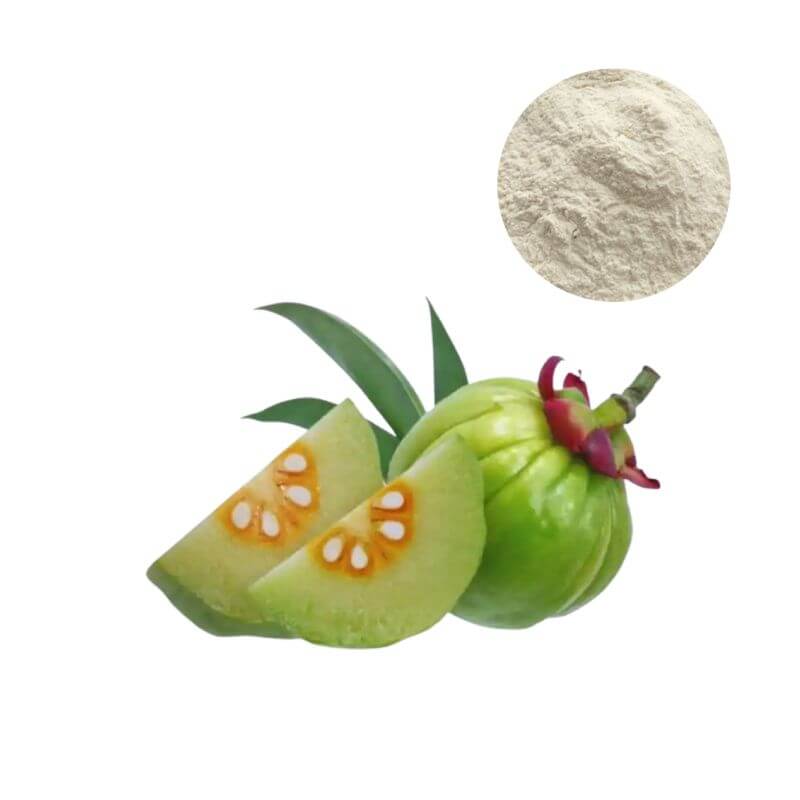
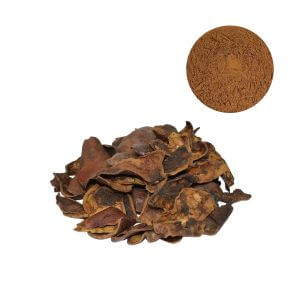
Garcinia Cambogia Extract Powder
| Product Name | Garcinia Cambogia Extract Powder |
| CAS Number | 90045-23-1 |
| Appearance | Off-white to pale yellow fine powder |
| Purity | 50.0% & 60.0% Hydroxycitric Acid (by HPLC) |
| Packaging | 1 kg/bag, 5 kg/bag, 25 kg/drum |
| MOQ | 1 kg |
Bulk Garcinia Cambogia Extract Powder - Quality-Driven Sourcing for Metabolic Health Formulations
Bulk Garcinia Cambogia powder at 50% and 60% HCA requires chromatographic screening at receiving to detect species adulteration and label discrepancies. Spec-verified protocols enforce lot-specific HPLC fingerprinting, with each batch's COA quantifying identity, purity and contaminants, ensuring lot-to-lot consistency. In a crowded weight-management ingredient market, rigorous physical and chemical specification control serves as the primary differentiator that protects finished product brands from substandard raw material infiltration and preserves formulation integrity throughout commercial production.
HPLC Fingerprinting as the Primary Barrier Against Species Substitution
Incoming inspection of Garcinia Cambogia Extract powder requires analytical discrimination between Garcinia cambogia and lower-cost Garcinia indica, a near-relative species encountered in commercial streams. HPLC-UV methods provide definitive differentiation by detecting anthocyanin marker peaks - cyanidin-3-O-sambubioside and cyanidin-3-O-glucoside - which are present in G. indica fruit rind but absent from authentic G. cambogia. Routine screening for the absence of these markers intercepts species adulteration before batch disposition.
| Analytical Parameter | Detection Method | Industry Benchmark |
|---|---|---|
| (-)-HCA quantitation | HPLC-UV at 210 nm | 50.0% / 60.0% min. |
| Species authentication (G. indica adulteration screening) | HPLC-UV chromatographic fingerprint profiling | Absence of marker anthocyanins: cyanidin-3-O-sambubioside & cyanidin-3-O-glucoside (indicative of G. indica adulteration) |
| Thermal degradation markers | GC-MS screening | Undeclared peaks investigated |
| Excipient-related compounds | Full-scan mass spectral library matching | Non-native compounds flagged |
A survey of 18 commercial Garcinia cambogia finished products found 33% exhibited declared-to-actual (-)-HCA discrepancies via LC-UV, alongside thermal degradation markers and foreign excipients in Garcinia cambogia fruit (Nutrients, 2022; doi: 10.3390/nu14153077). Routine chromatographic fingerprinting intercepts specification fraud before batch disposition, protecting product integrity and regulatory credibility.
Contaminant Clearance: Heavy Metals, Pesticides and Residual Solvents for EU and US Market Access
Regulatory acceptance in North American and European markets depends on contaminant control limits from soil loading, agricultural chemicals and solvent carryover. Lead, arsenic, cadmium and mercury are quantified via ICP-MS against USP <232> thresholds, with arsenic species monitored as inorganic arsenic to meet EU limits.
- Lead (Pb) and inorganic arsenic (As) controlled at ≤1.0 mg/kg each - Source GAP program monitoring and selective chelation polishing during downstream purification eliminate soil-borne metal accumulation that would otherwise compromise finished supplement heavy metal compliance.
- Cadmium (Cd) at ≤0.5 mg/kg and mercury (Hg) at ≤0.1 mg/kg - Raw material screening at fruit rind reception paired with ICP-MS verification of each production lot ensures full alignment with USP monograph specifications.
- Residual solvent profile fully compliant with USP <467> and ICH Q3C Class 1 limits - Extraction utilizes USP-grade ethanol only; residual solvents such as methylene chloride and acetone are explicitly excluded from the processing train, verified by GC headspace analysis on every batch.
- Pesticide residue screening meets USP requirements with UHPLC-MS/MS methods - QuEChERS-based extraction with targeted MRM transitions detects over 400 pesticide compounds at sub-ppb levels, with negative results documented on each COA prior to release.
ICP-MS and GC headspace data accompany each commercial lot, documenting contaminant clearance for procurement directors. This analytical rigor supports streamlined customs release across EU and US ports and eliminates downstream recall exposure. Expedited port clearance and reduced laboratory re-testing frequency directly lower total landed cost per batch while minimizing supply chain friction during customs inspection.
Molecular Mechanism and Clinical Validation for Metabolic Health Formulation Support
(-)-Hydroxycitric acid functions as a competitive inhibitor of ATP citrate lyase (EC 4.1.3.8), the enzyme catalyzing the cleavage of citrate to oxaloacetate and acetyl-CoA. By limiting acetyl-CoA availability for fatty acid and cholesterol synthesis, HCA reduces hepatic lipogenesis and supports improved serum lipid profiles.
- AMPK phosphorylation enhancement in skeletal muscle - The calcium/CaMKII/AMPK/GLUT4 signaling cascade is activated, promoting glucose uptake independent of insulin stimulation and improving whole-body glucose disposal.
- Hepatic fatty acid synthase (FAS) activity depression - Reduced acetyl-CoA substrate availability directly limits de novo lipogenesis, decreasing VLDL secretion and triglyceride accumulation in hepatocytes.
- Serotonergic modulation in the central nervous system - Increased brain serotonin availability contributes to appetite regulation, supporting caloric restriction compliance during weight management programs.
Pooled data from multiple randomized controlled trials quantify significant improvements in TC, TG, and HDL-C following targeted Garcinia Cambogia intervention (Phytotherapy Research, 2024; doi: 10.1002/ptr.8102). HCA standardization at 50% or 60% by HPLC ensures batch-to-batch reproducibility of this clinical profile, enabling brands to substantiate metabolic health claims with referenced data.
Formulation Compatibility and Synergistic Blending for High-Speed Compression
Garcinia Cambogia Extract powder presents formulation challenges arising from its hygroscopic nature and calcium-salt matrix. Critical relative humidity thresholds trigger rapid moisture uptake, leading to powder bed flow degradation, die-fill variability and punch-face sticking during high-speed rotary compression.
- Critical RH control below 45% during handling - Hygroscopic moisture adsorption above 45% RH increases powder cohesiveness and reduces bulk density, producing bridging in feed hoppers and weight variation exceeding USP <905> uniformity specifications.
- Pre-blending with glidants and lubricants minimizes sticking - Colloidal silicon dioxide at 0.5-1.0% and magnesium stearate lubricant at 0.5-2.0% reduce die-wall friction and punch adhesion, enabling sustained compression runs exceeding 4 hours without cleaning interruption.
- Synergistic pairings for metabolic health finished products - standardized green tea polyphenols provide complementary thermogenic activity; chromium picolinate powder matrix acts as an insulin-sensitizing co-factor alongside HCA-mediated lipogenesis suppression.
- Acidic beverage matrix incompatibility requires alternative platforms - At pH below 3.5, HCA lactonization proceeds at measurable rates; encapsulation or pH-modulated buffer systems are required for liquid formats.
Hygroscopic management through controlled processing environments and strategic excipient selection mitigates high-speed line stoppages from punch sticking and bridging. The 80-mesh particle size distribution (95% minimum) supports homogeneous blending with co-formulants, eliminating downstream micronization or granulation steps. Effective moisture control during manufacturing directly reduces tablet friability and weight variation reject rates, translating to measurable yield improvements on high-speed rotary presses operating at commercial throughput volumes.
Degradation Kinetics and Air Freight Protection Against Temperature-Humidity Excursions
HCA stability depends on its calcium-salt structure, yet the compound remains vulnerable to hydrolytic cleavage and lactone formation under elevated temperature and moisture. Accelerated stability studies at 40°C and 75% RH demonstrate measurable HCA degradation over 12-week exposure, with lactone formation detectable by HPLC-UV.
- Hydrolytic cleavage accelerated at elevated temperature and moisture - HCA lactonization proceeds through intramolecular ester formation, reducing bioavailable (-)-HCA content and diminishing finished product efficacy relative to label claims.
- Air freight temperature spikes during transshipment threaten potency - Temperature excursions exceeding 40°C during ground handling at intermediate airports trigger degradation acceleration; high-barrier packaging mitigates external environment penetration.
- Double-layer aluminum foil laminated bags with desiccants - Impermeable packaging reduces moisture vapor transmission below 0.1 g/m²/day, maintaining internal RH below 15% and preventing caking during transit.
Commercial packaging includes 1 kg/bag, 5 kg/bag and 25 kg/drum, utilizing high-barrier aluminum foil liners and desiccants to maintain integrity throughout distribution. Storage below 25°C preserves full HCA potency through the 24-month shelf life, ensuring product arrival matches original COA specifications. Supply chain risk mitigation through robust protective packaging and stringent storage protocols protects bulk ingredient procurement investments from moisture-induced caking, potency degradation and costly finished product rework obligations.
Technical Dossier Access and Sample Program for Accelerated Supplier Onboarding
Commercial material release is accompanied by batch-specific Certificates of Analysis documenting all identity, purity, contaminant and microbiological parameters - total aerobic count ≤1,000 CFU/g, yeast and mold ≤100 CFU/g, with E. coli, Salmonella and Pseudomonas aeruginosa absent per USP <62> - independently verified for each production batch.
Brand R&D teams may Get Spec-Verified Garcinia Cambogia Samples and COAs for in-house analytical verification prior to procurement commitments.
Frequently Asked Questions
Share this product
Related Products
Ready to get started?
Contact our team for technical specifications, pricing, and customized solutions.