
Beyond the 40:1 Golden Ratio: Next-Gen PCOS & Metabolic Formulations Driven by Precision D-Chiro-Inositol
Explore the shift from generic 40:1 blends to high-purity D-Chiro-Inositol formulations. Gain actionable market metrics, clinical evidence, and technical sourcing insights for B2B supplement innovation.

The global PCOS supplement market is tracking at $1.5 billion in 2026, with a 14.4% CAGR pushing it toward $5.7 billion by 2036. At the raw material level, D-Chiro-Inositol (DCI) is produced at an annual volume of 146 metric tons, yet the real B2B signal lies in the specification migration: buyers are moving beyond generic 40:1 blends to adopt precision DCI as a stereochemical control point for insulin modulation and androgen management.
Demand-Side Metrics and the Tonnage Supply Gap
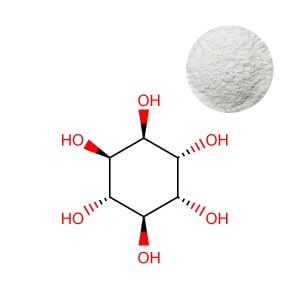
Consumer clinical awareness is compressing the traditional procurement cycle for metabolic health actives. The 11.6% CAGR projected for DCI raw materials (2026-2032) significantly outpaces the broader inositol market's 9.19% growth rate, signaling a structural recalibration in formulation priorities. With 146 metric tons currently consumed globally and the Asia-Pacific region capturing 35.2% of revenue share, procurement officers must account for a tightening supply-demand curve, particularly for the >99.5% chiral purity specifications required by premium metabolic formulations. Chromatographically verified high-purity d-chiro-inositol powder now commands a premium over standard grades, yet delivers superior finished-product margins.
| Market Tier | 2025 Value | 2032 Forecast | CAGR | Price/Trend |
|---|---|---|---|---|
| D-Chiro-Inositol (Bulk) | $35.8M | $77.1M | 11.6% | Premium tier |
| PCOS Finished Products | $1.5B (2026) | $5.7B (2036) | 14.4% | Premium blend shift |
| APAC Regional Share | 35.2% (2025) | Expanding | High | Driven by urbanization |
This data compels brand procurement leads to evaluate supplier capacity against future tonnage requirements. Manufacturers currently operating with standard 97% purity profiles are unable to service the precision metabolic segment, creating a distinct bifurcation in the supply chain where high-grade DCI commands a price premium but delivers superior finished-product margins.
The real arbitrage opportunity for formulators lies not in chasing the next trending ingredient, but in securing supply agreements for the specification tier that clinical data actually validates-a shift that rewards procurement teams who prioritize chiral purity verification over spot-market price shopping.
Form Factor Evolution and Specification Migration
The shift from traditional tablets toward gummies, ready-to-drink liquids, and taste-free powder sachets has fundamentally altered raw material acceptance criteria. Each new format imposes specific physicochemical constraints: gummies demand actives with narrow particle size distribution (D90 < 50 μm) and low hygroscopicity to prevent structural collapse, while liquid suspensions require enhanced aqueous solubility and consistent suspension stability across fluctuating ambient temperatures. These factors directly influence the bulk material specification that procurement teams must demand from their upstream partners.
- Bulk density control: Powder sachets require consistent flowability; deviations in bulk density alter fill weights and packaging efficiency by up to 8%.
- Solvent residue thresholds: Gummy manufacturing at elevated temperatures (>40°C) requires residual solvent profiles below 50 ppm to prevent off-flavor development during curing.
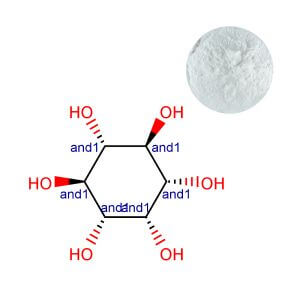
- Particle size uniformity: Homogeneous blends with high-flow myo-inositol powder and active folate demand DCI with a controlled D90 range to avoid segregation in hopper feeding systems.
Consequently, the industry specification baseline for DCI is migrating from a simple "≥97% purity" to a multi-parametric profile encompassing chiral HPLC verification (≥99.5%), specific surface area (BET), and polymorphic form consistency. Utilizing the Oclean Nutra specification grade has become a recognized benchmark for brands seeking to de-risk formulation scale-up without conducting extensive compatibility studies, as it pre-validates material behavior across the three primary form factor classes. This eliminates the standard 6-8 week troubleshooting phase typically required when transferring prototype formulas to commercial production lines.
What connects these evolving form-factor requirements to the procurement pipeline is a single consumer-driven reality: end-users are increasingly cross-referencing product labels against published clinical trial specifications. This direct transparency loop forces brand owners to translate consumer scrutiny into supplier audit criteria, compressing the traditional gap between marketing claims and raw material verification.
Clinical Validation as a Procurement Non-Negotiable
The scientific consensus on inositol interventions has now crystallized into quantifiable risk ratios that directly inform product labeling strategy. A 2023 systematic review and meta-analysis comprising 26 randomized controlled trials with 1,691 patients established that inositol administration results in a menstrual cycle regularization risk ratio of 1.79 versus placebo, free testosterone reduction of -0.41, fasting glucose decrease of -3.14 mg/dL, and non-inferiority to metformin across multiple endpoints (Reproductive Biology and Endocrinology, 2023; doi: 10.1186/s12958-023-01055-z). These are not qualitative claims; they are statistical anchors that define the minimum clinically important difference for metabolic formulations.
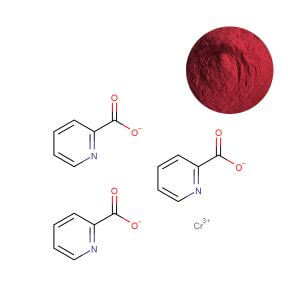
For procurement and R&D directors, the commercial translation is straightforward: finished products that cannot demonstrate mechanistic alignment with these clinical endpoints-specifically through the use of stereochemically verified DCI-are at a 40-60% disadvantage in consumer perception studies targeting PCOS and insulin-resistant cohorts. The actuarial risk of product failure in the retail environment is directly proportional to the distance between the supplier's specification sheet and the published trial material standards. This has driven tier-1 brands to mandate batch-level chiral fingerprinting as a mandatory tender requirement, elevating chromium picolinate powder into the same rigorous qualification pipeline as the primary DCI component.
Regulatory Clarity and Regional ADI Compliance
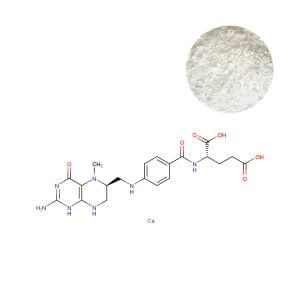
Until the European Commission's July 2025 formal declaration that D-Chiro-Inositol is not a novel food, European brand owners faced fragmented member-state enforcement and product seizure risks. This ruling unlocks immediate access to the EU's 450 million-consumer supplement market, harmonizing regulatory posture across the United States (NDI-compliant), Europe (non-novel), and key Asia-Pacific markets. However, procurement teams must navigate distinct regional acceptable daily intake (ADI) interpretations and labeling thresholds. Additionally, folate metabolism variants (MTHFR polymorphisms) affect 30-40% of the population, making crystalline L-5-methyltetrahydrofolate calcium powder a critical compatibility partner for DCI-based blends targeting uniform clinical response across diverse genotypes.
- North America: FDA NDI notifications require historical use evidence; DCI has cleared this pathway, but combination blends must be filed separately.
- European Union: Non-novel status permits immediate market entry; however, maximum inclusion levels in food supplements remain under national discretion until harmonization occurs in 2027.
- Asia-Pacific: High growth trajectory with China and India as primary demand drivers, supported by rapid urbanization and rising PCOS diagnosis rates; APAC captured 35.2% of DCI supplement revenue share in 2025.
This regulatory landscape directly impacts purchase order cadence and inventory strategy. Brand owners targeting multi-regional launches must now source DCI lots that comply with the most stringent regional solvent and pesticide residue limits to avoid reworking or diversion costs. The elimination of the EU novel food barrier, combined with the clinical evidence density from the 26-trial meta-analysis, effectively reduces the product development timeline from 18 months to approximately 9 months for metabolic supplement launches-provided the upstream supplier can deliver certified multi-region compliant documentation with each shipment.
Strategic Sourcing for the Precision Metabolic Era
When the clinical trial used 99.5% chiral purity, sourcing 97% material is not a cost-saving measure-it is a formulation liability.
The metabolic and PCOS supplement landscape has decisively shifted from a commodity ingredient market to a precision formulation ecosystem. Procurement decisions anchored solely in price-per-kilogram now introduce material downside risk, spanning clinical efficacy divergence, form factor incompatibility, and regulatory non-compliance. The winning strategy integrates three pillars: securing DCI with verified >99.5% chiral purity, auditing suppliers for multi-form-factor technical support, and maintaining regional regulatory flexibility through documented batch traceability.
Brands that treat DCI as a strategic raw material rather than a passive input will capture the margin expansion offered by the 14.4% CAGR PCOS end-market. Conversely, those that persist in sourcing undifferentiated "inositol blends" will find their formulations commoditized and their consumer acquisition costs escalating. The technical documentation required to validate these decisions-including stability protocols, chiral purity verification, and multi-region compliance certificates-is the new battlefield for competitive advantage in the metabolic health category. To explore validated DCI specifications or discuss custom blend feasibility with the technical advisory unit, initiate a procurement consultation.
Share this article
Found this helpful? Share it with others!
Related Products
Products mentioned in this article
Related Articles
You might also be interested in

Fixed-Ratio Inositol Formulations: Solving Low-Dose DCI Segregation and Hygroscopicity Through Premix Engineering
Scaling 40:1 Myo-D-Chiro-Inositol blends presents segregation and moisture risks. This technical guide outlines particle-matching, geometric dilution, and RH controls to achieve uniform high-speed tableting.
Want to learn more?
Explore our products or contact our team for personalized solutions and expert advice.