
Fixed-Ratio Inositol Formulations: Solving Low-Dose DCI Segregation and Hygroscopicity Through Premix Engineering
Scaling 40:1 Myo-D-Chiro-Inositol blends presents segregation and moisture risks. This technical guide outlines particle-matching, geometric dilution, and RH controls to achieve uniform high-speed tableting.
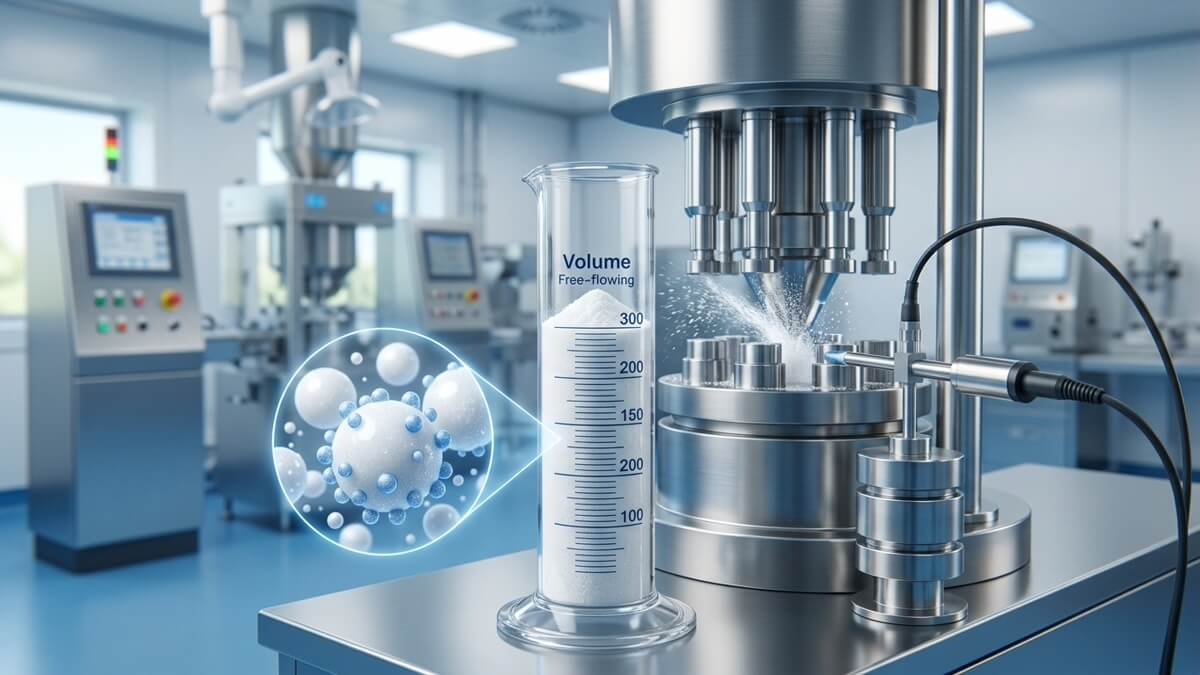
For formulation scientists scaling a 40:1 Myo-inositol-to-D-chiro-inositol (DCI) solid dosage form, the greatest risk is not raw material purity—it is physical uniformity. At a 2.5% loading, DCI exists as a minor component within a bulk matrix, creating a high propensity for segregation during blending and material transfer. Its crystalline structure and moisture affinity further complicate compression and capsule filling. This guide establishes the physical boundaries and premix strategies required to maintain content uniformity (CV < 2%) across commercial production campaigns.
Physical Barriers to Uniformity in 40:1 Inositol Blends
The 40:1 ratio of Myo-inositol to DCI is validated by clinical endpoints. In a 2024 clinical evaluation, subjects with metabolic and endocrine profile imbalances (phenotype A) receiving 2,255 mg/day of this fixed ratio demonstrated significant reduction in HOMA-IR (p < 0.001) and testosterone (p < 0.001) (Gynecologic and Obstetric Investigation, 2024; doi: 10.1159/000536163). Translating this clinical efficacy into a reproducible tablet or capsule demands strict control over powder physics. DCI crystals exhibit a tap density of 0.805 g/mL and pass 90% through an 80-mesh screen (177 μm), while Myo-Inositol Powder matrices often show broader particle size distributions and lower bulk densities. This mismatch triggers segregation via sifting and fluidization during hopper discharge. Compounding this issue, DCI is hygroscopic (storage RH ≤ 60%), and its high water solubility (403.4 g/L at 11°C; approximately 75 mg/mL at 25°C) means that even brief exposure to ambient moisture during blending increases surface cohesivity, raising the angle of repose and promoting sticking. Based on supplier characterization as a free-flowing crystalline powder, the angle of repose for DCI is expected to fall within the USP "Excellent" to "Good" range (25-35°). When combined with a matrix showing 40-45°, this amplifies flow differential during hopper discharge. This directly elevates segregation coefficients in production-scale gravity feed systems.
| Property | D-Chiro-Inositol | Myo-Inositol Matrix | Scale-Up Risk |
|---|---|---|---|
| Tap Density (g/mL) | 0.805 (measured) | 0.60-0.75 | Density-driven stratification |
| Particle Size (D90) | < 177 μm (80 mesh) | Variable (100-250 μm) | D50 mismatch accelerates sifting |
| Hygroscopicity (RH limit) | Storage ≤ 60% | Biphasic surface absorption | Moisture increases cohesivity |
Premix Engineering: Particle Matching and Geometric Dilution
Extended blending alone fails to resolve segregation—it often energizes particles, worsening stratification. The robust solution is to design a premix that matches the physical characteristics of the bulk matrix. Processing of D-Chiro-Inositol Powder begins with geometric dilution: the micronized DCI is blended in a stepwise manner with Myo-inositol at 1:1, 1:3, and 1:10 ratios before full incorporation. This prevents localized over-concentration and reduces the density differential driving force. A 2025 study in the International Journal of Pharmaceutics validated composite indices (D50, D90/D10, and API-to-blend flowability ratio) that predict segregation risk in 2-10% drug load blends (International Journal of Pharmaceutics, 2025; doi: 10.1016/j.ijpharm.2025.125990). For DCI, this means matching the matrix D50 within ±20 μm and targeting a flowability ratio (Hausner ratio) below 1.25. To mitigate moisture uptake, processing suites must maintain ≤ 30% RH throughout blending and material transfer. Anti-caking agents such as silicon dioxide (0.5-1.0% w/w) interrupt particle bridging without compromising dissolution. A total blending time of 12-15 minutes in a V-blender at 25 RPM, followed by a 5-minute gentle tumbling period, consistently achieves an RSD below 1.8% across ten sub-samples, provided the geometric dilution steps are strictly followed and each stage includes a 3-minute intermediate mixing pause. For brand owners, mastering this premix engineering sequence translates directly into a defensible label claim for "clinically validated 40:1 inositol ratio with guaranteed unit-dose uniformity," a positioning that immediately distances premium formulations from commodity blends that rely on post-mix sampling alone.
From a commercial scale-up perspective, achieving these laboratory-grade uniformity targets demands more than formulation skill—it forces capital decisions around blender capacity, dust collection efficiency, and HVAC dehumidification plant that must be finalized before the first production batch is even scheduled.
Scale-Up Dynamics: Equipment and Environmental Control
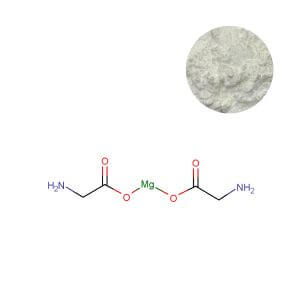
Scaling from pilot V-blenders to production bins (up to 400 L) requires fixed particle velocity, not RPM. The validated crossover point is approximately 36 cm/s with a 27% fill level. At commercial scale, maintaining a turret speed of 30-50 RPM on a rotary press, with pre-compression at 5-8 kN and main compression at 12-15 kN, reliably produces tablets with 8-12 kP hardness and friability below 0.5%. For capsule filling, the blend's compressibility index must stay within 16-21% (USP "Good" range). Inclusion of Alpha-Lipoic Acid Powder introduces a thermal constraint: it degrades above 65°C, so the blend temperature must remain below 40°C during mixing. Meanwhile, Magnesium Glycinate Powder (bulk density 0.45-0.65 g/mL per typical supplier specifications) can act as a flow modifier, but its lower density requires careful order-of-addition to avoid layering. Continuous environmental monitoring is non-negotiable; single excursions above 30% RH increase tablet sticking forces by over 40%, necessitating line stops for tooling cleaning. For high-speed encapsulation, setting the dosing disc speed to 12-15 RPM and maintaining a vacuum pressure of 0.4-0.6 bar on the tamping pins ensures consistent fill weight variation below 2.0%, even when processing blends with a Carr index of 18-20%.
| Parameter | Pilot Setting | Production Setting | Control Rationale |
|---|---|---|---|
| Blender Fill Level (%) | 25-35 | 27 (fixed) | Maintains consistent particle velocity |
| Particle Velocity (cm/s) | ~36 | ~36 | Prevents over-energizing the blend |
| Processing RH (%) | ≤ 30 | ≤ 30 | Prevents DCI surface moisture adsorption |
| Main Compression Force (kN) | 10-12 | 12-15 | Achieves target hardness (8-12 kP) |
Stability Auditing and Quality Benchmarks for R&D and QC
Brand owners and QC managers auditing DCI-containing solid dosages must focus on formulation-specific critical attributes rather than generic heavy metal specs. The acceptance criteria for a well-engineered premix are precise: content uniformity (CU) must demonstrate ≤ 2% RSD for DCI across 10 dosage units at release and at 12 months (USP <905> acceptance value ≤ 15.0). Dissolution testing using USP Apparatus 2 (paddle, 50 RPM) requires that ≥ 80% of the label claim be dissolved within 45 minutes in pH 1.2, 4.5, and 6.8 media. Finished tablet water activity (Aw) must remain ≤ 0.4 throughout the 24-month shelf life to prevent hydrolytic degradation and preserve disintegration kinetics. Under ICH accelerated conditions (40°C / 75% RH, 6 months), DCI assay must stay within ±5.0% of release values, with total degradation products below 1.0% by HPLC. Disintegration time for uncoated tablets must not exceed 10 minutes in purified water at 37°C, and for hard gelatin capsules, the limit is 15 minutes with a basket-rack assembly. Suppliers meeting these stringent technical criteria, utilizing the Oclean Nutra grade as a benchmark for process control and full lot traceability, provide the documentation necessary for regulatory submissions and third-party vendor audits.
Process Engineering Summary and Next Steps
Reproducible uniformity in low-dose DCI (40:1) blends is not achieved by chance—it requires matching particle size (D50), controlling processing RH below 30%, applying geometric dilution, and scaling by particle velocity (36 cm/s) rather than RPM. The critical quality metrics for batch release are CU (RSD < 2%), dissolution (≥ 80% at 45 min), and Aw (≤ 0.4), with accelerated stability (40°C/75% RH) validated over a six-month period. These engineering disciplines transform a segregation-prone powder into a robust industrial material suitable for high-speed tableting and encapsulation.
Formulation teams aiming to de-risk their next scale-up campaign can access technical support packages that include premix feasibility evaluations and targeted sample kits. Request a DCI premix sample kit with full PSD and flow characterization via our technical support team to validate your specific processing parameters before full commercial commitment.
Share this article
Found this helpful? Share it with others!
Related Products
Products mentioned in this article
Related Articles
You might also be interested in

Beyond the 40:1 Golden Ratio: Next-Gen PCOS & Metabolic Formulations Driven by Precision D-Chiro-Inositol
Explore the shift from generic 40:1 blends to high-purity D-Chiro-Inositol formulations. Gain actionable market metrics, clinical evidence, and technical sourcing insights for B2B supplement innovation.
Want to learn more?
Explore our products or contact our team for personalized solutions and expert advice.