
Knowledge Center
Stay updated with the latest industry insights, scientific research, and application knowledge about nutraceutical ingredients.
Blog articles and industry insights
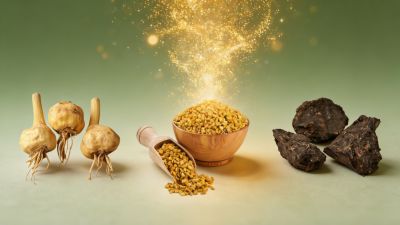
Beyond Single Ingredients: Building a Synergistic “Male Vitality” Stack with Maca, Fenugreek, and Shilajit
Maca, Fenugreek, and Shilajit form a powerful synergy for male vitality. This article analyzes the clinical evidence, formulation strategies, and market success of this stack, providing actionable insights for brands aiming to create differentiated, science-backed products.

Beyond Ginger: Closing the Zingerone Gap
Zingerone is now the fastest‑growing ingredient in cosmetics, pet food, and functional nutrition. This feature unpacks its bioavailability paradox and why standardized powder is the supply chain’s new baseline.
The Clean Label Paradox: Why Your “Natural” Ginger Extract May Be Losing Zingerone—And How to Fix It
Most “natural” ginger extracts sacrifice the very compound you’re paying for. Here’s why clean‑label carriers sabotage zingerone formation—and how formulation science finally offers a way out.

Urolithin A vs. The Rest: How to Choose the Right Anti-Aging Ingredient for Your Product Formulation
Confused by anti-aging ingredients? This guide cuts through the hype, comparing Urolithin A's targeted cellular benefits against NMN, Fisetin, and pomegranate extract. Learn key selection criteria—from clinical evidence to formulation stability—to make an informed choice for your next product.
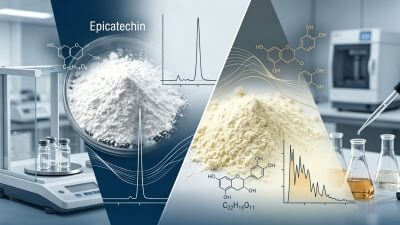
Epicatechin vs. EGCG for Sports Nutrition and Active Aging: A Technical Sourcing Guide on Bioavailability, Stability, and Mechanism Differentiation
Choosing between Epicatechin and EGCG impacts scale-up success. This guide dissects human pharmacokinetics, 25-fold chiral potency differences, and pH stability to de-risk encapsulation and optimize cost-in-use.

The Dark Side of the Functional Food Boom: An Honest Look at Epicatechin Claims and Controversies
The epicatechin market is surging, but hype obscures real science. We cut through the noise, analyzing controversies, bioavailability challenges, and how brands can build trust with transparent, high-quality ingredients for lasting success.
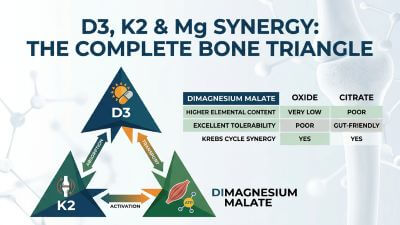
The Bone Health “Triangle”: Why Your Vitamin D3 & K2 Formula Needs Dimagnesium Malate
The era of standalone Vitamin D3 is ending. This article explores the biochemical synergy of the D3-K2-Magnesium triangle, clinical evidence for Dimagnesium Malate, and technical strategies to help brands build high-potency bone health systems.
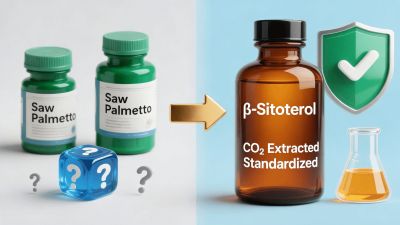
Why Saw Palmetto Remains the Go-To Ingredient in the Booming Men’s Health Market
The saw palmetto extract market is growing, shifting focus from a single benefit to strategic formulation. Success now hinges on mastering quality, standardization, and innovative science, as brands learn to navigate the “Potency Lottery” and choose clinically-backed ingredients.
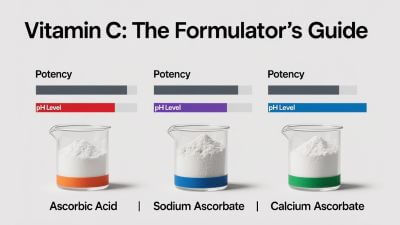
Navigating Vitamin C Forms: A Formulator's Guide to Ascorbic Acid, Sodium Ascorbate, and Calcium Ascorbate
For product developers, selecting the right vitamin C source is key. This guide compares ascorbic acid, sodium ascorbate, and calcium ascorbate across critical parameters like pH and bioavailability, providing actionable insights for your formulation strategy.
Need Technical Support?
Our experts are ready to help with formulation advice, technical documentation, and customized solutions for your specific needs.