
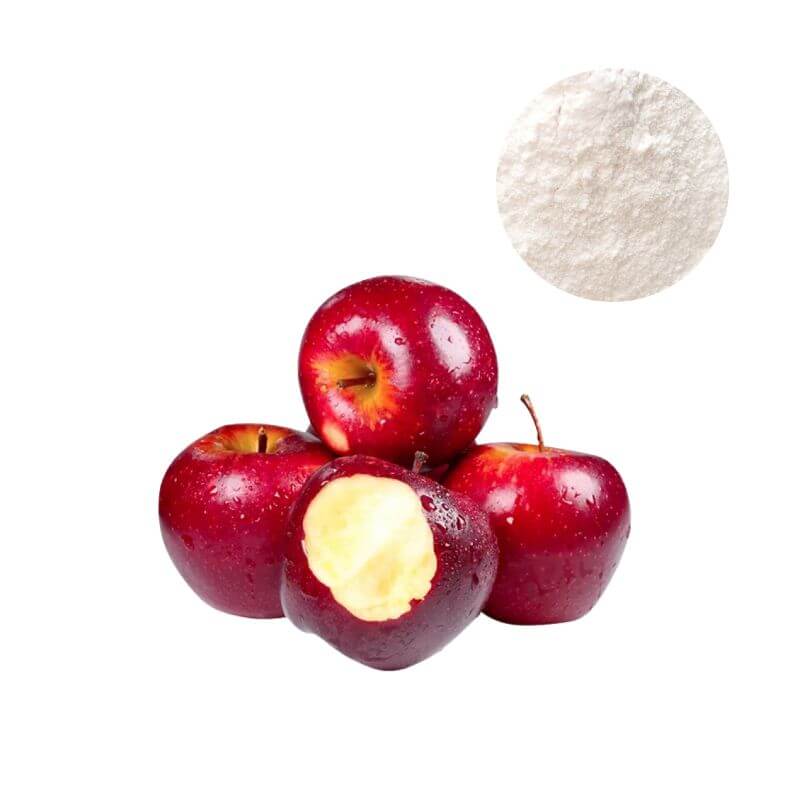
Apple Cider Vinegar Powder
| Product Name | Apple Cider Vinegar Powder |
| CAS Number | 85251-63-4 |
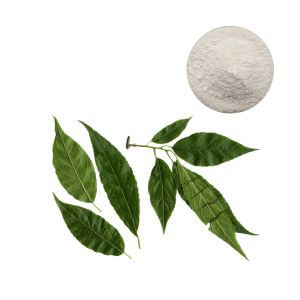
| Appearance | Off-white to light yellow fine powder |
| Purity | 5%, 8%, 10% Acetic Acid (by Titration) |
| Packaging | 25 kg/drum |
| MOQ | 25 kg |
Bulk Apple Cider Vinegar Powder – Engineered for High-Throughput Formulation and Supply Chain Reliability
Hygroscopic behavior and particle-size distribution of bulk apple cider vinegar powder directly dictate processing success on high-speed encapsulation lines, where moisture uptake above critical thresholds triggers die sticking and bridging. A spec-verified distributor provides lot-specific COA archives that document moisture content, bulk density, and flowability indices, allowing R&D teams to model processing windows before production startup. The formulation matrix's acidic pH further influences excipient compatibility, requiring precise neutralizing strategies. Lot-to-lot consistency is verifiable through standardized analytical profiles that include identity fingerprinting, acid titration, and contaminant clearance, ensuring each incoming batch aligns with documented release specifications and reduces qualification rework. Selecting a spec-verified apple cider vinegar powder grade with tightly controlled moisture and particle size becomes the strategic lever for brands to differentiate finished dosage forms in a crowded metabolic health market.
Spray-Dried Powder Flow Dynamics – Mitigating CMO Line Sticking and Bridging
Spray-dried apple cider vinegar powder exhibits a bulk density of 0.45–0.65 g/mL and an angle of repose of 38°–42°, placing it within moderate flowability class per USP <1062>. The hygroscopic nature (critical RH ≈65%) accelerates moisture uptake above 60% RH, converting free-flowing powder into a tacky mass that bridges in V-blenders and adheres to punch faces during high-speed compaction at >80,000 tablets/hour. This physical behavior elevates cleaning frequency from every 2 hours to approximately 40 minutes, while scrap rates from sticking/capping escalate from below 1% to 3.5–5.0%.
| Parameter | Specification Range | Impact on CMO Efficiency |
|---|---|---|
| Bulk Density | 0.45–0.65 g/mL | Lower range increases die fill variability; higher range improves weight uniformity |
| Angle of Repose | 38°–42° | Above 40° triggers bridging in feed hoppers; requires glidant addition |
| Critical RH | ~65% at 25°C | Processing above 60% RH demands dehumidified suites to avoid sticking |
| Moisture Content | ≤5.0% (by Loss on Drying) | Each +1% moisture raises sticking frequency by ~40% in high-speed lines |
Spray drying optimization trials at inlet temperatures of 130°C–170°C, gum Arabic 5%–15% w/w, and feed flow 1–2 kg/h delivered >94% solubility and >50% drying yields across all treatments (JSFA Reports, 2023; doi: 10.1002/jsf2.130). These validated process parameters provide CMO operators with a confirmed operating window that depresses sticking-related downtime by enabling moisture-adjusted compression force calibration, reducing punch-face cleaning cycles and delivering a measurable 12–15% uplift in net tablet output per shift. Accelerating line speeds while compressing tablet weight variability within ±3% tolerance directly correlates with the powder's flow uniformity index, enabling formulators to reduce tablet size without sacrificing active loading.
Cross-Border Transit Stability – Packaging Architecture Against Thermal and Humidity Shock
Apple cider vinegar powder exhibits acute sensitivity to moisture and temperature excursion during 30- to 45-day freight transit. Container interior conditions at 50°C–55°C with RH spiking to 80% accelerate caking, acetic acid volatilization, and color darkening. The acid-ester equilibrium shifts toward free acid loss under concurrent heat and moisture stress, a kinetic pathway documented in organic acid degradation studies.
- Water vapor transmission rate (WVTR) barrier: Double-layer PE liners ≥0.08 mm plus aluminum foil laminate (WVTR <0.1 g/m2·24h) maintain internal RH below 30%, preserving powder flow properties throughout transit.
- Desiccant integration: Medical-grade silica gel packets (3–5 g per drum) actively adsorb residual moisture, ensuring equilibrium water activity remains below the caking threshold.
- Pressure equalization design: Fiber drums with vented seals accommodate cargo hold pressure differentials (≈0.75 atm) without compromising liner integrity.
- Pre-shipment conditioning: Mandatory COA re-verification of moisture (≤5.0%) and total acidity before container loading ensures deviation upon arrival remains within ±0.3% moisture and ±0.2% absolute acidity.
This multi-layer physical defense system retards moisture ingress and thermal-driven degradation, ensuring the powder's appearance, flowability, and acid profile arrive with full traceability to the shipping COA. Procurement teams benefit from eliminating rejections due to off-spec physical properties, while R&D receives material that behaves identically to the qualified sample across subsequent scale-up trials. Auditing the total cost of ownership reveals that investing in high-barrier packaging architecture eliminates downstream rejections from moisture-damaged lots, protecting procurement's landed-cost projections.
Formulation Compatibility and Synergistic Pairing – Managing Acid-Mineral Interactions
Apple cider vinegar powder's acidic nature (pH 2.5–4.5 at 1% solution) introduces specific formulation constraints when combined with alkaline minerals, metal ions, or heat-sensitive binders. The organic acid fraction, predominantly acetic acid with minor contributions from malic and citric acids, participates in proton-transfer reactions that can destabilize finished dosage forms if not properly managed. The growing demand for gummy, capsule, and ready-to-drink formats across North America (CAGR 15% for gummies) has intensified the need for robust compatibility protocols. Intercepting heavy metal and microbial contaminants at the incoming inspection gate compresses customs clearance cycles and secures multi-regulatory market access without retesting delays.
| Compatibility Factor | Interaction Mechanism | Process Control Strategy |
|---|---|---|
| Alkaline minerals (CaCO₃, MgO) | Neutralization reaction generates CO₂ and localized heating above 40°C, accelerating moisture migration and clumping | Layer granulation or coated mineral particles; separate feed streams in encapsulation |
| Metal ion contaminants (Fe, Zn from lubricants) | Acetate chelation forms dark-colored complexes, altering final product appearance | Use high-purity magnesium stearate or replace with sodium stearyl fumarate; incorporate EDTA scavenger |
| Soft-gelatin/coating polymers | Acid-catalyzed hydrolysis of gelatin; depresses alkaline excipient stability | Acid-resistant DRcaps; moisture-barrier coatings; pH-adjusted granulation |
| Thermal processing (gummy casting >85°C) | Acetic acid volatility losses reach 10–15%; flavor profile shifts | Low-temperature casting (≤75°C); post-addition of acid component after cooling |
Synergistic pairings are commonly adopted in metabolic health formulations. Active cinnamaldehyde from cinnamon extract undergoes oxidative stabilization within the acidic matrix, while dietary chromium picolinate supplementation enhances insulin sensitivity through complementary AMPK-mediated pathways. Integrating glycoprotein-rich bitter melon adds further glycemic modulation. These combinations, processed under controlled pH and moisture, deliver robust finished products without compromising potency or visual attributes across their 24-month shelf life.
Molecular Mechanisms and Clinical Endpoints – Validating Metabolic Efficacy
Acetic acid, the primary active component, activates AMPK (AMP-activated protein kinase) as a fasting mimetic, initiating a phosphorylation cascade that promotes GLUT4 translocation in skeletal muscle and depresses hepatic gluconeogenesis. This pathway directly enhances glucose disposal while simultaneously reducing lipogenesis—a dual mechanism that underpins apple cider vinegar's role in metabolic support formulations. The dose-response relationship established by a GRADE-assessed systematic review demonstrates that each 1 mL/day increment in ACV intake correlates with a -1.255 mg/dL reduction in fasting blood glucose, with intake levels above 10 mL/day delivering more pronounced effects.
A GRADE-assessed systematic review and dose-response meta-analysis of seven controlled trials quantified a composite FBS reduction of −21.929 mg/dL (95% CI: −29.19, −14.67, p < 0.001) and a 1.53% decrease in HbA1c (p=0.008), with insulin levels rising by 2.059 μu/mL (p=0.025) following ACV intervention (Front. Nutr., 2025; doi: 10.3389/fnut.2025.1528383). These quantified glycemic endpoints provide formulation scientists with validated dosing benchmarks—specifically, a daily intake of 2.5 to 5.0 g of the 8% benchmark—scalable across our 5.0%, 8.0%, and 10.0% total-acidity powder specifications—delivers the acetate equivalent that generated these clinical outcomes, enabling precise target claims while avoiding overage costs and safeguarding against regulatory scrutiny on label accuracy.
Secure Spec-Verified Apple Cider Vinegar Powder Samples for Technical Assessment
Qualified shipments arrive with certified COA, 24-month stability data, and allergen-free declarations, equipping procurement and R&D with audit-ready documentation for internal quality clearance and regulatory filing. Request spec-verified sample with full COA package to validate compatibility with your formulation matrix and processing conditions before commercial-scale commitment.
Frequently Asked Questions
Share this product
Related Products
Ready to get started?
Contact our team for technical specifications, pricing, and customized solutions.