
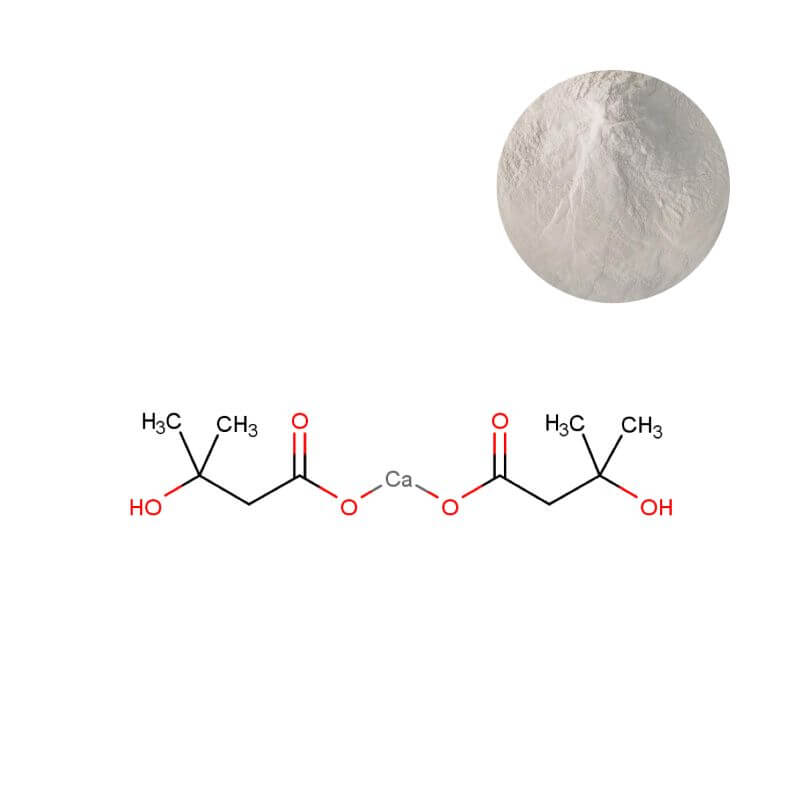
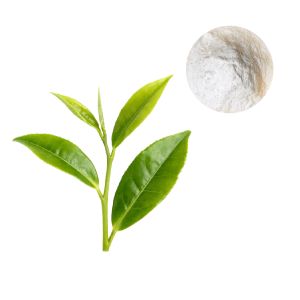
HMB Calcium Powder
| Product Name | HMB Calcium Powder |
| CAS Number | 135236-72-5 |
| Appearance | White or off-white crystalline powder |
| Purity | ≥ 99.0% (by HPLC) |
| Packaging | 1 kg/bag, 5 kg/bag, 25 kg/drum |
| MOQ | 1 kg |
HMB Calcium Powder for Sports Nutrition & Healthy Aging - Clinically Verified Bulk Ingredient
Documented bioavailability advantages and lean mass endpoints position HMB Calcium Powder as a clinically defensible asset for premium sports nutrition and healthy aging formulations. Bulk HMB Calcium Powder demand continues accelerating as brand owners migrate toward evidence-backed muscle health platforms. Spec-verified HMB Calcium Powder supplier relationships reduce R&D friction through lot-to-lot COA traceability and audit-ready documentation, bridging formulation innovation with procurement confidence.
Clinical Pharmacokinetics & Muscle Metabolism: HMB Calcium Delivers Superior Systemic Exposure
Calcium salt form of β-hydroxy-β-methylbutyrate (HMB-Ca) demonstrates significantly greater systemic exposure than the free acid equivalent, shaping the evidence base for formulation efficacy claims. A randomized crossover human trial quantified HMB-Ca AUC0-720min at 50,078 ± 10,507 µmol·L-1×720 min following a 1,000 mg single dose - approximately 72% higher than the free acid form (29,130 ± 12,946 µmol·L-1×720 min) - with Tmax reaching 43 minutes in aqueous solution, absorption kinetics that support rapid post-exercise anabolic windows. (Amino Acids, 2024; doi: 10.1007/s00726-023-03369-z). This pharmacokinetic profile serves as the basis for structure/function claims such as "supports muscle protein synthesis" and "helps preserve lean mass during training."
| Parameter | HMB-Ca (Aqueous) | HMB-FA (Capsule) |
|---|---|---|
| AUC0-720min (µmol·L-1×720 min) | 50,078 ± 10,507 | 29,130 ± 12,946 |
| Cmax (µmol·L-1) | 229.2 ± 65.9 | 139.1 ± 67.2 |
| Tmax (min) | 43 ± 22 | 78 ± 21 |
For finished product branding, these kinetic advantages afford direct DTC marketing leverage: finished products can highlight "clinically proven superior absorption" while maintaining compliant structure/function positioning. The dual mechanism - mTOR activation for synthesis plus ubiquitin-proteasome inhibition for breakdown - constitutes a complete muscle metabolism story resonant with both performance and aging demographics. For brand owners, this clinical architecture supports premium pricing tiers and differentiates generic HMB Calcium Powder offerings from science-backed alternatives.
Dosage Form Innovation & Thermal Stability Engineering: From Powder to Gummy and RTD
Introducing HMB Calcium into consumer-friendly formats requires addressing formulation challenges unique to this salt - particularly thermal degradation and sensory defects in heat-processed systems. Whey protein isolate emulsions containing HMB-Ca undergo droplet size increase to 24.09 µm after autoclaving at 121°C for 15 minutes, accompanied by intensified off-notes and viscosity rise. Casein phosphopeptides (CPP) at a 1:25 CPP:HMB-Ca ratio reduce droplet aggregation by approximately 60% and significantly reduce perceived bitterness in heat-processed emulsions, enabling sterile RTD beverages and shelf-stable liquid shots. (International Journal of Biological Macromolecules, 2023; doi: 10.1016/j.ijbiomac.2023.125023).
- Water-soluble HMB-Ca supports powder sticks, capsules, gummies, compressed tablets, and clear RTD formulations
- CPP co-formulation mitigates heat-induced protein aggregation without altering active assay levels
- Synergy with whey protein, creatine monohydrate, and vitamin D3 enables multi-benefit claims
RTD and gummy formats represent the fastest-growing HMB delivery channels, with the global HMB supplement market projected to reach $0.8 billion by 2034 at 7.2% CAGR (Market IntelO, 2025). Dry-powder compatibility with creatine monohydrate and beta-alanine powder - both physically stable in binary blends at ambient conditions - further broadens formulation architectures without requiring segregated production lines. This formulation flexibility leverages existing CMO capabilities, shortening development cycles and avoiding investment in specialized equipment. The CPP-HMB-Ca system delivers a predictable stability profile - 24 months shelf life - cutting batch rejection rates and inventory write-offs. Co-formulation with whey protein, creatine, and vitamin D3 100,000 IU powder reinforces stacked benefit claims, amplifying retail differentiation in crowded sports nutrition categories.
Powder Physicals & CMO Line Adaptation: Direct Compression for Faster TTM
Without optimized powder flow, high-speed compression risks sticking and prolonged changeover; the 100% through 80 mesh specification paired with loss on drying ≤7.0% directly mitigates both. Eliminating wet granulation removes moisture-induced degradation risks entirely. Lot-to-lot consistency verified by HPLC (≥99% assay) and USP <61>/<62> microbiological compliance supports audit-ready documentation for Tier-1 brand inspections.
- Direct compression capability eliminates secondary granulation, cutting production lead time by 8-12 weeks
- Heavy metals: Pb ≤1.0 ppm, As ≤1.0 ppm, Cd ≤0.5 ppm, Hg ≤0.1 ppm (ICP-MS)
- Shelf life of 24 months under sealed, cool-dry storage - supports safety stock planning
Eliminating wet granulation reduces processing costs through simplified workflows and reduces scrap rates from tableting failures. The accelerated production timeline shortens time-to-market by 8-12 weeks, letting brands capture seasonal launch windows. Faster production cycles also compress working capital requirements by reducing raw material holding periods. Consistent powder flow further reduces CMO line downtime, improving capacity utilization and lowering per-unit manufacturing overhead.
Global Regulatory Pathways & ADI Compliance: Market Access Without Re-engineering
FDA GRAS, EU Novel Food, and China NHC (National Health Commission) approvals provide a unified compliance foundation for HMB Calcium Powder exports. The 2025 Chinese regulatory update raised the daily recommended intake from 3 g to 6 g, expanding applications into mainstream foods - beverages, dairy, baked goods, and confectionery - beyond traditional sports nutrition. This regulatory alignment removes major roadblocks, shortening legal review cycles and permitting simultaneous multi-market rollouts.
- US: structure/function claims permitted under GRAS (e.g., "supports muscle protein synthesis")
- EU: Novel Food compliant, with EFSA health claim restrictions to be observed
- China: NHC approval with 6 g/day ADI (2025 update) - label limits must reflect local maxima
For compliance officers, the consolidated regulatory dossier eliminates region-specific reformulation. Brands apply a single specification sheet across all major markets, avoiding duplicate stability studies and toxicology reviews. The expanded Chinese ADI opens a new revenue stream in functional foods, while US/EU frameworks protect existing sports nutrition positioning - a dual advantage that increases total addressable market without added regulatory burden.
Total Cost of Ownership & Supply Chain Resilience for HMB Calcium Buyers
Global HMB Calcium market growth at 7.2% CAGR, with the top three global suppliers collectively holding approximately 84% of the market share (QYResearch, 2024), concentrates supply risk. The TCO framework for HMB Calcium Powder extends beyond unit price to include formulation stability, line efficiency, and brand protection. Direct compression compatibility eliminates secondary granulation costs and reduces scrap rates from tableting failures. A documented 24-month shelf life paired with HPLC-verified batch-to-batch assay consistency allows brands to implement safety stock strategies without overextending working capital.
- Direct compression reduces time-to-market by 8-12 weeks through simplified manufacturing workflows
- Supply concentration risk mitigated by spec-verified secondary sourcing and multi-lot COA traceability
- Audit-ready documentation supports Tier-1 brand inspections and regulatory submissions
Transparent technical dossiers permit direct supplier comparison without costly in-house re-testing, a clear procurement advantage. For brand owners, the combination of clinical validation, formulation agility, and supply chain resilience transforms HMB Calcium Powder from a transactional raw material into a strategic asset that supports margin protection, with specification-grade HMB Calcium Powder meeting Oclean Nutra analytical benchmarks for batch-to-batch traceability and heavy metals control.
Accelerate R&D Validation with Technical Dossiers and Pilot Samples
Formulation scientists bypass the typical 8-week validation cycle through comprehensive technical documentation - including batch-specific COAs, stability data, and cross-reference compliance dossiers - packaged with each sample request. Procurement teams gain immediate visibility into lot-to-lot consistency metrics and regulatory clearance status, eliminating redundant testing during supplier qualification. The sample program delivers material in production-equivalent packaging, mirroring commercial-grade physical properties for direct line trials without scale-up surprises.
Frequently Asked Questions
Share this product
Related Products
Ready to get started?
Contact our team for technical specifications, pricing, and customized solutions.