
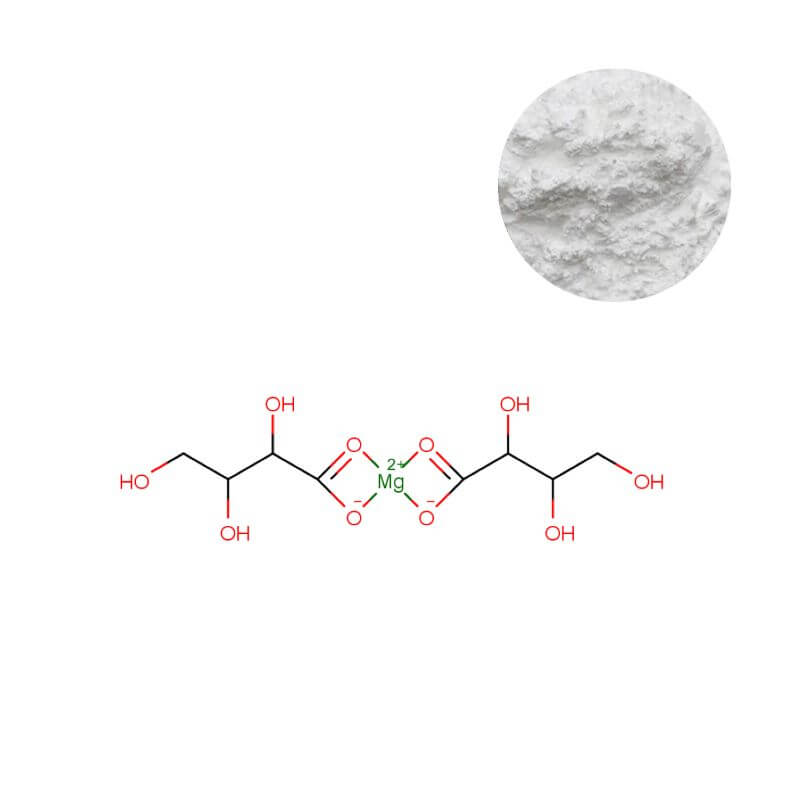
Magnesium L-Threonate Powder
| Product Name | Magnesium L-Threonate Powder |
| CAS Number | 778571-57-6 |
| Appearance | White to off-white crystalline powder |
| Purity | ≥ 98.0% (by HPLC) |
| Packaging | 1 kg/foil bag, 5 kg/foil bag, 25 kg/paper drum |
| MOQ | 1 kg |
Brain-Targeting Magnesium L-Threonate Powder for Premium Cognitive Supplements & Functional Beverages
Crossing the blood-brain barrier via L-threonate-mediated active transport, this mineral form directly supports memory and executive function—validated by a 2026 RCT that reduced estimated cognitive age by 7.5 years. For R&D and procurement teams seeking bulk Magnesium L-Threonate Powder, the ingredient's clinical pedigree and flexible physicochemical profile enable ready-to-mix beverages, gummies, and high-load capsules. Every lot is accompanied by comprehensive COA and full supply-chain traceability, de-risking formulation development while ensuring audit-ready compliance for global brand owners.
Clinical Evidence and Consumer Trust Architecture: From Neuronal Mechanisms to DTC Claim Support
Clinical foundation rests on glucose-transporter-mediated brain magnesium elevation. A 2026 double-blind RCT (100 adults, 6 weeks, 2 g/day) demonstrated significant working-memory, reaction-time, and cognitive-score improvements, with a 7.5-year mean cognitive-age reduction versus placebo. These endpoints provide brand owners with scientifically defensible structure/function claims—such as "helps maintain healthy cognitive function"—that resonate with today's bio-hacking and wellness consumers.
| Clinical Endpoint | Magnesium L-Threonate Group | vs. Placebo |
|---|---|---|
| NIH Cognitive Composite | Significant improvement | p=0.043 |
| Estimated Cognitive Age Reduction | 7.5 years | p=0.041 |
| Reaction Time (Aim Trainer) | +3.59 points (+6.3%) | p=0.031 |
Finished products featuring this ingredient command a 40-60 % retail premium over standard magnesium oxide, directly driven by these outcomes. Integrating these clinically validated benefits into marketing narratives differentiates brand offerings in the crowded cognitive health space. The EFSA safety evaluation further reinforces consumer trust, confirming a daily intake of up to 3000 mg is safe for adults—a critical regulatory pillar for any Magnesium L-Threonate supplier targeting European markets (EFSA Journal, 2024; doi: 10.2903/j.efsa.2024.8656).
Formulation Synergy and Finished Dosage Innovation: Expanding Cognitive Delivery Formats
Excellent water solubility, neutral taste, and broad pH stability make Magnesium L-Threonate Powder compatible with RTD beverages, carbonated waters, gummies, sticks, and ready-to-mix powders. This physicochemical versatility allows brand teams to bypass the bitter, chalky profiles associated with other magnesium salts, enabling clean-label, great-tasting products that drive repeat purchases. Adaptogenic herbs such as rhodiola rosea extract are also compatible with this matrix for stress-support formulations.
- Synergistic pairing with L-theanine enhances calm focus, while phosphatidylserine complements memory support—both are ideal for "stress & cognition" combos.
- Adaptogen blends (e.g., ashwagandha) create holistic stress-management systems, capitalizing on the 33 % CAGR of Magtein-based SKUs in the US.
- Gel and chewable matrices leverage the ingredient's thermal stability, broadening the target demographic to on-the-go and senior consumers.
Formulation freedom shortens TTM by eliminating solubilization and masking steps. Sourcing bulk Magnesium L-Threonate Powder enables multiple SKUs—from morning cognitive shots to evening sleep blends—from a single validated material, reducing development overhead and accelerating portfolio expansion. Over 400 commercial products already utilize this ingredient across North America and Europe.
Powder Physics and Production-Line Engineering: Conquering Hygroscopicity for Reliable Direct Compression
Hygroscopicity poses a production risk: humidity above 40 % causes deliquescence, punch sticking, machine jamming, and costly stoppages. Industry practice mandates blending and compression areas below 30 % RH and fluid-bed granulation to produce free-flowing spherical granules. This engineered physical matrix enables true direct compression—eliminating the need for secondary granulation and reducing tablet-defect rates.
- Granulation parameters are optimized to achieve ≥95 % through 80 mesh, ensuring consistent die fill and weight uniformity.
- Anti-caking agents (e.g., colloidal silicon dioxide) may be added at low levels to further enhance flow without compromising purity.
- Moisture-barrier packaging—foil-lined drums with desiccant packs—protects granulated material during air freight, safeguarding stability against low-pressure and temperature fluctuations.
For CMOs and brand owners, these controls translate into 8-12 weeks TTM reduction by eliminating re-processing and scrap. High-yield, low-waste production improves margins while ensuring lot-to-lot consistency for major retailers. Granulation parameters and moisture-barrier specifications shorten raw-material qualification cycles by eliminating multiple pilot-scale trials. This production-ready profile becomes a key differentiator when evaluating a Magnesium L-Threonate wholesale partner, guaranteeing seamless scale-up from pilot to commercial runs.
Global Regulatory Pathways and Label-Claim Safety Zones: Navigating Market-Specific ADI and Data Exclusivity
Magnesium L-Threonate Powder holds US GRAS status (2014) and EU Novel Food authorization under Regulation (EU) 2024/2694, with Regulation (EU) 2025/2225 permitting food supplement use from 26 November 2025. The UK approved it as a Novel Food on 5 March 2026, granting five years of data protection—only the authorized applicant can market it in that territory until 2031. This legal exclusivity creates a substantial competitive moat for early-mover brands.
| Market | Regulatory Status | Key Restriction |
|---|---|---|
| USA | GRAS (GRN 499, 2014) | Dietary supplement use only; no drug claims |
| EU | Novel Food (2024/2694) | Max 3000 mg/day; adults only; excludes pregnancy/lactation |
| UK | Novel Food (March 2026) | 5-year data protection; same ADI as EU |
| China | Food fortifier (2016) — approved per GB 14880 for designated food categories (milk powder, beverages, confectionery, jellies) | Use subject to category-specific limits |
These regulatory milestones provide brands with clear launch pathways but impose strict labeling constraints: EFSA-approved health claims are limited to "supports nervous system function" and "maintains normal psychological function". To communicate brain-specific benefits, leading brands adopt "off-pack" education—websites, podcasts, and social media—to explain the science. This compliant yet compelling narrative builds consumer trust without overstepping regulatory boundaries, supported by expert dossier guidance from a qualified Magnesium L-Threonate supplier.
Total Cost of Ownership and Supply-Chain Resilience: Financial Analytics for Procurement Confidence
Total cost of ownership depends on import reliance, lead-time swings, and carrying costs. The majority of global Magnesium L-Threonate production capacity is concentrated in China, with certified non-GMO material sourced through verified supply chains. Typical export lead times range from 12-16 weeks, with annual price volatility of 15-25 % driven by raw material and regulatory dynamics. A secure, multi-sourced supply base combined with safety-stock planning reduces stockout risk—a critical advantage given that demand surges (e.g., Huberman Lab recommendations) have caused global shortages, with consumers paying up to 50 % premiums for expedited shipping.
- Batch-to-batch consistency is verified through HPLC-based purity (≥98.0 %) and ICP-MS heavy-metal screening (Pb ≤0.5 ppm, Hg ≤0.1 ppm).
- Contract manufacturing efficiency is enhanced by the granulated form's direct-compression capability, lowering production waste and equipment wear.
- Audit-ready documentation—including full COA, stability data, and regulatory dossiers—minimizes qualification time for procurement teams.
These factors collectively ensure that a Magnesium L-Threonate wholesale partnership functions as a strategic sourcing decision rather than a commodity transaction, protecting brand margins and market share. With the cognitive supplement segment forecast to grow at a 17.1 % CAGR through 2034, securing a reliable, high-spec ingredient stream today represents a direct investment in future revenue resilience. The combination of clinical superiority, formulation agility, regulatory clarity, and supply-chain robustness delivers a comprehensive business case that transcends simple price comparisons, with product traceability and analytical protocols aligned to the Oclean Nutra technical framework for specification-grade ingredient supply.
Accelerate Formulation Validation with Verified Samples and Full Technical Dossiers
To eliminate R&D bottlenecks and procurement uncertainties, brand teams are invited to request a 10-20 g evaluation sample complete with a full specification pack—HPLC assay data, heavy-metal profiles, microbiological certificates, and stability summaries. This sample-to-commercial pathway reduces internal qualification cycles by up to 40 %, enabling faster go-to-market decisions while ensuring every lot meets the rigorous acceptance criteria of Tier-1 retailers and regulatory authorities. Request your Magnesium L-Threonate sample and COA package today to begin the technical assessment and secure your competitive position in the rapidly growing cognitive health market.
Frequently Asked Questions
Share this product
Related Products
Ready to get started?
Contact our team for technical specifications, pricing, and customized solutions.