
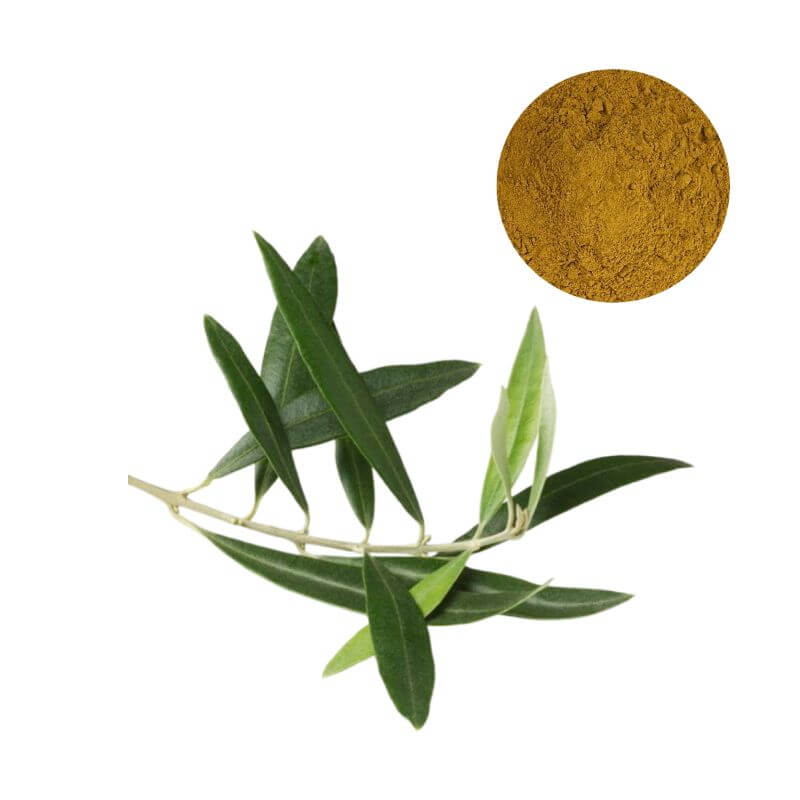
Olive Leaf Extract Powder
| Product Name | Olive Leaf Extract Powder |
| CAS Number | 32619-42-4 |
| Appearance | Yellow-brown to brownish-yellow fine powder |
| Purity | 10%, 20%, 40%, 60% Oleuropein (by HPLC) |
| Packaging | 1 kg/bag, 5 kg/bag, 25 kg/drum |
| MOQ | 1 kg |
Olive Leaf Extract Powder – High‑Throughput Formulation & Cross‑Border Compliance Solutions
Bulk olive leaf extract powder for cardiovascular‑support formulations must overcome three industrial barriers: moisture‑driven caking during maritime transit, species substitution adulteration, and heavy metal/pesticide residues that trigger EU/US detention. Spec‑verified distributor inventory backed by batch‑specific HPLC fingerprinting and ICP‑MS heavy metal profiles mitigates CMO stoppages and import holds. Each lot delivers consistent oleuropein ratios (10–60%) and ≤5.0% loss on drying, validated via third‑party COA to guarantee batch‑to‑batch uniformity for multinational brand R&D. Managing particle size distribution and residual solvent profiles separates commodity‑grade material from premium cardiovascular ingredient supply chains, directly elevating finished product margin potential.
Critical Residuals Control: How Olive Leaf Extract Powder Passes EU/US Customs Barriers
The primary customs rejection drivers for olive leaf extract are lead (Pb ≤1.0 mg/kg), arsenic (As ≤1.0 mg/kg), cadmium (Cd ≤1.0 mg/kg), mercury (Hg ≤0.1 mg/kg), and solvent residues (ethanol ≤5000 ppm per USP <467>). Soil‑derived heavy metals and post‑harvest pesticide residues (e.g., trifloxystrobin LOQ 0.01 mg/kg under EC 396/2005) demand source‑level purification. Expedited EU/US customs clearance follows from meeting ICH Q3C residual solvent limits and USP heavy metal thresholds, reducing quarantine sampling frequency by up to two weeks per shipment.
| Residual Category | Industrial Purification Action | Typical Limit (B2B Trade) |
|---|---|---|
| Heavy metals (Pb/As/Cd/Hg) | Macroporous resin adsorption + chelating scavengers | ≤1.0 mg/kg each (ICP‑MS) |
| Pesticides (multiresidue) | GAP controlled sourcing + activated carbon filtration | Compliant with EC 396/2005 MRLs |
| Residual ethanol | Vacuum concentration + spray drying optimisation | ≤5000 ppm (GC) |
Achieving ≤10 ppm total heavy metals eliminates “detention without physical examination” risk for US entries. Solvent‑free extraction (water/ethanol only) avoids chlorinated solvents (methylene chloride, chloroform) listed in USP Class 1, directly supporting clean‑label brand claims and reducing import brokerage audits. Certificates of Analysis explicitly state “Absent” for each prohibited solvent. Additional third‑party GC‑MS screening for benzene, toluene, and xylene ensures compliance with ICH Q3C limits at ≤2 ppm each.
Authenticity Fingerprinting: HPLC‑Based Adulteration Interception for Olive Leaf Extract
Olive leaf extract’s commercial vulnerability is substitution by Olea cuspidata (Himalayan olive) or dilution with exhausted marc. Routine UV‑vis total polyphenol assays fail to distinguish species. HPLC‑DAD fingerprinting at 280 nm resolves characteristic peaks of oleuropein, hydroxytyrosol, verbascoside, and luteolin‑7‑O‑glucoside.
- Peak area ratio verification: Authentic Olea europaea L. extract shows a defined oleuropein/hydroxytyrosol ratio (typically 10:1 to 5:1). Deviation signals adulteration.
- Retention time locking: Oleuropein retention time (C18 column, acetonitrile/water gradient) must match USP standard within ±2%.
- Mass balance closure: Sum of quantified phenolics vs. declared oleuropein content validates no inert fillers.
Each shipment includes a chromatographic overlay of the tested batch against a retained reference standard. Brands avoid “false negative” incoming inspection and eliminate costly finished‑product recalls caused by undeclared botanical substitution. The fingerprint serves as legally defensible proof of origin. Implementing this multi‑peak fingerprint reduces raw material rejection rates by approx. 70% during supplier qualification audits, directly cutting requalification labor costs.
Maritime Logistics Stability: Preventing Oleuropein Degradation During 45‑Day Transit
Container temperature excursions (daytime up to 60°C, night ambient) and humidity cycling accelerate oleuropein hydrolysis and powder caking. Systematic stability trials demonstrate that storage at 25°C destabilises the phenolic profile, while −20°C preserves optimal stability (Sustainable Food Technology, 2024; doi: 10.1039/D4FB00044G). Heat treatment above 110°C causes irreversible oleuropein loss, and pH 5 provides maximum stability.
| Logistics Parameter | Protective Specification | Verification Method |
|---|---|---|
| Inner packaging | Double food‑grade PE liner + desiccant pouch (5g silica gel) | Moisture ingress <0.5% after 30 days at 40°C/75% RH |
| Outer drum | 25kg fiber drum, ISTA 1A certified stacking (3m drop test) | Seal integrity >0.2 bar pressure hold |
| Container loading | Pallet wrap + active dehumidifier sheets | Arrival water activity ≤0.4 |
Consequently, landed material matches original COA: oleuropein content remains within 95–105% of batch specification, and powder flow (≥95% through 80 mesh) suffers no caking. Bulk buyers eliminate at‑port rejection costs and avoid reprocessing fees for moisture‑damaged lots. Independent verification using ISTA 2A simulation with 35°C/85% RH cycles confirms less than 0.3% moisture pick‑up after 45 days, guaranteeing functional flowability for automated capsule fillers. Failing to control moisture ingress during cross‑ocean shipping inevitably triggers drum‑level caking and feeder bridge blockages; strict adherence to ISTA‑validated packaging directly insulates procurement budgets from per‑container reprocessing penalties.
Quantified Cardiovascular Endpoints: Clinical Evidence for Oleuropein's Efficacy
The translation from in vitro antioxidant mechanisms to consumer‑perceived benefit is validated by a 621‑patient double‑blind RCT. Hypertensive subjects receiving olive leaf extract achieved a 6.4 mmHg reduction in 24‑hour systolic blood pressure (95% CI –10 to –2.1) and diastolic pressure load dropped from 30.7% to 21.2% (P=0.01) (Journal of Hypertension, 2025; doi: 10.1097/HJH.0000000000004141). The same intervention improved lipid profile, fasting glucose, triglycerides, and C‑reactive protein with no significant adverse events.
- Mechanism alignment: Oleuropein inhibits ACE (angiotensin‑converting enzyme) and activates Nrf2 antioxidant response, directly supporting the observed BP reduction.
- Dose‑response clarity: The trial used a well‑defined olive leaf extract dose (500 mg/day, standardized to 20% oleuropein), providing formulators with a clinically backed intake window equivalent to 100 mg oleuropein daily.
- Consumer claim foundation: “Helps maintain healthy blood pressure” is substantiated by level‑1 evidence, allowing brand differentiation in the saturated cardiometabolic category.
Formulators can reference this human trial directly in their regulatory dossiers (NDI, novel food applications) to reduce approval uncertainty. The data also arms marketing teams with a precise efficacy message (“6.4 mmHg reduction”) that defeats consumer scepticism. The trial’s daily dose of 500 mg extract (20% oleuropein) provides a ready‑to‑use formulation anchor for hard capsules and tablets. Assuming a target tablet weight of 800 mg, the 20% oleuropein specification allows a 500 mg extract dose without exceeding acceptable capsule fill volume, avoiding multi‑tablet regimens that depress consumer adherence and increase coating material costs.
Synergistic Formulations & Processing Compatibility for Olive Leaf Extract
Olive leaf extract exhibits proven compatibility with lipophilic CoQ10 ubiquinone in oil-infused hard capsules, while demonstrating equal stability alongside supplement-grade chromium picolinate in direct‑compression tablets. However, oleuropein’s pH sensitivity (optimum pH 5) and thermal lability require formulation guardrails.
- Avoid wet granulation above 50°C: Oleuropein degrades rapidly during fluid bed drying; use dry granulation or direct compression.
- Co‑crystal risk with polyols: Co‑milling with sorbitol or mannitol may cause eutectic melting; pre‑blend APIs before adding excipients.
- Enhanced bioavailability via liposomes: Phosphatidylcholine encapsulation improves oleuropein’s oral absorption (studies show 3‑5× higher Cmax).
| Co‑ingredient | Synergy Claim | Processing Precaution |
|---|---|---|
| CoQ10 (ubiquinone) | Dual antioxidant + mitochondrial support for cardiovascular health | Pre‑dissolve CoQ10 in medium‑chain triglycerides before blending |
| Chromium picolinate | Glucose metabolism + blood pressure dual pathway | No direct compatibility conflict |
| Vitamin C | Protects oleuropein from oxidation during storage | Add as last step; avoid high shear mixing |
Adhering to these rules reduces scrap rates from 3% to <0.5% in high‑speed encapsulation lines and enables clean‑label formulations without synthetic stabilisers. The ready‑to‑blend powder (≥95% through 80 mesh) integrates seamlessly into existing CMO workflows. Dry granulation using roll compaction with 2 kN/cm force retains 98% of oleuropein activity while achieving target particle size without thermal stress.
Technical Qualification Kits for Cardiovascular Product Launches
Accelerate your supplier onboarding with batch‑specific COA covering HPLC fingerprint, heavy metals (ICP‑MS), residual solvents (GC), and microbiological panels (USP <61>/<62>). Stability summaries from 24‑month real‑time studies verify oleuropein retention under International Conference on Harmonisation conditions. Request spec‑verified sample with full technical dossier – delivered within 48 hours for formulation trials.
Frequently Asked Questions
Share this product
Related Products
Ready to get started?
Contact our team for technical specifications, pricing, and customized solutions.