
Overcoming Urolithin A Solubility & Cohesiveness: Industrial Scale-Up and Bioavailability Optimization in Solid Dosage Forms
Overcome Urolithin A solubility barriers and punch sticking in high-speed manufacturing. This guide details particle sizing, lipid wet granulation, and stability protocols for solid dosage lines.
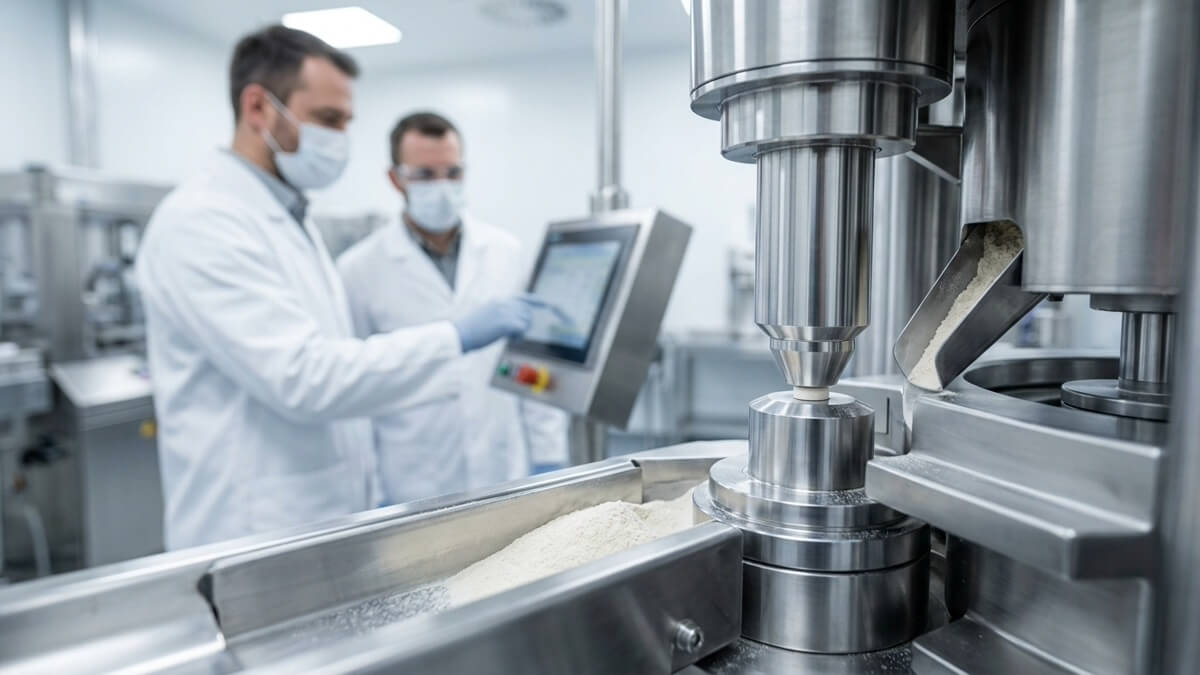
For formulation scientists scaling up Urolithin A from lab bench to high-speed encapsulation lines, two failures dominate: sticking punches on rotary tablet presses and unacceptable fill-weight variation on dosator-type capsule fillers. The native crystalline habit of this mitophagy activator, combined with its extreme hydrophobicity, causes these failures. This guide dissects the physical chemistry behind these processing failures and maps a validated route to commercial-scale success.
The Physical Barrier: Why Urolithin A Defies Conventional Solid-Dosage Processing
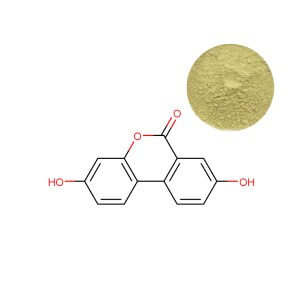
Urolithin A (molecular weight 228.20; LogP 2.36) has a melting point of 340-345 °C and is classified as practically insoluble in water, with supplier data indicating solubility below 1 mg/mL at 25 °C. This near-insolubility creates two distinct manufacturing traps: poor wettability leading to dissolution failure in vivo, and a cohesive powder bed that resists uniform flow in hoppers and dosing chambers.
Micronization is the key intervention. Patented work establishes that Urolithin A is preferably micronized to a D50 below 8 µm (optimally 1.5-5 µm) and a D90 below 25 µm (preferably under 15 µm) to achieve adequate surface area for gastrointestinal release. Particle size directly dictates both dissolution kinetics and powder flow. When D90 exceeds 45 µm, stratification in V-blenders becomes inevitable, producing blend samples that fail content uniformity (CU) testing by a wide margin. For high-speed rotary presses running at 80,000 capsules per hour, the target bulk density range is 0.48-0.55 g/mL with an angle of repose below 32°.
- D50 target: 1.5-8.5 µm (preferred below 5 µm).
- D90 limit: below 25 µm (preferred under 15 µm).
- D10 control: 0.5-3 µm to manage fines-induced electrostatic agglomeration.
Beyond size reduction, the crystalline lattice must be stabilized during drying; uncontrolled recrystallization reverts the powder to a cohesive mass that stalls hopper flow within minutes on automated filling lines. The addition of colloidal silica at 0.5-2.0% w/w is standard practice to mitigate electrostatic adhesion, while MCC pre-layering in the blender prevents localized "pocketing" of the active ingredient.
From Particle Engineering to Delivery Architecture: A Two-Tiered Strategy for Bioavailability Breakthrough
Reducing particle size solves the flow problem, but it does not address the biopharmaceutics bottleneck: even micronized Urolithin A exhibits poor dissolution in intestinal media due to its crystalline hydrophobicity. Lipid-based delivery architecture is therefore essential. Co-processing micronized urolithin a powder with lipophilic carriers, particularly medium-chain triglycerides (MCT), forces the formation of mixed micelles during digestion—a passive but highly effective solubilization mechanism that shuttles the active across the unstirred water layer of the intestinal epithelium.
Contemporary formulation science has validated that pH-driven liposomal encapsulation (PDM-ULs) offers superior protection. In a comparative study, PDM-ULs delivered a 1.91-fold increase in oral absorption (AUC) relative to conventional thin-film hydration liposomes (International Journal of Biological Macromolecules, 2023; doi: 10.1016/j.ijbiomac.2023.127554). Beyond the bioavailability gain, the pH-driven process uses no organic solvents, eliminating residual solvent risks and batch-to-batch variability that plague traditional methods. The resulting liposomes exhibit a zeta potential exceeding -35 mV and a PDI below 0.2, both being essential quality attributes for long-term suspension stability in liquid-filled hard capsules or stick-pack reconstitution. Brands that adopt this delivery architecture can secure a differentiated "clinically optimized absorption" label claim—a positioning unavailable to competitors relying on untreated crystalline Urolithin A, effectively moving the purchasing conversation away from per-kilogram pricing and toward per-serving clinical performance.
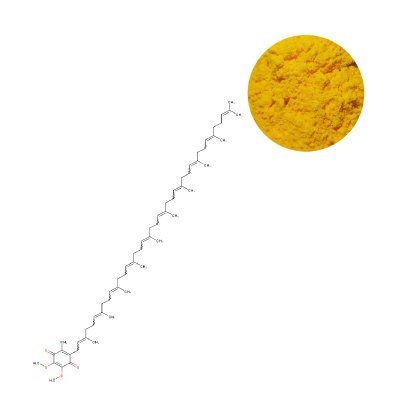
In parallel, the choice of co-active ingredients must respect physical compatibility. Coenzyme Q10 powder is a logical pairing for mitochondrial health claims—Urolithin A triggers mitophagy while CoQ10 supports electron transport in newly formed mitochondria. However, CoQ10's waxy nature (melting point ~50 °C) and documented instability at 40 °C/75% RH—a 2021 accelerated stability study of 11 commercial finished products found total CoQ10 content declined by more than 30% in two of the tested formulations after 3 months—demand that the final blend be protected from oxidative stress. Heavy metal residues—particularly palladium and copper from synthetic routes—should be minimized, as elevated levels can catalyze free-radical chain reactions that degrade CoQ10 and Urolithin A simultaneously over the shelf-life.
From a commercial scale-up perspective, the transition from a lab-scale liposomal dispersion to a dry, flowable powder that runs on a rotary press forces capital decisions around fluid-bed drying capacity and downstream dehumidification infrastructure—parameters that must be specified before the first production batch is scheduled.
Scale-Up Realities: Process Parameters That Separate Laboratory Success from Production Disaster
For dry-granulated or wet-granulated blends containing Urolithin A, three equipment-specific parameters demand constant monitoring.
Critical Process Parameters for High-Speed Solid-Dosage Production
| Equipment / Stage | Critical Parameter | Target / Limit | Failure Mode If Exceeded |
|---|---|---|---|
| V-blender / Bin blender | Blend time (post-lubrication) | 8-12 minutes | Over-lubrication → extended disintegration time > 30 min |
| Dosator capsule filler | Bulk density & Hausner ratio | 0.48-0.55 g/mL; HR < 1.25 | Fill weight RSD > 3%; dosator nozzle jams |
| Rotary tablet press | Main compression force | 8-15 kN (depending on tablet size) | Sticking on punch faces; capping/laminating |
| Manufacturing suite | Relative humidity (RH) | Below 45% (preferred 30-35%) | Moisture pickup → loss of flow; assay drift |
Wet granulation with hydrophobic excipients (hydrogenated vegetable oil or MCT powder) is the preferred route when direct compression fails. The granulation liquid—typically an ethanol-water blend—should be added at 15-25% w/w, followed by fluid-bed drying at an inlet temperature not exceeding 55 °C to avoid melt of the lipid carrier. Post-granulation, the powder bed must be conditioned to a moisture content below 2% (target 0.8-1.5%) to prevent tackiness during encapsulation.
At 40 °C/75% RH, unencapsulated Urolithin A blends degrade rapidly; failure to control granule moisture is the primary cause of stability audit failures in commercial batches.For stick-pack and sachet filling, a dedicated dehumidified zone (dew point < -20 °C) is strongly advised; standard industrial air handling is often insufficient for cohesive micronized actives.
Evaluating Formulation-Ready Urolithin A Premixes: What Quality Auditors Must Verify
For procurement and quality teams assessing supplier premixes, the data sheet must move beyond conventional heavy-metal and microbial clearances. The real differentiators are physical and biopharmaceutical metrics that predict performance on your own production floor. Third-party auditing protocols—including those aligned with the technical specifications adopted by Oclean Nutra—now routinely require particle size distribution (PSD) certificates for every lot, with D50 and D90 values verified by laser diffraction, alongside tapped-density measurements to confirm Hausner ratio compliance.
- Disintegration time: For hard capsules, target < 15 minutes in 0.1N HCl (USP apparatus).
- Dissolution profile: At 60 minutes in pH 6.8 phosphate buffer with 0.5% SLS, > 75% release is the minimum acceptance criterion for micronized grades.
- Water activity (Aw): Should not exceed 0.3 for long-term stability at 25 °C; values above 0.4 correlate with significant degradation in CoQ10-containing blends.
- Accelerated stability (40 °C/75% RH, 6 months): Total related substances should remain below 2.0%, with no single impurity exceeding 0.5%.
- Foreign particulate: Visual inspection under 2x magnification should show no black specks or fiber contamination—common failure points in recycled micronization equipment.
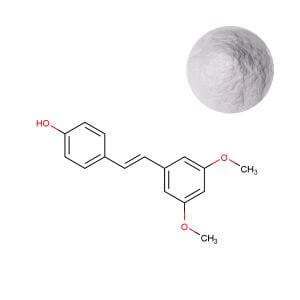
When evaluating blends with pterostilbene powder as the second co-active, note that this stilbenoid shares Urolithin A's poor aqueous solubility (approximately 0.018 mg/mL) but responds exceptionally well to HP-β-CD complexation, achieving an 81-fold solubility boost at 1:1 molar ratio. While complexation adds cost, it eliminates the need for separate solubilization steps when both actives are co-formulated, reducing total excipient burden and simplifying the final blend.
Conclusion: From Pilot-Lot Instability to Commercial Confidence
Urolithin A is not a forgiving molecule—its crystalline stubbornness and hydrophobicity punish shortcuts in milling, blending, and granulation. But the physics are now well mapped. Micronization to D90 below 25 µm, combined with lipid-based wet granulation or liposomal pre-processing, transforms this intractable powder into a production-ready active that meets both dissolution and flow requirements on high-speed lines. The 1.91-fold bioavailability gain from pH-driven liposomes reduces API usage per serving while strengthening label claims for mitophagy support.
For R&D teams currently struggling with sticking punches or CU failures, the fastest path forward is a systematic re-evaluation of particle size distribution and granulation fluid selection. Request a technical consultation or a small-batch premix sample to validate these parameters on your specific encapsulation or compression platform. Our laboratory team is available to discuss custom granulation protocols and stability study designs.
Contact our formulation team to discuss a custom Urolithin A premix trial.
Share this article
Found this helpful? Share it with others!
Related Products
Products mentioned in this article
Related Articles
You might also be interested in
Beyond Single-Ingredient Longevity: Strategic Urolithin A Synergies for Next-Gen Mitochondrial & Cellular Health Formulations
Clinical data and supply constraints drive the pivot toward Urolithin A formulation stacks. Discover key raw material market dynamics, NMN synergies, and strategic sourcing solutions for next-gen cellular health products.

Urolithin A vs. The Rest: How to Choose the Right Anti-Aging Ingredient for Your Product Formulation
Confused by anti-aging ingredients? This guide cuts through the hype, comparing Urolithin A's targeted cellular benefits against NMN, Fisetin, and pomegranate extract. Learn key selection criteria—from clinical evidence to formulation stability—to make an informed choice for your next product.
Want to learn more?
Explore our products or contact our team for personalized solutions and expert advice.