
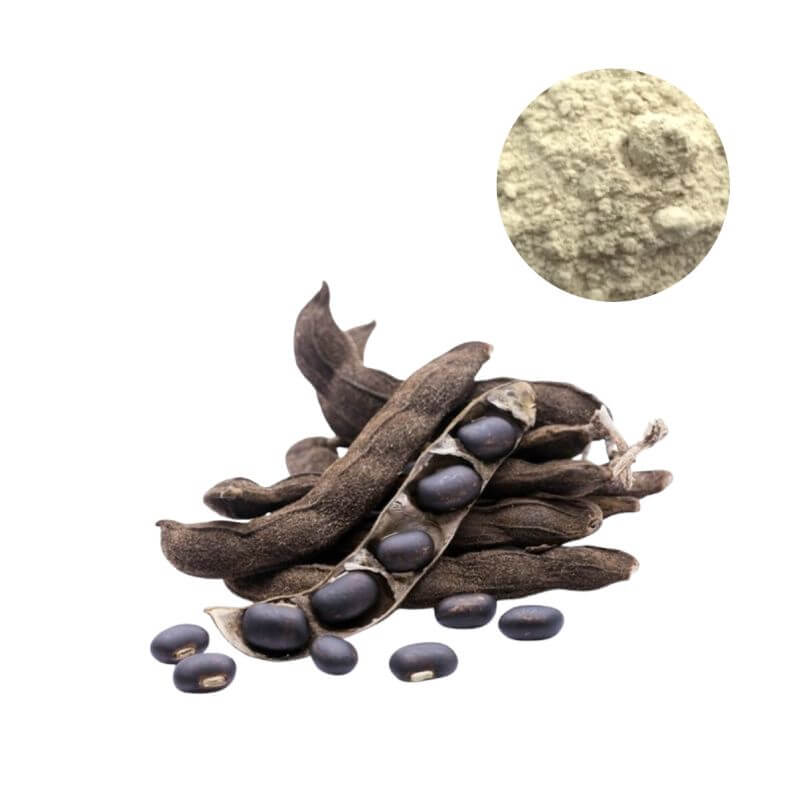
Mucuna Pruriens Extract Powder
| Product Name | Mucuna Pruriens Extract Powder (L-Dopa) |
| CAS Number | 59-92-7 |
| Appearance | Fine brown to off-white powder (depending on purity) |
| Purity | 15%, 40%, 98% min. (by HPLC) |
| Packaging | 1 kg/foil bag, 5 kg/tin, 25 kg/cardboard drum |
| MOQ | 1 kg |
Mucuna Pruriens Extract Powder (15%-98% L‑Dopa): A Multi‑Grade Botanical for Cognitive and Sports Nutrition Formulations
Formulating a premium supplement for cognitive or sports nutrition requires balancing clinical credibility with batch consistency. Mucuna Pruriens Extract Powder, standardized to 15%, 40%, or 98% L‑Dopa by HPLC, offers a plant‑based solution. For brands sourcing bulk extract, three purity tiers enable indication‑specific strategies with full traceability via GMP‑certified production and COA support. For brand owners, this multi‑grade approach directly addresses two strategic imperatives: regulatory readiness for diverse markets and the ability to formulate premium lines without redesigning the supply chain.
Clinical Rationale: How Standardized L‑Dopa from Mucuna Pruriens Supports Neurological and Motor Health
L‑Dopa is the direct metabolic precursor to dopamine – a neurotransmitter governing mood, motor control, and focus. A whole‑plant Mucuna Pruriens extract provides not only L‑Dopa but also naturally occurring co‑factors that may improve tolerability. A 2026 multicenter controlled trial in untreated Parkinson’s patients reported that 12 months of Mucuna Pruriens powder improved both motor and non‑motor symptoms, performing comparably to standard L‑Dopa therapy (doi: 10.1177/1877718X251383721). For procurement teams, this directly translates to a clinically validated botanical alternative that supports cognitive stamina and physical coordination without relying on synthetic actives. Key consumer‑facing benefits derived from this mechanism include:
- Enhanced mental clarity and focus under stress.
- Support for balanced mood and emotional well‑being.
- Maintenance of healthy motor function and coordination.
From a strategic formulation perspective, the observed mild adverse event profile in the trial (most events were mild) directly reduces end‑user compliance risk – a critical factor for subscription‑based supplement programs. This clinical foundation naturally raises the question: how can brands guarantee that every batch delivers the claimed L‑Dopa level reproducibly? From a brand equity standpoint, a clinically validated botanical like this allows marketing teams to build 'science‑backed' narratives that command premium pricing in crowded cognitive health segments.
Quality Benchmarks: What a Professional CoA Must Reveal Beyond “Purity”
For a botanical extract, a Certificate of Analysis (COA) is your primary risk‑management tool. Advanced buyers look for more than a single purity number. Premium Mucuna Pruriens extract powder typically features HPLC‑verified L‑Dopa content (15%, 40%, or 98% min.), strict heavy metal limits (Pb ≤2.0, As ≤1.0, Cd ≤1.0, Hg ≤0.1 mg/kg), and absence of E. coli, Salmonella, and Pseudomonas aeruginosa. Additionally, loss on drying ≤5.0% and particle size ≥95% through 80 mesh are critical for consistent blending.
From a strategic formulation perspective, these parameters allow R&D teams to skip costly trial‑and‑error adjustments and predict how the ingredient will behave in high‑speed capsule fillers or powder stick packs. For brands sourcing bulk L‑Dopa extract, requesting a batch‑specific COA that includes residual solvent testing (USP <467>) is non‑negotiable. It flags potential processing shortcuts before they become a regulatory headache. A professional Mucuna Pruriens supplier will also provide stability data under recommended storage conditions (cool, dry, away from light), which directly influences finished product shelf‑life claims. The plant's natural cadmium accumulation makes multi‑batch heavy metal testing essential. Consequently, enforcing strict heavy metal release limits directly lowers finished product recall risk and streamlines regulatory filings – a tangible ROI benefit for compliance teams.
| Quality Attribute | Why It Matters for Formulators | Commercial Impact |
|---|---|---|
| HPLC purity (15/40/98%) | Ensures clinical dose accuracy | Prevents under‑dosing or batch inconsistency → consumer complaints |
| Heavy metals & microbiology | Meets FDA/EFSA supplement requirements | Avoids regulatory rejection, recalls, and brand damage |
| Particle size (80 mesh) | Uniform flow in capsule filling / stick packs | Reduces content uniformity failure and production waste |
Choosing a GMP‑certified, COA‑backed Mucuna Pruriens extract powder with verified test methods (USP <61>, <62>, ICP‑MS) is the first step. But even the best quality specification is useless if the ingredient cannot be formulated stably – which leads to practical application guidelines.
Formulation in Practice: Stability, Synergy, and Selecting the Right Purity Grade
Effective incorporation of Mucuna Pruriens extract requires attention to dosage, excipient compatibility, and environmental stability. Based on clinical protocols, daily L‑Dopa intake from standardized extracts typically ranges from 75 mg to 400 mg. This means a 15% extract would need 500–2660 mg of raw material per serving, while a 98% grade requires only 76–408 mg – drastically affecting capsule count and label claims.
- For powder blends (smoothies, stick packs): Use 15% or 40% grade for better dispersion and full‑spectrum positioning. Keep mixing humidity below 45% RH to prevent clumping.
- For capsules/tablets: 98% grade minimizes excipient load and allows smaller capsule sizes, ideal for “high‑potency” claims.
Common synergistic combinations include pairing with standardized L‑Theanine or high-purity GABA powder for balanced focus, with Phosphatidylserine (PS) for a memory matrix, or with Ashwagandha extract for sports recovery formulas. Stability considerations: the extract is moderately hygroscopic and sensitive to prolonged heat above 60°C. For procurement teams, this directly translates to choosing primary packaging (1 kg foil bags with desiccant, 25 kg drums with inner liner) that matches your batch size to avoid repeated moisture exposure. Storing opened drums in non‑climate‑controlled warehouses accelerates L‑Dopa degradation – using loss‑on‑drying monitoring as an incoming check flags humidity damage early. For R&D managers, this means that specifying a GMP‑certified extract with documented stability under 60°C and 45% RH prevents scale‑up surprises and cuts reformulation cycles by weeks.
| Purity Grade | Formulation Fit | Cost per Serving | Consumer Perception |
|---|---|---|---|
| 15% L‑Dopa | Whole‑food, full‑spectrum blends | Lowest | “Natural, traditional” |
| 40% L‑Dopa | Intermediate capsules, cost‑performance balance | Medium | “Standardized, reliable” |
| 98% L‑Dopa | High‑potency, small‑size softgels/sport formulas | Highest (but lower excipient cost) | “Clinical strength, premium” |
From a strategic formulation perspective, selecting the right grade allows brands to precisely target price points and consumer expectations. However, even the best formulation strategy depends on a trustworthy supply chain – which brings us to the final critical topic: sourcing risk mitigation.
Mitigating Sourcing Risk: A Checklist for Qualifying a Mucuna Pruriens Supplier
Supply chain disruptions and quality variability are top concerns for any B2B buyer. When evaluating a potential partner for bulk Mucuna Pruriens extract powder, experienced procurement teams verify the following elements against documented evidence:
- Full traceability: botanical origin (Mucuna pruriens seed) and solvent declaration.
- Certifications: GMP, ISO 22000; Kosher/Halal optional.
- Quality documentation: batch‑specific COA with HPLC chromatogram, ICP‑MS heavy metals, residual solvents.
- Stability program: 24‑month data under cool, dry storage.
- Regulatory support: US FDA DSHEA compliance guidance; for EU markets, compliance with local Novel Food regulations is required; technical dossiers are available to support your application.
For procurement teams, this directly translates to a systematic risk‑reduction framework that goes far beyond unit price negotiation. Adopting a Total Cost of Ownership lens, verifying each of the above checklist items up front avoids costly batch failures and compliance delays that could erase any initial savings from cheaper alternatives. A reputable distributor provides a 10–20g free sample for lab verification. A recent 2026 review in Scientia Pharmaceutica (doi: 10.3390/scipharm94010016) emphasizes that advances in extraction methods enable reliable production of multiple purity grades – but only when suppliers adhere to strict process controls.
Next Steps for Your Product Development Cycle
Bringing a differentiated cognitive or sports nutrition product to market requires more than a raw material – it demands a partner that understands formulation pitfalls, quality assurance, and regulatory pathways. By evaluating a GMP‑certified, HPLC‑verified Mucuna Pruriens extract powder with flexible purity options (15%, 40%, 98%), you gain the ability to prototype quickly, scale predictably, and offer science‑backed claims. To accelerate your internal evaluation, request a complimentary 10‑20g sample plus the complete technical dossier (batch‑specific COA, stability summary, regulatory note). Request your complimentary sample & technical dossier – a no‑obligation step that turns ingredient research into a validated formulation roadmap.
Frequently Asked Questions
Share this product
Related Products
Ready to get started?
Contact our team for technical specifications, pricing, and customized solutions.